
Vandaag of morgen in huis

Kwaliteit gegarandeerd

Welkomstaanbiedingen ontgrendelen: GRATIS bezorging | Tot 80% korting | Gratis 30 dagen JoyPlus-proefperiode
Download de app
A dead battery on a cold morning or a flat tire on your way to a vacation getaway. These are situations every driver would rather avoid. A jump starter with compressor seems like the perfect all-in-one solution: emergency power for your car and a pump for your tires in one compact device.
But the market is flooded with models that make big promises. Unfortunately, exaggerated specifications and clever marketing often lead to a purchase you'll regret. As a Joybuy Product Recommendation Officer, I'm here to help you separate fact from fiction, so you can choose a device that won't let you down.
Before you make a choice, it's crucial to recognise three common pitfalls.
To avoid a bad purchase, it's better to focus on a few concrete specifications that truly matter. These determine whether the emergency car starter will do its job when you need it most.
The required starting power depends directly on your vehicle type. A 12V jump starter is the standard for passenger cars, but the engine displacement is the deciding factor.
A tire inflator and jump starter must be able to inflate a car tire efficiently. Pay attention to two values:
Most jump starters use a lithium-ion battery. These are lightweight and compact. Pay attention to the standby time; a good jump starter loses very little charge when not in use. Manufacturers often recommend charging the device every 2 to 3 months.
Extra features like a built-in power bank with jumper cables for charging your phone and an LED light are standard. However, the quality and charging speed (e.g., via USB-C PD) can vary significantly.
To help you with your choice, we've matched a few products to specific user profiles. These recommendations are based on objective specifications that align with practical needs.
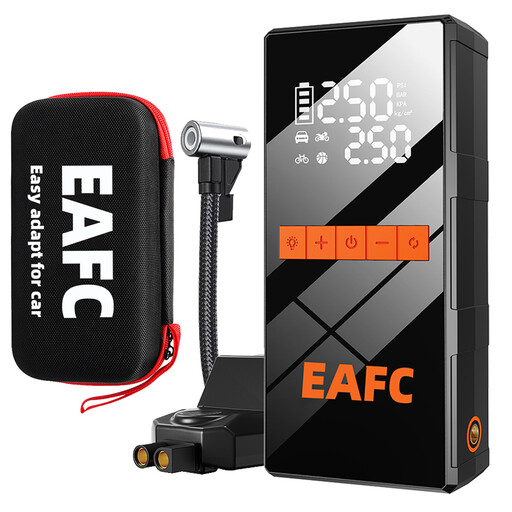
Why This Fits Their Persona: This model is a practical choice for most common passenger cars (up to 4.0L gasoline). It combines the four essential functions—jump-starting, compression, power bank, and flashlight—into a compact and affordable package, ideal for emergencies at home and on the road.
It avoids the 'useless compressor' pitfall by offering a functional 150 PSI pump suitable for standard car tires, without pretending to be a professional-grade tool.
The 4-in-1 functionality provides a complete emergency solution in a single device. Its compact size makes it easy to store in the glove compartment.

Why This Fits Their Persona: For those with a heavy-duty SUV, a commercial van, or a car with a large diesel engine (up to 10.0L), sheer power is essential. This model delivers the high starting current needed to reliably start these engines, even in low temperatures.
This model sidesteps the 'peak amp myth' by pairing high power with specifications genuinely suited for large engines. The compressor delivers a manufacturer-rated 35 L/min, which is functional for larger tires.
Very high starting power (8000A peak) suitable for virtually all 12V vehicles. The large 3.4-inch screen provides clear information on status and any potential errors.
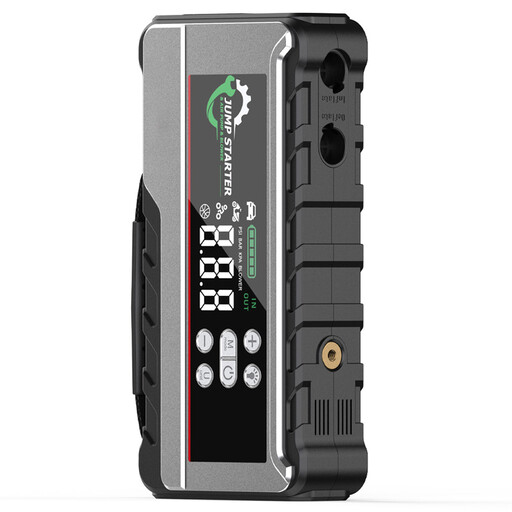
Why This Fits Their Persona: For those who need to power not just their car but also laptops, phones, and camping gear on the go. The PD65W port is powerful enough for most laptops, and the unique blower function is ideal for inflating and deflating air mattresses or inflatable boats.
This model bypasses the 'weak extras' pitfall. The PD65W fast-charging feature and the air blower are not gimmicks but fully-fledged, powerful functions that offer real value for outdoor and tech users.
The combination of a powerful 3000A jump starter with PD65W fast charging for laptops and a unique blower function makes this a highly versatile device for travel.
We have compiled a complete, up-to-date list of products that meet these selection criteria and comply with current safety regulations.
Most manufacturers recommend fully charging the jump starter every 2 to 3 months, even if you don't use it. This helps maintain the lifespan of the internal lithium-ion battery and ensures the device is ready when you need it.
Modern jump starters are equipped with smart jumper cables that provide protection against common errors. This includes safeguards against short circuits, reverse polarity (connecting the clamps incorrectly), overcharging, and overheating. As a result, the risk of damage to your car or the booster itself is minimal, even if you make a mistake during connection.
A model with a built-in compressor is typically slightly larger and heavier than a standard jump starter. However, thanks to the use of lightweight materials and compact designs, most models are still very portable. They often fit easily in the glove compartment or a storage compartment in the trunk. For many users, the slight extra weight is a small price to pay for the convenience of an all-in-one device.
