
Vandaag of morgen in huis

Kwaliteit gegarandeerd

Welkomstaanbiedingen ontgrendelen: GRATIS bezorging | Tot 80% korting | Gratis 30 dagen JoyPlus-proefperiode
Download de app
A dead battery or a flat tire always happens unexpectedly and at the worst possible moment. Waiting for roadside assistance is often the only option. A jump starter with a compressor seems like the perfect all-in-one solution: you can start your car yourself and inflate your tires, wherever you are. But the market is flooded with models that overpromise and underdeliver. Many car owners end up disappointed with a device that fails in an emergency.
As a Joybuy Product Recommendation Officer, I'll help you cut through the marketing jargon. We'll look at the specifications that truly matter, so you can make a purchase you can rely on. Let's examine the three most common pitfalls.
Before you make a choice, it's crucial to recognize the marketing traps that lead to a bad buy.
Manufacturers advertise with impressive peak currents of 3000A, 4000A, or even more. This 'peak current' is the maximum current a jump starter can deliver for a fraction of a second. For most cars, this number isn't the most important one. What counts is the starting current (or 'cranking current'), the sustained current needed to actually turn the engine over. This value is often lower and less prominently displayed, which could lead you to buy a model that's too weak for your engine, especially in the winter.
A high capacity in milliamp-hours (mAh) suggests you can charge your phone many times or start your car multiple times. However, the advertised mAh is usually the capacity of the internal battery cells. Due to energy loss during transfer, the actual, usable capacity is often 30% to 40% lower. This means a jump starter with a power bank can run out of power much faster in practice than you would expect based on the packaging.
The addition of a compressor makes a jump starter multifunctional. However, many cheaper models have a portable tire inflator that lacks the power (expressed in PSI and L/min) to inflate a car tire within a reasonable time. They are sometimes only suitable for bicycle tires or a soccer ball. In an emergency on the side of the highway, a compressor that takes 20 minutes to slightly increase your tire pressure is useless.
To choose a reliable car jump starter, focus on the following objective specifications.
Look beyond the peak amps and check what type and size of engine the car battery starter is suitable for. Manufacturers usually specify this in liters (L) for gasoline and diesel engines. A 2.0L gasoline engine requires less starting power than a 3.0L diesel engine. A 12V jump starter rated for engines up to, for example, "8.0L gasoline / 6.0L diesel" offers more than enough power for most cars.
A better measure of total energy content than mAh is watt-hours (Wh). Some manufacturers list this. A higher Wh value means more energy for starting your car and charging devices. If you also want to use the jump starter with a power bank to charge a laptop, look for a USB-C port with Power Delivery (PD) of at least 45W or 65W.
For a jump starter with an air compressor that can actually inflate a car tire, two values are crucial:
Below are a few models we've selected based on their specifications, tailored to different user profiles.
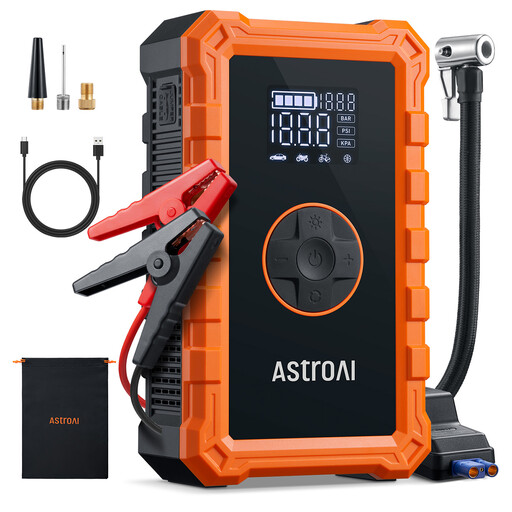
Why This Fits Their Persona: Ideal for the average driver with a standard gasoline or compact diesel car. This model offers reliable core functionality without unnecessary extras, perfect for those who want to be prepared for the most common emergencies.
The 1500A peak current is realistic for engines up to 6.0L gasoline. The compressor delivers 150 PSI with an airflow of 25L/min, avoiding the pitfall of a weak pump and ensuring it can actually inflate a car tire.
The large, clear 2.4-inch screen displays all information brightly, making it easy to operate, even for beginners. The automatic shut-off feature on the compressor prevents over-inflation.
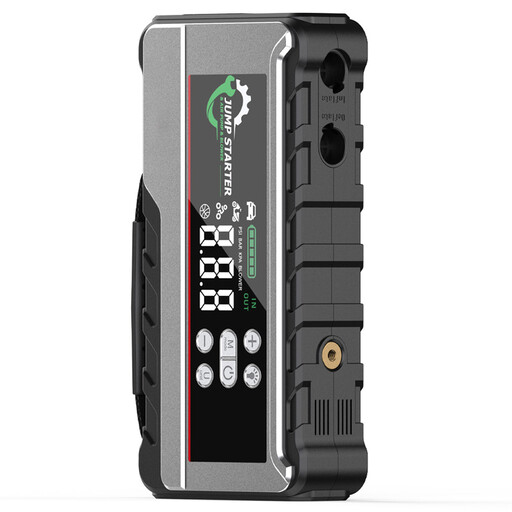
Why This Fits Their Persona: For the owner of an SUV, van, or RV who is often on the road and needs a powerful, multifunctional device. This model is not just a jump starter, but also a serious power bank for heavier devices like a laptop.
With 3000A peak current and a large 24800mAh battery, this model is powerful enough for large engines. It bypasses the pitfall of insufficient capacity. The PD65W fast-charging function also makes the power bank claim a reality for laptops.
The PD65W USB-C port can charge a laptop, which is unique in this category. The additional air blower function is useful for inflating air mattresses or inflatable boats during camping trips.
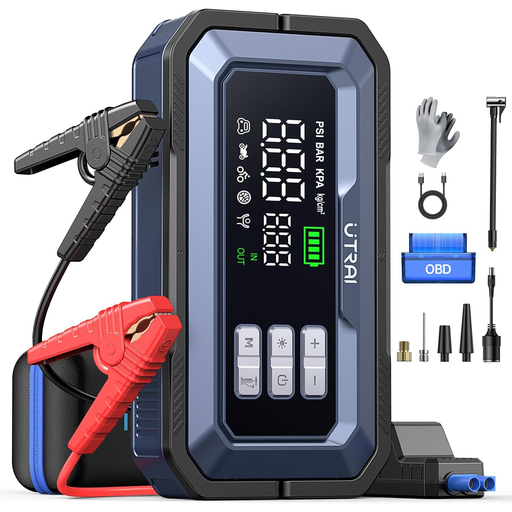
Why This Fits Their Persona: For the car enthusiast or DIYer who wants to get the most out of their tools. This is more than a jump starter; it's a complete on-the-go diagnostic and power station, suitable for the toughest jobs.
This model exceeds the standard. The 7000A peak current is suitable for diesel engines up to 14L, making the 'peak amp myth' irrelevant. The 160W DC output is a professional feature that far surpasses the pitfall of a weak power bank.
Unique features like the 160W DC output (cigarette lighter socket) for powering coolers or vacuums, and the included OBD2 fault code reader make this an exceptionally versatile device.
We have compiled a complete, up-to-date list of products that fully meet these strict selection criteria and safety regulations.
1. How often should I charge a jump starter? Most manufacturers recommend fully charging the jump starter every 3 to 6 months, even if you don't use it. This helps keep the battery in good condition and ensures it's ready for use when you need it. Always consult the manual for your specific model for the best advice.
2. Can I leave a jump starter in my car during the winter? Yes, most modern jump starters are designed to function in a wide range of temperatures, often from -20°C to +60°C (-4°F to +140°F). This makes them suitable for storage in a car during the winter. However, always check the product's specifications for the exact operating temperature range.
3. Is a jump starter with a compressor really powerful enough for a car tire? A quality model is. Pay attention to the airflow specification (L/min). A model with an airflow of 25 L/min or higher can take a standard car tire from flat to the correct pressure in just a few minutes. Models with a lower L/min value will take significantly longer and are less practical in an emergency. The automatic shut-off feature, which many recommended models have, is a handy extra that prevents you from over-inflating the tire.
