
Vandaag of morgen in huis

Kwaliteit gegarandeerd

Welkomstaanbiedingen ontgrendelen: GRATIS bezorging | Tot 80% korting | Gratis 30 dagen JoyPlus-proefperiode
Download de app
A dead battery or a flat tire always happens unexpectedly. Waiting for roadside assistance is often time-consuming and expensive. A jump starter with a compressor seems like the ideal all-in-one solution. But the market is flooded with models that make big promises but fail to deliver in practice. Many drivers buy a device that isn't quite powerful enough for their diesel engine or has a tire inflator that takes forever.
As a Joybuy Product Recommendation Officer, I separate marketing claims from the facts. In this guide, we'll discuss the 3 most common pitfalls and explain what to look for, so you can choose a reliable car emergency kit that won't let you down.
Before you consider a purchase, it's crucial to see through the marketing hype. Many devices fail at critical moments due to design flaws or exaggerated specifications.
battery booster with compressor that looks powerful on paper but falls short in practice.car jump starter with tire inflator that can reach 150 PSI sounds impressive. But if the airflow (expressed in liters per minute, L/min) is too low, inflating a single car tire can take fifteen minutes or more. Cheaper models often have low airflow and overheat quickly, causing them to shut down automatically after a few minutes.portable jump starters use a lithium-ion battery. Its quality determines the device's lifespan. Cheaper variants lose their charge quickly, especially when stored in a hot or cold car. After a year, the capacity can diminish so much that the jump starter is no longer reliable, making your investment worthless.To avoid a bad purchase, you need to look beyond the marketing. Focus on these three technical specifications to find a model that fits your vehicle and needs.
The starting power determines if you can start your car. A 12v jump starter for diesel and gasoline has different requirements.
A good jump starter with air compressor is fast and efficient.
The battery is the heart of the device. It's used not only for jump-starting but also as a jump starter power bank.
Based on these objective criteria, we have selected a number of models that suit different user profiles.
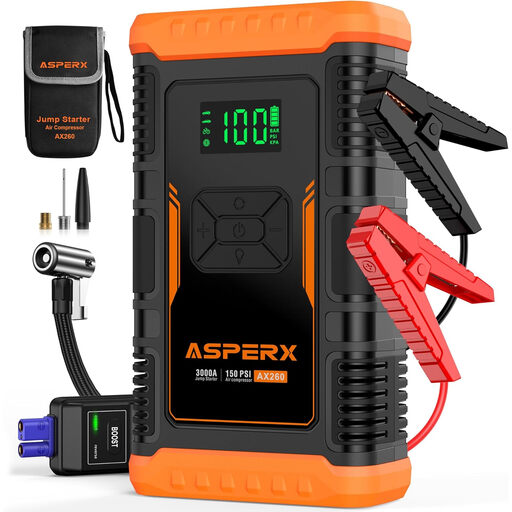
Why This Fits Their Persona: Ideal for drivers of standard gasoline or compact diesel cars. This model offers a solid balance between starting power and a functional compressor without unnecessary extras, perfect for keeping in the trunk for daily commute emergencies.
The manufacturer specifies an airflow of 35 L/min, which avoids the pitfall of a slow compressor. The 3000A peak current is realistically matched to engines up to 10L gasoline/8L diesel, preventing misleading claims about its power.
Combines five functions (jump starter, compressor, power bank, light, SOS signal) in a relatively compact size. The LCD screen for tire pressure with auto-stop is a practical feature.
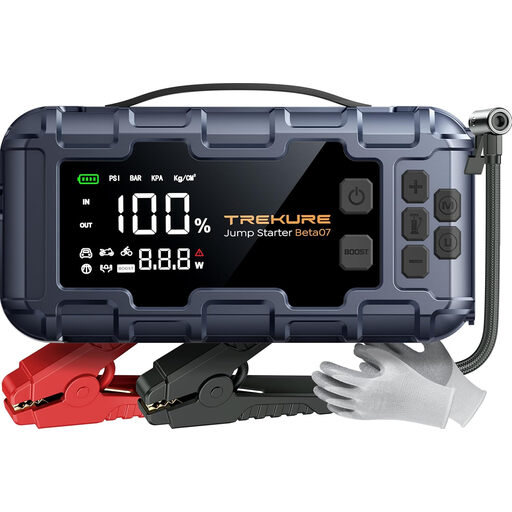
Why This Fits Their Persona: For owners of heavy vehicles like large SUVs, RVs, or vans with diesel engines. This model delivers a very high peak current and has a powerful compressor, which is essential for larger tires and engines that require more starting power.
The 6000A peak current is paired with a clear specification for engines up to 12L, which inspires confidence. The compressor has a stated airflow of 45 L/min, which is significantly faster than standard models and bypasses the slow pump pitfall.
Features a 45W PD fast-charging port, allowing the device itself to be recharged quickly. The large 3.3-inch display shows all data clearly, and the included insulating gloves are a useful safety addition.
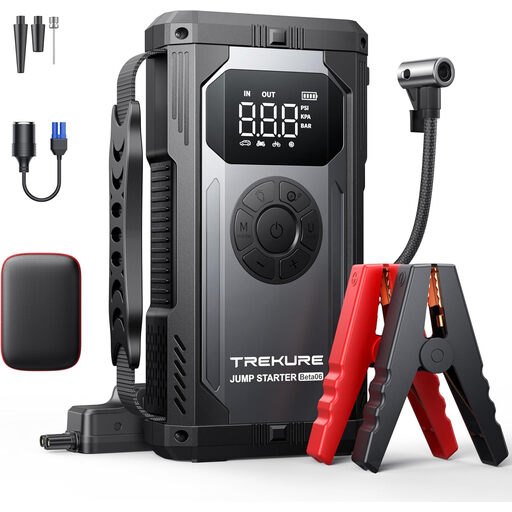
Why This Fits Their Persona: Perfect for campers and travelers looking for a multifunctional device. Besides starting almost any car, its powerful power bank (23800mAh) and 12V output can power a cooler or other accessories, while the compressor inflates air mattresses and tires.
This model avoids the weak battery pitfall by specifying a high capacity of 23800mAh, which supports its claims of being a versatile power bank. The 5500A peak current is more than sufficient for most vehicles, making it a reliable choice.
The inclusion of a 12V cigarette lighter output is a major plus for outdoor use. The 'force start' function, to jump-start even completely dead batteries, offers extra peace of mind in remote areas.
We have compiled a complete, up-to-date list of products that fully meet these strict selection criteria and safety regulations.
Most manufacturers recommend fully charging the device every 3 to 6 months, even if it's not used. This helps keep the battery in good condition and ensures it's ready for use when you need it. Always consult the manual for your specific model for the exact advice.
For most modern diesel cars (up to about 2.5L), a quality jump starter with a 3000A peak current is typically sufficient, provided the battery is not completely dead or defective. For larger diesel engines (3.0L+), or in very cold temperatures, a model with a higher peak current (4000A or more) is a safer choice.
Yes, these devices are designed to be stored in a vehicle. However, it's important to avoid extreme temperatures. In the summer, don't leave the jump starter in direct sunlight on the dashboard, and be aware that extreme freezing temperatures can temporarily reduce the battery's performance. The ideal storage location is in the trunk or under a seat, in the provided storage case.
