
Vandaag of morgen in huis

Kwaliteit gegarandeerd

Welkomstaanbiedingen ontgrendelen: GRATIS bezorging | Tot 80% korting | Gratis 30 dagen JoyPlus-proefperiode
Download de app
A dead battery or a flat tyre always happens unexpectedly and at the worst possible moment. A jump starter with a compressor seems like the perfect all-in-one solution. But the market is flooded with models that promise a lot but fail to deliver in practice. Many car owners invest in a device that leaves them stranded when they need it most.
Before making a purchase, it's crucial to recognise the common pitfalls. This will prevent you from wasting money on a device that underperforms.
To avoid a bad purchase, focus on the specifications that truly matter. These are the non-negotiable points to check.
The most important distinction to understand is between peak current and cranking current.
For a standard petrol engine, 300-500A of cranking current is often sufficient. However, if you have a large SUV, a van, or a diesel engine, you'll need a model with a significantly higher cranking current, often approaching 800A or more. A 7000A jump starter sounds impressive, but always check the specification for the cranking current.
A portable car air compressor must be functional. A maximum pressure of 150 PSI is standard but says nothing about its speed. Pay attention to the airflow, expressed in litres per minute (L/min). The higher this number, the faster your tyre will be inflated. A good compressor also has an automatic stop function (you set the desired pressure, and it stops on its own) and overheat protection to prevent the device from failing during use.
A good jump starter is more than just a starting aid. It's a multifunctional car emergency kit.
Not every model is suitable for everyone. Below, we match some popular choices with specific user profiles.
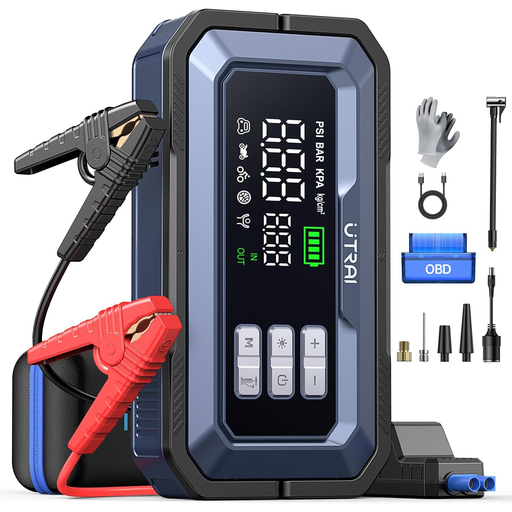
Why This Fits Their Persona: Ideal for drivers of heavy-duty diesel vehicles, motorhomes, or vans. This model is designed for serious jobs, offering the power and reliability needed to start large engines (up to 14L diesel) without issue.
This device bypasses the 'peak current trap' by delivering a very high cranking current of 1000A. The compressor features NTC temperature protection to prevent overheating, ensuring it remains reliable when inflating large tyres.
The 160W DC output makes it a powerful 12V power bank for devices like cool boxes. The included OBD2 adapter for reading fault codes is a unique and highly useful addition.
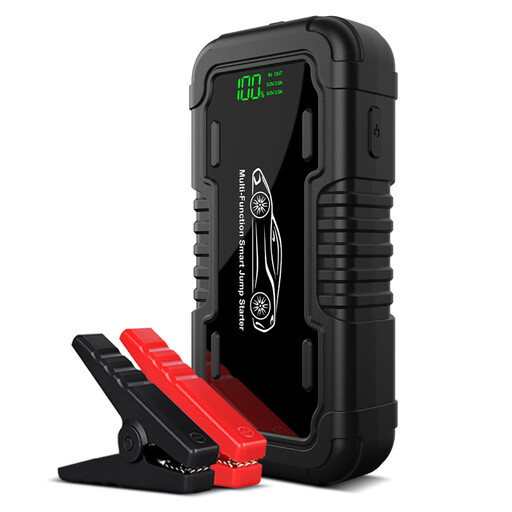
Why This Fits Their Persona: Perfect for the daily driver with a standard petrol or light diesel car. This model offers an excellent balance of power, portability, and functionality for general peace of mind on the road.
This model tackles the 'unreliable battery' pitfall with a clear LCD screen that displays the remaining capacity. This ensures you always know it's charged and ready for use, so you won't face any surprises.
The combination of a QC3.0 18W fast-charging output and a compact, IP44 water-resistant design makes it a very versatile and robust jump starter with a power bank for daily use and travel.
Why This Fits Their Persona: For those who use their car as a base for adventure. This device is not just a lifesaver in emergencies but also a mobile power station for camping or during outdoor activities.
Where other multifunctional tools have a weak and useless light, the JS-30 features an extremely bright 2000-lumen work light. It can be rotated 90 degrees, turning a dark campsite or breakdown spot into a well-lit workspace.
The 160W DC output (cigarette lighter socket) is its key asset. It allows you to directly power 12V devices like an electric cool box, an air mattress pump, or camping lights, far from any wall outlet.
The jump starters above feature a powerful, built-in light, which is essential for emergencies in the dark. We have compiled a complete list of products in the portable light category that meet strict selection criteria.
The lifespan of a jump starter primarily depends on the quality of its internal lithium battery. A well-maintained, high-quality model can last 3 to 5 years. To maximise its lifespan, it is advisable to fully charge the jump starter every 3 to 6 months, even if you don't use it. Additionally, store it at a moderate temperature; extreme heat or cold can damage the battery.
No, this is a common mistake. A diesel jump starter requires significantly more starting power (cranking current) than one for a petrol engine. Diesel engines have a higher compression ratio and are harder to start, especially in cold weather. Always check that the booster's cranking current meets the recommendations of your car's manufacturer. When in doubt, always choose a model with higher starting power.
Yes, modern jump starters are designed with multiple safety features to protect both the user and the car. Look for models with 'smart clamps' that offer protection against reverse polarity (connecting the clamps incorrectly), short circuits, overcharging, overcurrent, and sparking. These systems prevent damage to your vehicle's sensitive electronics and battery.
