
Vandaag of morgen in huis

Kwaliteit gegarandeerd

Welkomstaanbiedingen ontgrendelen: GRATIS bezorging | Tot 80% korting | Gratis 30 dagen JoyPlus-proefperiode
Download de app
A dead battery or a soft tire always comes as a surprise. Being stranded on the side of the road is the last thing you want, especially with a busy schedule. A jump starter with a compressor seems like the perfect all-in-one solution to keep in your car. But the market is flooded with models that promise more than they can deliver.
As a Joybuy Product Recommendation Officer, I'm here to help you cut through the marketing jargon. Before you make a purchase, it's crucial to know what to look for to avoid a costly mistake.
Many manufacturers use marketing terms that sound impressive but mean little in practice. These are the three most common pitfalls you can fall into as a consumer:
To make a smart choice, focus on the specifications that truly matter. Here are the three most important points to check before buying a jump starter with air compressor.
A battery booster must have enough power for your type of vehicle. The peak current is the maximum current the booster can deliver for a fraction of a second. The starting current is the power needed to get the engine turning. For a standard petrol engine, a model with 1500A-2000A peak current is often sufficient. For a larger SUV, camper, or a diesel engine, you'll need a more powerful car jump starter. Look for models advertised as a 3000A jump starter or higher, with a correspondingly high starting current.
Pay attention to the rated capacity instead of just the advertised mAh. This gives a more honest picture of its performance. A modern jump starter is also a multifunctional car emergency kit. Therefore, check the charging capabilities. A USB-C port with Power Delivery (PD) is a major advantage. A 65W power bank feature means you can quickly charge not only your phone but also your laptop on the go. This makes the device much more versatile for work or travel.
The performance of the built-in compressor is crucial. A maximum pressure of 150 PSI (about 10 Bar) is more than enough for car, motorcycle, and bicycle tires. The most important feature to look for is the automatic shut-off. This allows you to set the desired tire pressure, and the pump will stop automatically once it's reached. This prevents overinflation and makes it much easier and safer to use.
Below is a selection of products tailored to different user profiles, based on their objective specifications.
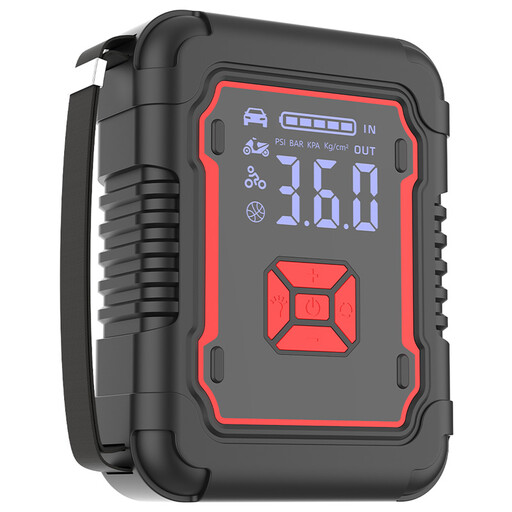
Why it's a match: Ideal for the driver of a standard petrol or diesel car who wants a reliable all-in-one emergency kit. Compact enough for the glove box, yet powerful enough for most emergencies.
The 3000A peak current is more than sufficient for most passenger cars. The compressor has an auto-stop function, which prevents overheating and overinflation.
Combines a powerful jump starter with a functional 150 PSI tire inflator and a QC3.0 power bank in a compact design. A practical all-rounder.
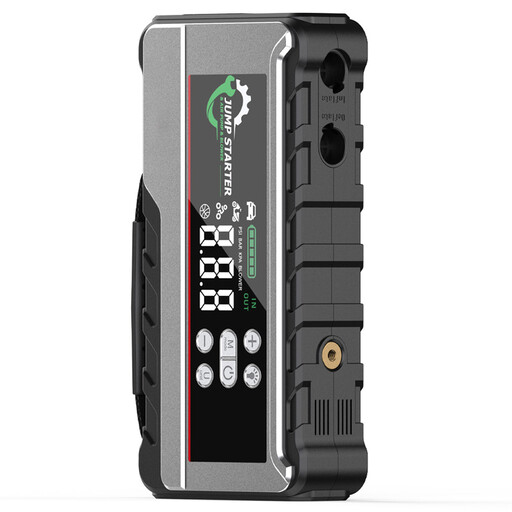
Why it's a match: Perfect for those who work on the go or travel with an RV or SUV. The ability to charge a laptop makes this device indispensable for anyone who depends on their equipment.
This model focuses on real-world usability by combining a high rated battery capacity (14,800 mAh) with a genuinely fast PD65W charging function, rather than just advertising empty numbers.
The PD65W fast-charging feature via USB-C is its main selling point. It allows you to directly charge most modern laptops, setting this device apart from standard power banks.
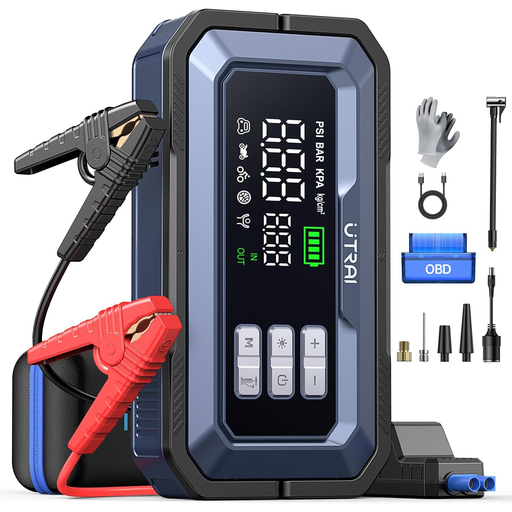
Why it's a match: For the owner of heavy equipment, large diesel vehicles (up to 14L), or professionals who demand absolute reliability. This isn't a gadget; it's a serious piece of equipment.
The 7000A peak current isn't an empty marketing claim; it's designed for starting diesel engines up to 14 litres. The rugged housing and built-in temperature sensors prevent the compressor from overheating.
Extreme starting power for large diesel engines. Extra features like a 2000-lumen work light and an OBD2 fault code reader make this a complete diagnostic tool for emergencies.
We have compiled a complete, up-to-date list of products that fully meet these strict selection criteria and safety regulations.
It is advisable to fully charge the jump starter every 3 to 6 months, even if you don't use it. Lithium batteries slowly lose their charge over time. Keeping it charged ensures it's ready for an emergency and extends the battery's lifespan.
No, not every jump starter is powerful enough for a diesel engine. Diesel engines have a higher compression ratio and require significantly more starting current than petrol engines. Check the manufacturer's specifications and choose a model with a high starting and peak current (e.g., 3000A or more) that is specifically recommended for diesel vehicles.
Modern jump starters are equipped with multiple safety features, such as protection against short circuits, reverse polarity, overheating, and overcharging. As long as you follow the manufacturer's instructions, the risk of damage to your car's electronics is minimal. These safety measures make them safe to use, even for those who are not technically inclined.
