
Vandaag of morgen in huis

Kwaliteit gegarandeerd

Welkomstaanbiedingen ontgrendelen: GRATIS bezorging | Tot 80% korting | Gratis 30 dagen JoyPlus-proefperiode
Download de app
Being stranded with a dead battery or a flat tire is a scenario every driver wants to avoid. A jump starter with a compressor promises the perfect all-in-one solution: independence from roadside assistance in a compact device. But not every jump starter with an air compressor lives up to that promise. Many models are overloaded with marketing claims that mean little in practice. Before you invest in peace of mind, it's crucial to recognise the common pitfalls.
To make a smart choice, it's essential to look past the marketing and focus on the specifications that truly matter. These are the three most important factors for a reliable jump starter with a compressor.
The starting power determines whether you can start your car at all. Don't just look at the peak power; also consider its suitability for your engine type.
A car jump starter with tire inflator is only useful if the pump does its job. Pay attention to two values here.
Modern jump starters are often multifunctional. A good power bank for your car and laptop is a valuable addition, but safety comes first.
Based on these criteria, we have selected a number of models that suit different user profiles.
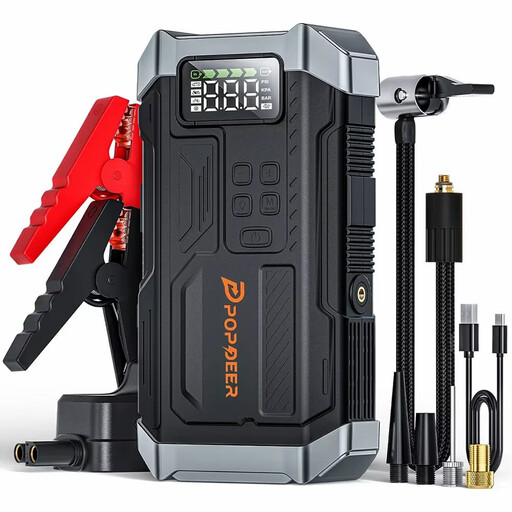
Why This Fits Their Persona: For the owner of a large SUV, van, or RV who wants to take zero risks. This model is focused on delivering maximum power for the most demanding situations.
The claimed 5000A peak power is backed by specifications for large engines (up to 10L petrol/8L diesel). The 150 PSI compressor with an airflow of 35L/min is genuinely functional for car tires.
Enormous starting power for virtually any consumer vehicle. The fast compressor and robust build make it a reliable partner for adventurers.
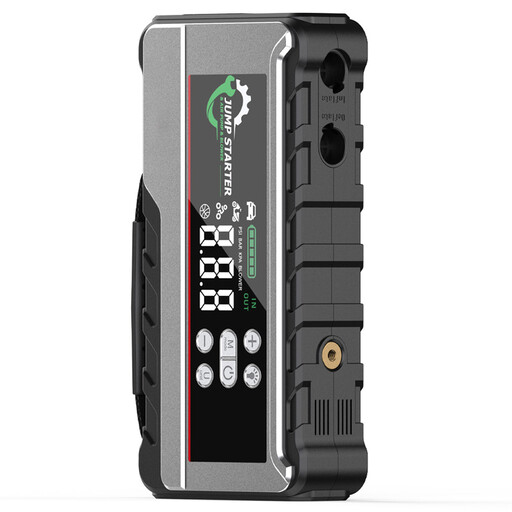
Why This Fits Their Persona: Ideal for the commuter or self-employed professional who is always on the go. This device combines a powerful jump-start function with a fully-featured power bank that can also charge a laptop.
The PD65W fast-charging feature is a true 'Power Delivery' port, not a slow USB output. The large 24800mAh battery has the capacity to deliver on these multifunctional promises without being instantly depleted.
Start your car, inflate your tire, and charge your laptop at full speed with a single device. The combination of 3000A starting power and PD65W charging is rare.
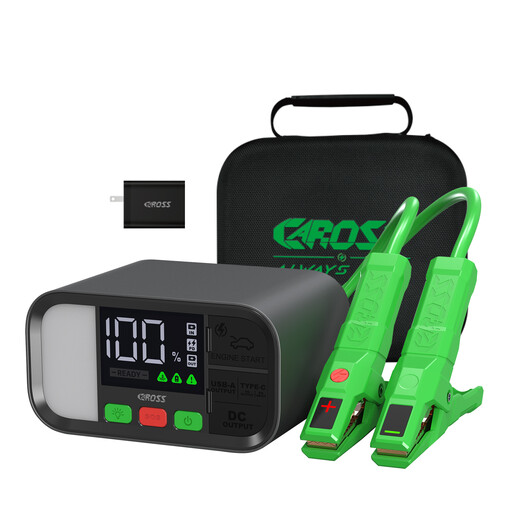
Why This Fits Their Persona: For the driver who primarily seeks reliability and simplicity for jump-starting and doesn't want to worry about connecting the clamps incorrectly. Note: this model does not have a built-in compressor.
This model avoids the pitfall of an underperforming 'extra' by focusing on one job: providing safe and simple jump-starting. It makes no false promises about features it doesn't have.
According to the manufacturer, the Smart Connect technology with non-polarized clamps makes incorrect connection impossible. This offers maximum peace of mind for users with no technical expertise.
Many jump starters need a powerful charger to recharge quickly. We've compiled a list of PD chargers that pair perfectly with these devices and your other electronics.
This depends on the battery's self-discharge rate. As a general rule, it's wise to check the charge every 3 to 6 months and top it up. Also, always fully recharge the device after each use, whether it was for jump-starting or charging your phone.
No, that is not recommended. Diesel engines have a higher compression ratio and require significantly more starting current than petrol engines, especially in cold weather. Always check the manufacturer's specifications to ensure the jump starter is explicitly suitable for the engine size (in litres) of your diesel vehicle.
Most high-quality jump starters are designed to operate within a wide temperature range, for example, from -20°C to +60°C (-4°F to +140°F). So, it is generally safe to store them in the car. However, always check the specifications of the specific model. It is advisable to keep the device in its supplied storage case, in a dry place, and out of direct sunlight.
