
Vandaag of morgen in huis

Kwaliteit gegarandeerd

Welkomstaanbiedingen ontgrendelen: GRATIS bezorging | Tot 80% korting | Gratis 30 dagen JoyPlus-proefperiode
Download de app
You get in your car, turn the key, and... nothing. A dead battery is one of the most common causes of a car breakdown. Waiting for roadside assistance can take hours, especially in a remote location or during the morning rush hour. Having your own jump starter with compressor is the perfect solution: it gets you back on the road quickly and can even inflate a soft tire.
But the market for these devices is flooded with marketing promises and specifications that confuse more than they clarify. As a Joybuy Product Recommendation Officer, I'm here to help you make the right choice by highlighting the most common pitfalls, ensuring you invest in a device that actually delivers on its promises.
Before you purchase a portable jump starter, it's crucial to know what to look for. Many models look impressive on paper but fall short in practice.
battery booster is useless for your car, especially for a jump starter for diesel engines.car battery starter operates with high currents. Inexpensive models often lack essential safety features to protect against short circuits, overheating, or reverse polarity (connecting the clamps incorrectly). A simple mistake could damage not only the jump starter but also your car's sensitive electronics.To avoid a bad purchase, focus on a few key specifications. These will determine if a jump starter is right for your situation.
The required power depends directly on your engine. A large diesel engine needs significantly more power to start than a small gasoline engine.
A functional compressor is a valuable addition, not a gadget.
A power bank with jumper cables is more than just a jump starter.
Based on these criteria, we have selected a number of products that suit different user profiles.
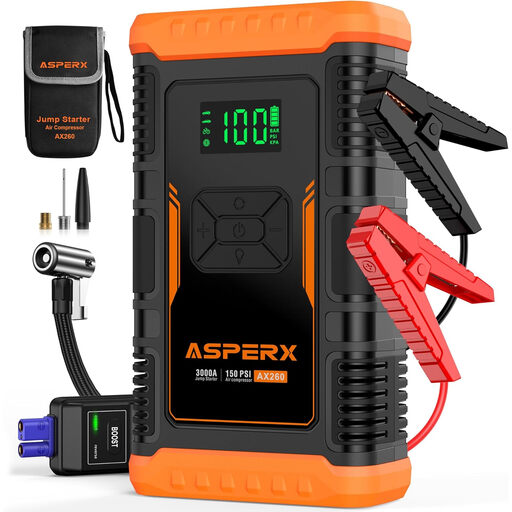
Why This Fits Their Persona: Perfect for the owner of an SUV, RV, or larger family car who needs a reliable all-in-one solution. The combination of 3000A starting power and a 150 PSI compressor covers both starting issues and a flat tire during a road trip.
The 3000A peak is specifically aimed at large engines (up to 10L gas/8L diesel), providing a realistic indication of its power. The compressor has a clear 150 PSI specification, making it functional for car tires, not just bicycle tires.
Multifunctional (starting, inflating, charging) in a relatively compact design. The smart clamps offer 10 levels of protection for safe use.
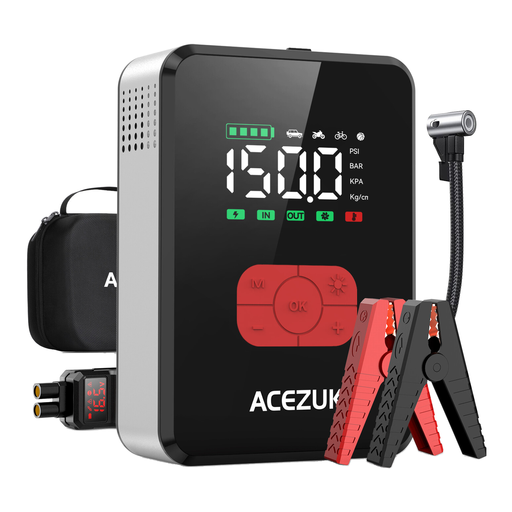
Why This Fits Their Persona: Ideal for drivers of heavy-duty vans, agricultural vehicles, or American pickup trucks with large diesel engines. When maximum starting power is the absolute priority, this model offers enormous capacity for the most demanding jobs.
With a claimed peak power of 7000A and suitability for 12L diesel engines, this model targets the toughest jobs where standard boosters fall short. The 150 PSI compressor is equally functional and not just an afterthought.
Extremely high peak power for the most demanding 12V vehicles. The large 3.3-inch screen provides clear information about status and tire pressure.
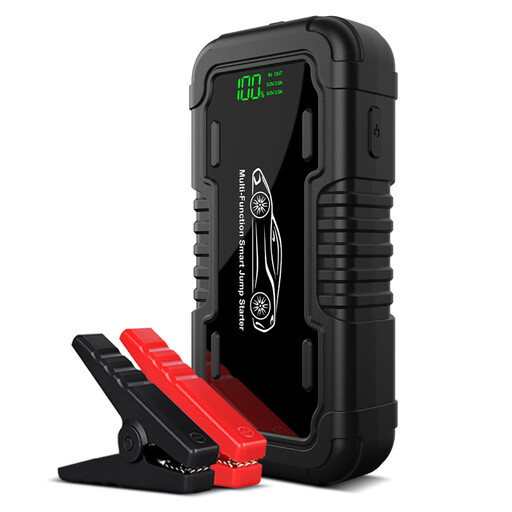
Why This Fits Their Persona: For the driver of a city car, classic car, or motorcycle who primarily wants a compact and reliable `battery booster` without the extra bulk of a compressor. Easy to store in the glove compartment or a saddlebag.
This model focuses purely on the core function: starting. It avoids the pitfall of an underpowered compressor by not having one. The 2000A peak is more than sufficient for most standard gasoline and smaller diesel engines.
Compact and lightweight, with a clear focus on starting power. The LCD screen provides instant insight into the remaining battery capacity.
We have compiled a complete, up-to-date list of products that meet these strict selection criteria and safety regulations.
Even if you don't use it, it's recommended to fully charge the jumpstarter every 3 to 6 months. This keeps the internal battery in good condition and ensures it's ready for use when you need it.
Yes, most models are designed to be stored in a car. However, avoid extreme temperatures. In the summer, don't leave it in direct sunlight on the dashboard, and during severe frost (-10°C/14°F or colder), consider bringing it indoors to protect the battery's lifespan.
Not necessarily. The power must match your vehicle. A car battery starter with far too much power for your small city car isn't harmful, but you're paying for power you'll never use. Conversely, a starter that's too weak for a heavy-duty diesel engine is completely useless. Choose a model that explicitly lists your car's engine size (gasoline or diesel) as compatible.
