
Vandaag of morgen in huis

Kwaliteit gegarandeerd

Welkomstaanbiedingen ontgrendelen: GRATIS bezorging | Tot 80% korting | Gratis 30 dagen JoyPlus-proefperiode
Download de app
A dead battery or a flat tire always comes unexpectedly. Waiting for roadside assistance is an option, but self-reliance provides greater peace of mind. A jump starter with a compressor seems like the perfect all-in-one solution. However, many models on the market promise more than they can deliver. As a Product Recommendation Officer at Joybuy, I'll help you see through the marketing jargon and choose a model that won't let you down.
Before you invest in a car jump starter with air pump, it's important to recognise the most common pitfalls. Many buyers fall for them, resulting in a useless device and wasted money.
portable tire inflator and starter that is extremely slow, overheats quickly, or lacks an auto-stop feature. This leaves you waiting for minutes on end and risks over-inflating your tire.To avoid a bad purchase, focus on the specifications that truly matter. These are the objective criteria that determine whether a jump starter with compressor is right for your situation.
Look beyond the peak amps. The most important factor is compatibility with your engine type. A 12V battery booster must have enough power for your car.
The maximum pressure (PSI or Bar) is important, but it doesn't tell the whole story. A car tire typically only needs 30-40 PSI (about 2.5 Bar). More important are:
A good jump starter is also a reliable power bank with jumper cables.
Not everyone needs the same thing. That's why we've made a selection based on different user profiles, grounded in objective specifications.
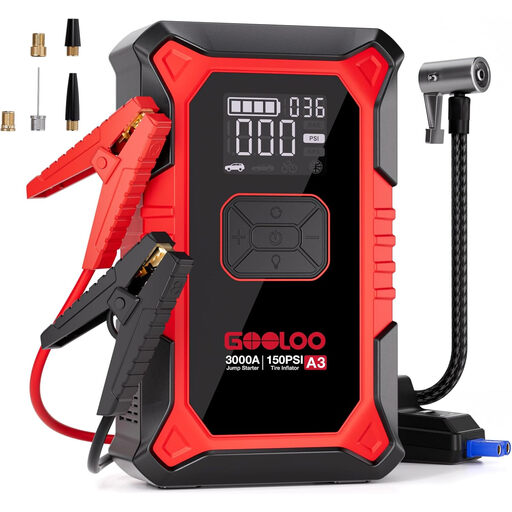
Why This Fits Their Persona: Ideal for those seeking a reliable all-in-one solution for a standard gasoline or mid-size diesel car without paying a premium. A solid choice for daily commutes and general emergencies.
The specifications are clear: suitable for gasoline engines up to 9.0L and diesels up to 6.5L. The compressor has a clear display and an auto-stop function, which avoids the pitfall of an unusable pump.
Offers an excellent balance of starting power (3000A peak), a 150 PSI compressor, and a functional power bank. The "BOOST" button for very dead batteries is a practical addition.
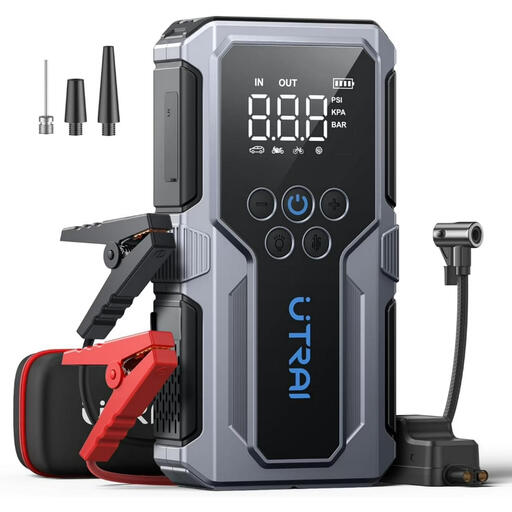
Why This Fits Their Persona: Perfect for the adventurous family or camper. This device can start the family SUV, inflate bike tires at the campsite, and charge phones and tablets simultaneously.
The 15000mAh capacity is realistic for a power bank. The inclusion of both USB and USB-C fast-charging ports (QC) tackles the pitfall of a slow, unusable power bank.
The bright 2-inch LED screen displays both battery status and tire pressure, which enhances user-friendliness. The 10 built-in safety features provide extra peace of mind.

Why This Fits Their Persona: For the owner of a large diesel SUV, van, RV, or boat. When starting power is the absolute priority and you don't want to take any chances, this is the most reliable choice.
This model tackles the "peak current" pitfall head-on by combining a very high power output of 4500A with clear compatibility for large engines (up to 8.0L diesel). This isn't an empty promise, but a specification built for heavy-duty use.
Its undisputed starting power is the biggest advantage. Additionally, its "honeycomb" cooling technology, according to the manufacturer, ensures better performance during repeated or heavy use, which counteracts overheating.
We have compiled a complete, up-to-date list of products that fully meet these strict selection criteria and safety regulations.
Even when not in use, the battery slowly loses its charge. It's good practice to fully charge the jump starter every 3 to 6 months. This ensures it's ready to go when you need it. Preferably, do not store it in the car during extreme heat or freezing cold, as this can shorten the battery's lifespan.
No, this is a crucial point. Diesel engines have a higher compression ratio and require significantly more power to start than gasoline engines. Always check that the manufacturer explicitly recommends the jump starter for diesel engines and note the maximum supported engine displacement (in liters). A booster that is too weak will not be able to start a diesel engine.
Modern jump starters are equipped with multiple safety mechanisms. Features like reverse polarity protection (connecting the clamps incorrectly), short-circuit protection, overheating protection, and overcharge protection are standard on quality models. These systems prevent damage to both the jump starter and your car's sensitive electronics, such as the ECU. Always verify that the model you are considering has these built-in safety features.
