
Vandaag of morgen in huis

Kwaliteit gegarandeerd

Welkomstaanbiedingen ontgrendelen: GRATIS bezorging | Tot 80% korting | Gratis 30 dagen JoyPlus-proefperiode
Download de app
A dead battery or a flat tire always happens unexpectedly and at the worst possible moment. A jump starter with a compressor might seem like the ideal all-in-one solution for your trunk. The reality, however, is that many devices on the market don't deliver on their promises, leaving you with a useless piece of plastic when you need it most.
Before you make a purchase, it's crucial to recognize the most common pitfalls. This will help you avoid a bad buy and invest in a device that truly offers reliability.
portable tire inflator and jump starter whose compressor overheats after a minute or can't handle the pressure to fully inflate a car tire. Without clear specifications on air pressure (PSI/Bar) and airflow (L/min), you might be buying a glorified balloon pump.power bank with jumper cables and compressor holds its charge.A good jump starter with a compressor is an investment in peace of mind. Check these three specifications before making a choice to ensure you're getting a dependable tool.
The starting power determines whether you can get your engine running again. The wrong choice means you'll be fumbling with jumper cables anyway.
jump starter for large engines. A 3000A car jump starter is a realistic and safe choice in this category. Always check the manufacturer's specifications for supported engine displacement.A functional compressor saves you a trip to the gas station for a simple tire check.
The 12V jump starter with compressor must be reliable and safe to use.
emergency car starter has built-in protection against short circuits, reverse polarity, overheating, and overcharging. Smart jumper cables with indicator lights are a clear plus.Below are a few choices tailored to different user profiles, based on their objective specifications.
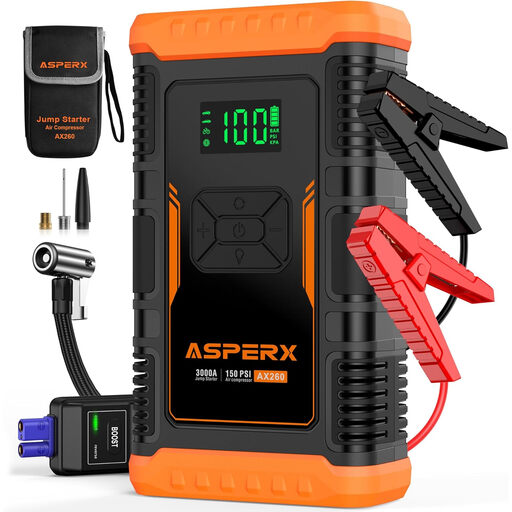
Why This Fits Their Persona: Ideal for drivers of RVs, vans, or large SUVs. This device combines a powerful jump-starting function with a full-fledged compressor, making it a complete emergency solution for the road.
The specifications (3000A peak, suitable for 10L petrol/8L diesel) are aimed at heavy-duty engines. The compressor, with 150 PSI and 35 L/min airflow, is designed for real-world use, not just for topping off.
Combines a powerful jump starter with a fast tire inflator. The automatic shut-off function and clear LCD screen make it easy and efficient to use.
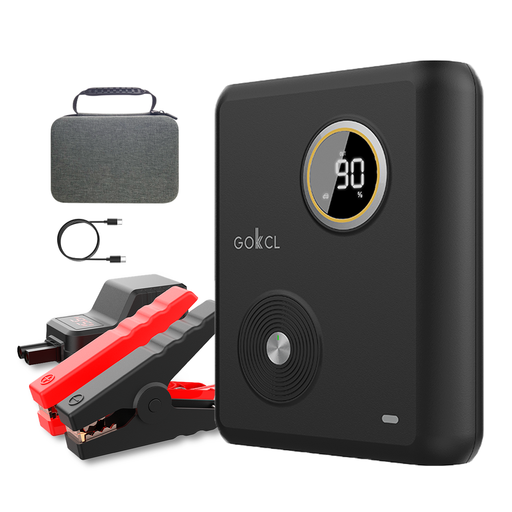
Why This Fits Their Persona: For those who prioritize reliability and durability above all else. This model uses sodium-ion technology, resulting in an extremely long standby time and better performance in heat and cold. Note: This model does not have a built-in compressor.
Directly tackles the 'always dead' trap. According to the manufacturer, this model has a standby time of up to 5 years, minimizing the risk of a dead battery from self-discharge. You can leave it in your car with peace of mind.
The sodium-ion battery is more stable in extreme temperatures (-40°C to 80°C) and has a much longer lifespan (over 6000 charge cycles, according to the manufacturer) than traditional lithium models.
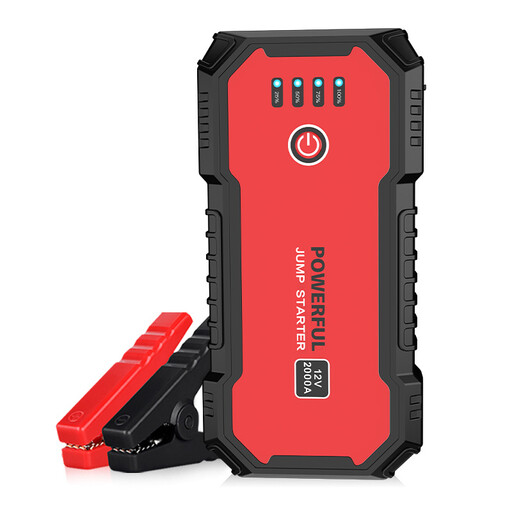
Why This Fits Their Persona: A compact and affordable solution for drivers of standard passenger cars. Powerful enough for most engines and small enough for the glove compartment. Note: This model does not have a built-in compressor.
This model doesn't pretend to be a jack-of-all-trades. It focuses on one job: reliably starting your car. The 1500A peak current is a realistic value for the vehicles it's intended for, without making empty promises.
A good balance between price, size, and performance. The addition of a QC3.0 18W fast-charging port also makes it a handy and quick power bank for your smartphone or tablet.
We have compiled a complete, up-to-date list of products that fully meet these strict selection criteria and safety regulations.
This depends on the battery's self-discharge rate. For most lithium-ion models, it is recommended to check and top them up every 3 to 6 months. Models with very low self-discharge, such as those with sodium-ion batteries, may only need to be charged once every few years. Always consult the manufacturer's manual for specific advice.
No, for a standard passenger car like a Volkswagen Golf, a 3000A car jump starter is overkill. A model with a peak current between 1000A and 1500A is more than sufficient and is often more compact and affordable. The more powerful models are really intended for heavy-duty diesel engines in vans, RVs, or boats.
Yes, most jump starters with a compressor come with various attachments (valve adapters). With these, you can typically inflate bicycle tires, balls, and air mattresses without any problem. Check at the time of purchase to ensure the necessary adapters are included.
