
Vandaag of morgen in huis

Kwaliteit gegarandeerd

Welkomstaanbiedingen ontgrendelen: GRATIS bezorging | Tot 80% korting | Gratis 30 dagen JoyPlus-proefperiode
Download de app
A dead battery or a flat tire always happens unexpectedly. Waiting for roadside assistance is often the only option. A jump starter with a compressor seems like the perfect all-in-one solution to get you back on the road quickly. However, many models on the market overpromise and underdeliver. Before you invest in this convenient tool, it's crucial to know what to look for to avoid making a bad buy.
As a Product Recommendation Officer at Joybuy, I see a lot of products come and go. I'm here to help you see through the marketing jargon and focus on what really matters. Here are the most common pitfalls and how to avoid them.
To ensure you buy a device that won't let you down, focus on these three objective specifications.
The starting power, expressed in Amperes (A), determines whether the jump starter can start your car.
A good rule of thumb for a 12V jump starter:
The effectiveness of the built-in tire inflator depends on the maximum pressure it can deliver.
The capacity of the internal battery, expressed in milliampere-hours (mAh), determines its endurance.
Below are some popular choices selected based on their specifications and functionality, tailored to different user profiles.
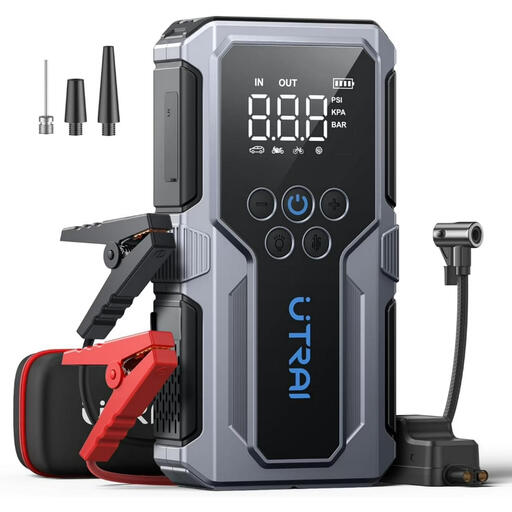
Why This Fits Their Persona: A reliable choice for the daily driver with an average family car or hatchback. It offers a good balance between starting power for most gasoline and diesel engines and a capable compressor for emergencies.
The 150 PSI compressor is powerful enough for a car tire, unlike weaker models. The 3000A peak amperage is a realistic specification for a wide range of 12V vehicles.
The clear LCD screen displays both the battery status and real-time tire pressure, which removes the guesswork in a stressful situation.
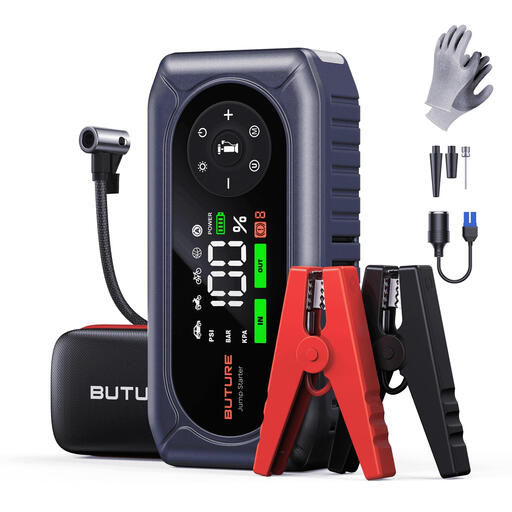
Why This Fits Their Persona: With a peak amperage of 4500A, this model is designed for larger engines (up to 9.0L gasoline / 8.0L diesel). Ideal for owners of an SUV, van, or an older diesel car that requires more power to start.
This model actually delivers high power, unlike devices with exaggerated claims but weak performance. The 150 PSI compressor is robust and suitable for the larger tires of an SUV.
High peak amperage for demanding vehicles and advanced cooling technology that the manufacturer claims reduces heat generation by 30% during use.
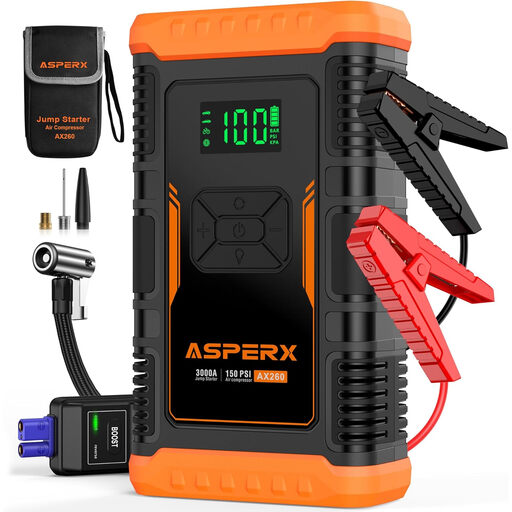
Why This Fits Their Persona: Offers the essential 2-in-1 functionality (jump starter and compressor) at an accessible price point. Perfect for those who want to be prepared for emergencies without making a large investment.
Focuses on the core functions without unnecessary extras. The 3000A peak amperage and 150 PSI compressor are solid specifications that offer real functionality instead of just marketing hype.
A complete package including a storage case and various nozzles. This offers great value and keeps everything neatly organized in the car.
We have compiled a complete, up-to-date list of products that meet these strict selection criteria and safety regulations.
Most manufacturers recommend fully charging the device every 3 to 6 months, even if you don't use it. This keeps the internal lithium battery in good condition and ensures it's ready for use when you need it. Consult the manual for your specific model for the exact advice.
Yes, most models are designed to be stored in the car. Check the specified operating temperature range, which is often between -20°C and 60°C (-4°F and 140°F). Extreme heat or cold can affect the battery's performance, so it's wise to keep the device within this range.
Modern jump starters are equipped with multiple safety systems. Features like spark-proof technology, reverse polarity protection, and over-current protection are standard on quality models. These systems prevent damage to the car's computer (ECU) and other sensitive electronics. Always check that these safety features are present.
