
Vandaag of morgen in huis

Kwaliteit gegarandeerd

Welkomstaanbiedingen ontgrendelen: GRATIS bezorging | Tot 80% korting | Gratis 30 dagen JoyPlus-proefperiode
Download de app
A dead battery or a flat tyre always happens unexpectedly and at the worst possible moment. A jump starter with compressor seems like the perfect all-in-one solution for your trunk. But the market is flooded with devices that overpromise and underdeliver. Before you invest in this piece of mind, it's crucial to know what to look for. Many models look impressive on paper but will leave you stranded when you actually need them.
As a Joybuy Product Recommendation Officer, I'm here to help you see through the marketing hype. Here are the three most common pitfalls and how to avoid them.
Not all jump starters with an air compressor are created equal. Manufacturers often use impressive numbers to sell their products, but these can be misleading.
To avoid a bad purchase, focus on the specifications that truly matter. These objective criteria determine whether a device is reliable.
Don't be dazzled by peak current. The most important factor is compatibility with your engine. A reputable manufacturer will clearly state the type and size of engine the starter is suitable for.
For the built-in portable 12v tyre inflator, two values are crucial:
A good jump starter is more than just a battery. Pay attention to built-in safety features. A power bank with jumper cables must offer protection against short circuits, reverse polarity, overheating, and overcharging. This not only protects the device itself but also your car's sensitive electronics. Also, check the recommended operating temperature range to ensure the device will function on a cold winter morning.
We've compared several popular choices, matching them to different user profiles. This will help you find a model that fits your specific needs without paying for features you won't use.
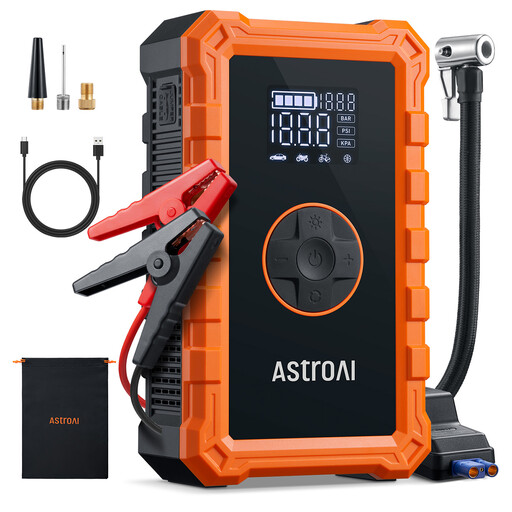
Why This Fits Their Persona: Ideal for the daily driver seeking a compact, reliable all-in-one solution. It fits easily in the glove compartment and provides enough power for most passenger cars, plus a handy compressor for emergencies.
This model avoids the 'all-in-one compromise' pitfall by offering a balanced performance. Its specifications (1500A, 150 PSI) are solid for both jump-starting and inflating, and the large, clear screen makes operation simple and error-free.
The 2.4" digital screen displays real-time status and tyre pressure, eliminating guesswork. The compressor's automatic shut-off feature is very practical.
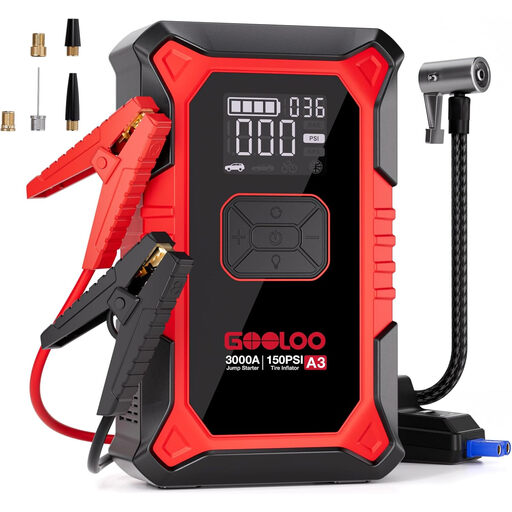
Why This Fits Their Persona: For those who drive a large SUV, van, or diesel vehicle. This model is built for heavy-duty tasks and provides the confidence that you can start even a large, cold engine.
This model bypasses the 'peak current myth' by specifying clear and realistic engine compatibility (up to 9.0L Petrol/6.5L Diesel). The GOOLOO A3 actually delivers the power needed for larger vehicles.
The "BOOST" button for force-starting completely dead batteries is a major advantage. At 35L/min, the compressor is also faster than average.
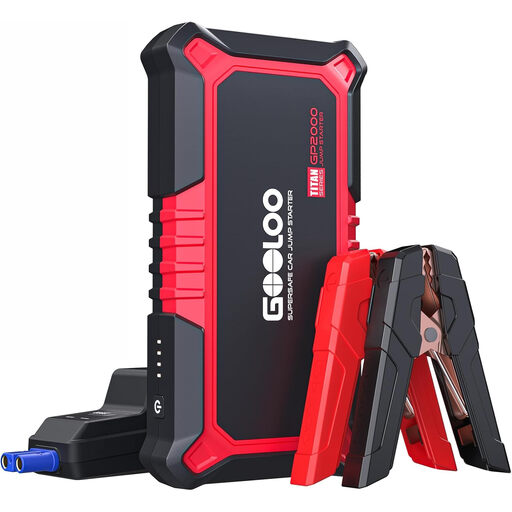
Why This Fits Their Persona: For those who primarily need a powerful, reliable jump starter and don't require a compressor. This model focuses on the core task: starting your car. An excellent choice for anyone who already owns a separate tyre inflator.
By omitting the compressor, this model focuses entirely on delivering starting power. It avoids the pitfall of being a mediocre all-in-one device and excels at its primary function, boasting a very long standby time.
Very powerful for its size and price (2000A, up to 8.0L Petrol). The manufacturer claims a standby time of 24 months, which minimises the 'dead battery' pitfall.
We have compiled a complete, real-time list of products that fully satisfy these strict selection criteria and UK safety regulations.
Most manufacturers recommend fully charging the jump starter every 3 to 6 months, even if you don't use it. This ensures the internal lithium battery remains in good condition and is always ready for use. Some models have a longer standby time, but a regular check is always wise.
Yes, most modern jump starters are designed to be stored in a car. However, pay attention to the operating temperature range specified by the manufacturer. Extreme cold (e.g., below -20°C / -4°F) can temporarily reduce the lithium battery's performance. It's fine to store it in the car, but if a very cold night is forecast, it doesn't hurt to bring it indoors.
Yes, a high-quality jump starter with the proper safety circuits is safe for modern cars. Features like reverse polarity, short-circuit, and over-voltage protection prevent damage to the ECU (Engine Control Unit) and other sensitive electronics. Always use a model that comes with "smart" jumper cables offering these safeguards.
