
Vandaag of morgen in huis

Kwaliteit gegarandeerd

Welkomstaanbiedingen ontgrendelen: GRATIS bezorging | Tot 80% korting | Gratis 30 dagen JoyPlus-proefperiode
Download de app
A dead battery or a flat tire always happens unexpectedly and at the worst possible moment. A jump starter with a compressor seems like the perfect solution: one device for two common problems. But the market is flooded with models that promise impressive specs, which often disappoint in practice. Many drivers fall for marketing traps and end up with a device that lets them down when they need it most.
Before you invest in a portable jump starter, it's crucial to recognise the common pitfalls:
car tire pump that looks fine on paper but struggles to inflate a car tire to the correct pressure in practice. A low airflow rate (L/min) means you'll be waiting a long time, all while draining the booster's battery.battery booster can be too depleted to work after just a few months in your trunk, precisely when you need it.To choose a reliable model, focus on the specifications that truly matter. Don't get distracted by marketing jargon.
The peak current (Amps) is the maximum current the jump starter can deliver. More important, however, is the starting current—the power needed to actually crank the engine. A rule of thumb:
12V jump starter is the standard for passenger cars.Always check the manufacturer's specifications for the recommended engine displacement (in liters).
A good compressor will save you time and frustration. Pay attention to two values:
A jump starter with a power bank is convenient, but its usefulness depends on the details.
We've selected several popular models and matched them to specific user profiles, so you can make a choice that fits your situation.
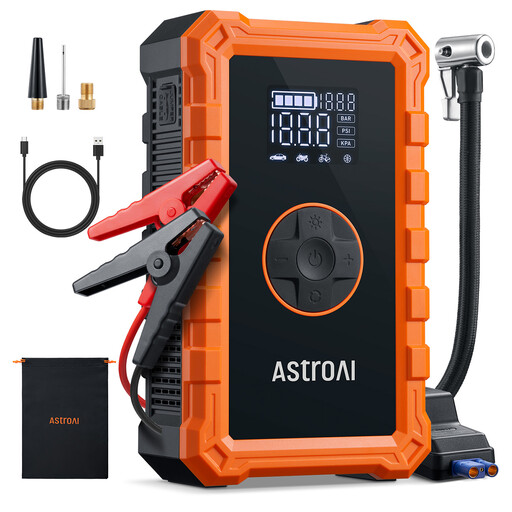
Why This Fits Their Persona: Ideal for drivers of standard gasoline or smaller diesel cars. This model is compact, user-friendly, and powerful enough for most everyday situations, without unnecessary and complex features.
This model focuses on core functions without exaggerating its Amperage. The compressor, at 25 L/min, is functional for emergencies, and the auto-shutoff prevents over-inflation.
The large, clear 2.4-inch screen and the automatic stop feature on the compressor make it extremely easy to use, even for those with no technical expertise.

Why This Fits Their Persona: This `car jump starter` has the high peak current needed to reliably start larger diesel engines (up to 10.0L, according to the manufacturer), even in colder weather. Perfect for drivers of SUVs, vans, or heavier vehicles.
While other models just throw numbers around, this one combines a high peak current with an above-average, powerful compressor (35 L/min). It delivers the power it promises for tougher jobs.
The combination of a very high peak current and a fast compressor in a single device. The large 3.4-inch LCD screen provides clear feedback on status and any potential errors.
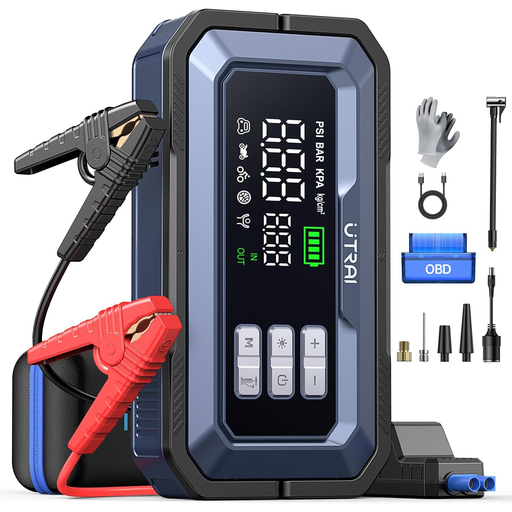
Why This Fits Their Persona: This is more than a jump starter; it's a mobile power station. The 160W DC output can power a cooler or other camping equipment. The extremely bright, rotating work light is ideal for repairs in the dark or as a campsite light.
This is an "all-in-one" device where the extra features are genuinely powerful and practical, rather than cheap gimmicks. The OBD2 adapter is a unique bonus for on-the-go self-diagnostics.
The 160W DC output (cigarette lighter socket) and the very powerful (2000 lumen) rotating work light make this device unique for outdoor and camping use.
We have compiled a complete, up-to-date list of products that meet these strict selection criteria and safety regulations.
Most manufacturers recommend fully charging the jump starter every 2 to 3 months, even if you don't use it. This helps keep the battery in good condition and ensures it's ready for use when you need it. The self-discharge rate varies by model and battery type.
Not necessarily. An extremely high peak current is unnecessary for a small city car and often makes the device needlessly large and expensive. It's more important to choose a model that matches your car's engine. A booster that's too weak won't start your car, but one that's far too powerful offers no extra benefit for a small engine.
Yes, most modern jump starters are designed to operate within a wide temperature range, often from -20°C to 60°C (-4°F to 140°F). However, extreme cold can temporarily reduce the performance of the lithium battery. It's best to store it in a place where temperatures aren't too extreme, but keeping it in the trunk or glove compartment is generally not a problem. Always check the manufacturer's specifications.
