
Vandaag of morgen in huis

Kwaliteit gegarandeerd

Welkomstaanbiedingen ontgrendelen: GRATIS bezorging | Tot 80% korting | Gratis 30 dagen JoyPlus-proefperiode
Download de app
A dead battery or a flat tire always happens unexpectedly and at the worst possible moment. A reliable jump starter with compressor in your trunk can be the difference between getting back on the road quickly and waiting for roadside assistance. But the market is flooded with models promising impressive specifications. How do you separate the good from the bad and avoid a purchase you'll regret?
As a Joybuy Product Recommendation Officer, I'll help you cut through the marketing hype. We'll focus on the specifications that truly matter, so you can choose a device that works when you need it most.
Before we get to the recommendations, let's first discuss the most common pitfalls. Many devices look good on paper but fail in practice due to one of these three issues.
To avoid these pitfalls, check the following three specifications before you make a purchase.
Look beyond the advertised peak current. A reputable manufacturer will also state the type and size of engine the car jump starter with compressor is suitable for (e.g., "for all gasoline engines and diesel engines up to 10.0L"). This gives a much better indication of its actual performance. For larger vehicles like SUVs, vans, or cars with a diesel engine, higher starting power is essential.
A good portable 12v compressor is defined by two values:
The capacity of the internal battery, expressed in milliampere-hours (mAh), determines how many times you can start a car or how long you can use the compressor. A higher capacity also means the device can function longer as a car power bank to charge your phone or tablet. Also, look for the presence of a clear LCD screen for straightforward information and a built-in LED light with an SOS function for emergencies in the dark.
Based on objective specifications and functionality, we have selected a number of models that suit different user profiles.
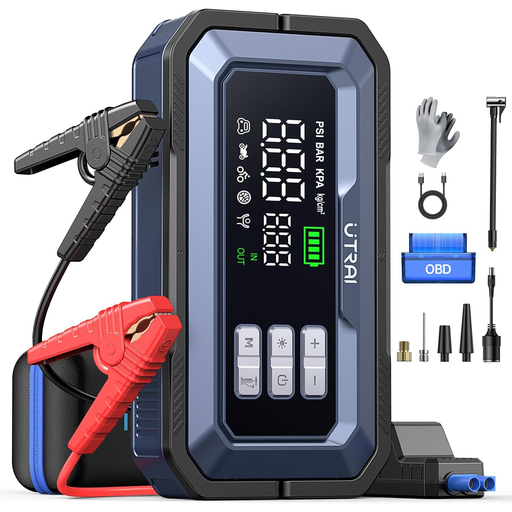
Why This Fits Their Persona: Ideal for owners of vans, RVs, or heavy-duty diesel vehicles. This model is designed for heavy-duty work, with power that the manufacturer claims is suitable for diesel engines up to 14 liters. The extra features like an OBD2 fault code reader and a powerful 2000 lumen work light make it a complete toolkit for the road.
This model bypasses the 'weak compressor' pitfall with a 150 PSI pump and overheat protection. The 10-fold safety protection and V0 flame-retardant housing directly address safety concerns.
Extreme starting power for large engines. Multifunctional with a 160W DC output and OBD2 diagnostic adapter.
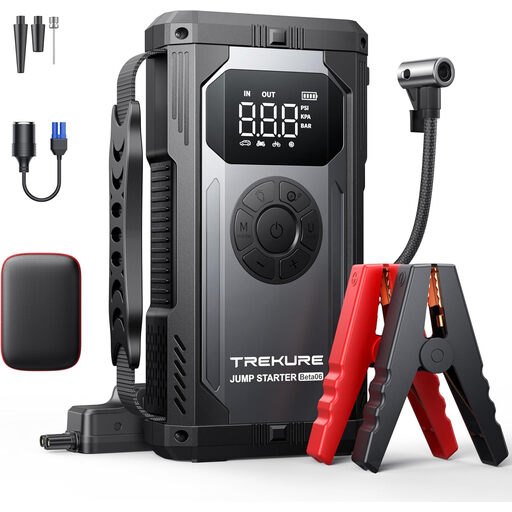
Why This Fits Their Persona: For the driver of a mid-size to large passenger car (gasoline or diesel) who is looking for a powerful and reliable solution. This device offers an excellent balance between starting power and a fast tire inflator, making it a solid choice for most on-road situations.
It tackles the 'underpowered compressor' pitfall with a specified speed of 35 L/min and 150 PSI. The 'force start' technology for completely dead batteries shows that it goes beyond just a high peak current claim.
Efficient and fast tire inflator. Powerful enough for most vehicles, including 10L diesel engines.
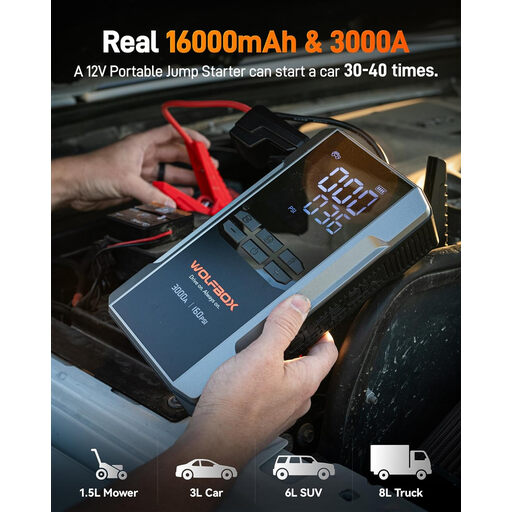
Why This Fits Their Persona: Perfect for the average driver with a gasoline or smaller diesel car who wants a compact, easy-to-store device. The power is more than sufficient for most everyday vehicles, and the 65W fast-charging feature is a practical advantage for those who also want to quickly charge their devices.
This model focuses on realistic performance rather than exaggerated claims. The 3000A peak current is paired with a clear specification (8L gasoline, 6L diesel), which inspires confidence. The 160 PSI compressor is powerful for its size.
Compact design, ideal for storage in the car. Supports 65W fast charging, making the power bank function extra useful.
We have compiled a complete, up-to-date list of products that meet these strict selection criteria and safety regulations.
It is generally recommended to fully charge the jump starter every 3 to 6 months, even if you don't use it. Lithium batteries slowly lose their charge over time. Regular charging ensures the battery remains in good condition and the device is ready for use when you need it. Always consult the manufacturer's manual for specific recommendations.
Yes, these devices are designed to be stored in a vehicle. However, it is important to avoid extreme temperatures. Do not leave the device on the dashboard in direct sunlight during the summer, and try to protect it from extreme cold. Most manufacturers specify an operating temperature (e.g., -20°C to 60°C or -4°F to 140°F). The device will function optimally within this range, and the battery's lifespan will be protected.
Not necessarily. A higher peak current is primarily needed for larger engines, such as those in a diesel jump starter model. For a standard gasoline car, a model with a moderate peak current (e.g., 1500-3000A) is often sufficient, more compact, and more affordable. It is more important to choose a model that matches your vehicle and has reliable, verified specifications and safety features.
