
Vandaag of morgen in huis

Kwaliteit gegarandeerd

Welkomstaanbiedingen ontgrendelen: GRATIS bezorging | Tot 80% korting | Gratis 30 dagen JoyPlus-proefperiode
Download de app
A dead battery on a cold morning or a flat tire on a deserted road. These are situations no driver wants to face. A jump starter with an air compressor seems like the perfect all-in-one solution. But the market is flooded with models that promise the world. Unfortunately, many of these promises lead to disappointment and wasted money.
As a Joybuy Product Recommendation Officer, I see where things go wrong every day. Before you make a purchase, it's crucial to recognize the three most common pitfalls manufacturers use to lure you in.
jump starter with air compressor claims to reach a pressure of 150 PSI. However, this maximum pressure says nothing about its speed. The airflow, measured in liters per minute (L/min), determines how quickly your tire inflates. A model with a low L/min rating will take forever and often overheats before the tire is properly inflated.portable jump starter is that it's ready to go when you need it. Cheaper models often suffer from a high self-discharge rate. After a few months in your trunk, the battery is dead, leaving you with a useless device when you need it most.To avoid a bad purchase, you need to look past the marketing claims. Focus on the specifications that truly matter for a reliable multifunctional car emergency tool.
Don't be dazzled by peak power. Look for specifications that match your vehicle.
A good car battery booster includes safety features like protection against reverse polarity, short circuits, and overheating. This prevents damage to both the booster and your car's electronics.
The effectiveness of the built-in 12V tire inflator depends on two values:
The battery's capacity, expressed in milliampere-hours (mAh), determines how many times you can start a car or charge your phone. A capacity of 16,000 mAh or more is a good starting point. Also, pay attention to the charging options. A car power bank with USB-C and fast-charging technology (like Power Delivery) is more versatile and recharges faster. A bright LED light with an SOS function is a standard but indispensable feature for emergencies in the dark.
Based on these objective criteria, we have selected several models that suit different user profiles.
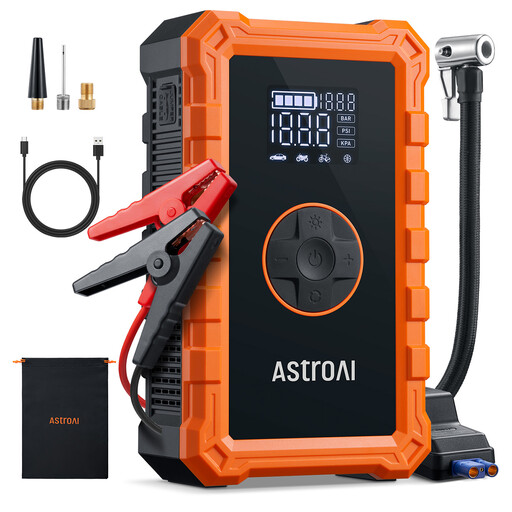
Why This Fits Their Persona: This compact model is ideal for commuters with a standard gasoline or small diesel car. It's small enough for the glove compartment and provides a reliable solution for the most common emergencies.
The AstroAI S8 focuses on realistic performance. Its 1500A peak power is more than enough for most cars, and the compressor delivers a solid 25 L/min, preventing it from overheating while inflating a tire.
The large 2.4-inch screen is very easy to read. The compressor's auto-shutoff feature prevents you from over-inflating a tire.
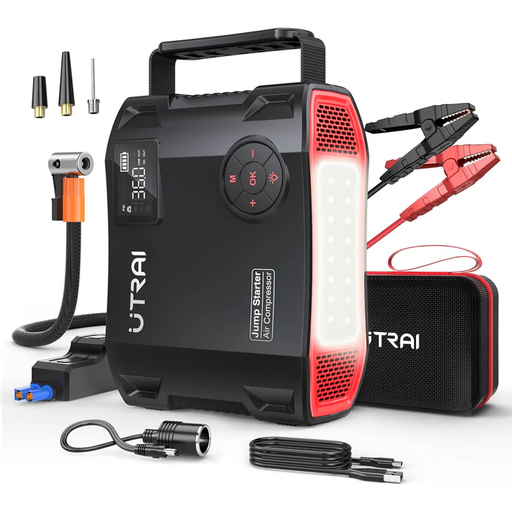
Why This Fits Their Persona: For those on the road with an RV, van, or heavy-duty diesel SUV. This model delivers the power needed for large engines and has a fast compressor for bigger tires. The DC output is a bonus for camping.
Where cheaper models fail, the UTRAI JS5 delivers. Its high peak power is functional for diesel engines up to 10.0L, and the 45 L/min airflow is one of the fastest in its class, ideal for large tires.
The 160W DC output can power 12V appliances like a portable cooler or car vacuum. The large battery capacity (27000mAh) ensures long-lasting use.
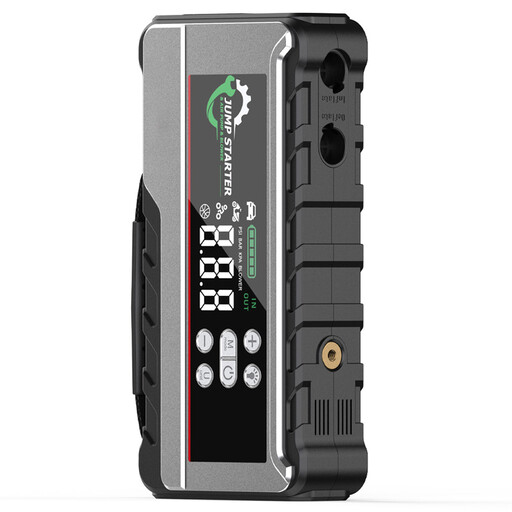
Why This Fits Their Persona: For the user who not only wants to be prepared but also appreciates the latest technology. This model combines a powerful jump-start function with the ability to fast-charge a laptop.
This model offers more than just a jump-start function. The PD65W fast-charging feature is a genuinely useful addition that many competitors with a simple USB port lack. Its performance is balanced and functional.
The PD65W USB-C port can charge most modern laptops. A unique extra is the blower function, handy for quickly inflating or deflating items like an air mattress.
We have compiled a complete, up-to-date list of products that fully meet these strict selection criteria and safety regulations.
Even if you don't use it, it's recommended to fully charge the jump starter every 3 to 4 months. This helps keep the battery in good condition and ensures it's ready for use when you need it. Most modern models have a low self-discharge rate, but regular maintenance is always wise.
Not necessarily. An extremely high peak amperage is often a marketing gimmick and unnecessary for most passenger cars. It's more important to choose a model with a starting power that matches your engine (gasoline or diesel, and its displacement). Reliable and stable power is more valuable than an unusable, brief peak.
Yes, most jump starters are designed to be stored in a car and have an operating temperature ranging from -20°C to +60°C (-4°F to 140°F). Extreme cold can temporarily reduce the performance of the lithium battery. Always check the manufacturer's specifications. It's a good idea to fully charge the booster before a harsh winter period.
