
Vandaag of morgen in huis

Kwaliteit gegarandeerd

Welkomstaanbiedingen ontgrendelen: GRATIS bezorging | Tot 80% korting | Gratis 30 dagen JoyPlus-proefperiode
Download de app
A flat battery or a flat tyre always happens unexpectedly. Waiting for roadside assistance is an option, but being self-reliant offers far more peace of mind. A jump starter with an air compressor seems like the perfect all-in-one solution. However, many devices on the market promise more than they can deliver.
As a Joybuy Product Recommendation Officer, I see a lot of products come and go. I'm here to help you see through the marketing jargon and focus on what really matters. Avoid wasting your money on a device that will let you down when you need it most.
Before you make a choice, it's wise to know where things often go wrong. Many disappointments can be avoided by paying attention to the following points:
diesel jump starter needs a higher continuous starting current, not just a high peak.12V car tyre pump is convenient, but only if it works. Many cheaper models have a low airflow (L/min), making inflating a car tyre take forever. They often overheat and shut down after just a few minutes.car emergency starter if its own battery is dead? Many models have a high self-discharge rate. You charge it fully, put it in the boot, and after three months, it's empty—right when you need it.You don't need to be a technician to make a good choice. Focus on these three concrete specifications. They determine whether a car jump starter is worth the money.
Don't be dazzled by the highest number. The peak power (A) is the maximum current the booster can deliver for a fraction of a second. More important is whether the device is suitable for the engine size (in litres) of your car.
12V battery booster will always clearly state which engine sizes (petrol and diesel) it is suitable for.A compressor is rated on two values:
The portable battery starter is also a car power bank. Its capacity, expressed in milliampere-hours (mAh), determines how many times you can charge a phone or how long the built-in light can stay on.
Even more important is the standby time. How long does the battery hold its charge when not in use? Some manufacturers claim a standby time of months or even years. This largely depends on the battery technology used (e.g., Lithium-ion vs. Sodium-ion) and the quality of the cells. Check the manufacturer's recommendation on how often you should recharge the device (e.g., every 3-6 months).
Below are some popular choices, matched to different user profiles. This selection is based on objective specifications that align with the points of attention mentioned earlier.
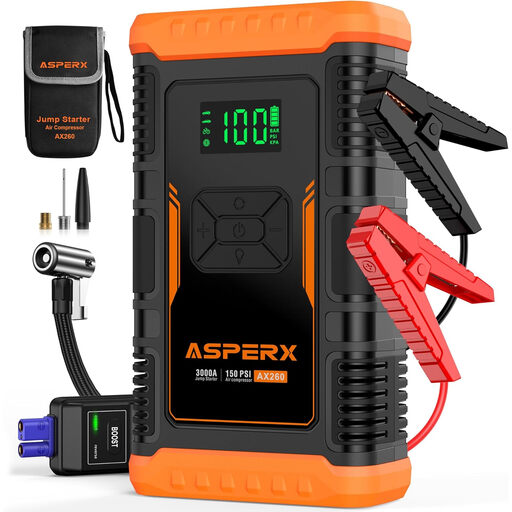
Why This Fits Their Persona: Ideal for the driver of a standard petrol or compact diesel car. This device offers a solid balance between starting power and a functional compressor, without you paying for extreme specifications you probably don't need. It's a reliable companion for the boot.
The specifications are realistic: 3000A peak is more than enough for most cars (up to 10L petrol/8L diesel according to the manufacturer). The compressor has a stated airflow of 35 L/min, which avoids the pitfall of a slow, unusable pump.
The combination of a cordless inflator with auto-shutoff and a clear LCD screen makes the device very user-friendly. The included storage bag keeps everything neatly organised.
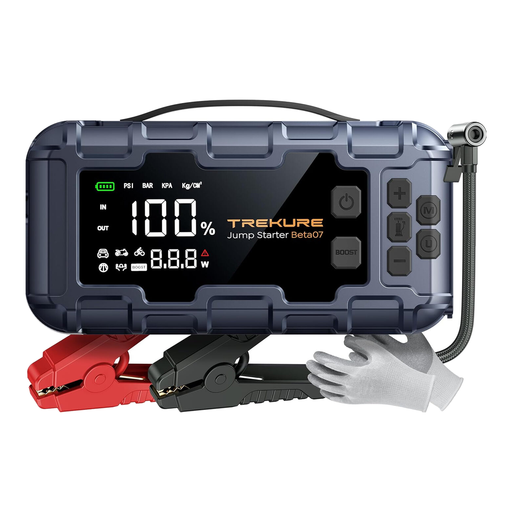
Why This Fits Their Persona: For those with a heavy-duty diesel, a large SUV, or a camper van. This model is designed for serious starting problems. If you want absolute certainty that you can get even the most stubborn engine running again, this is a fitting choice.
This device directly tackles the 'unrealistic power' pitfall. According to the manufacturer, it delivers a peak power of 6000A, suitable for petrol and diesel engines up to 12L. The compressor has an airflow of 45 L/min, which is exceptionally fast.
The large 3.3-inch screen displays all data clearly. The 45W PD fast-charging function for the power bank is a major plus, allowing you to charge laptops as well. Includes insulated gloves for extra safety.
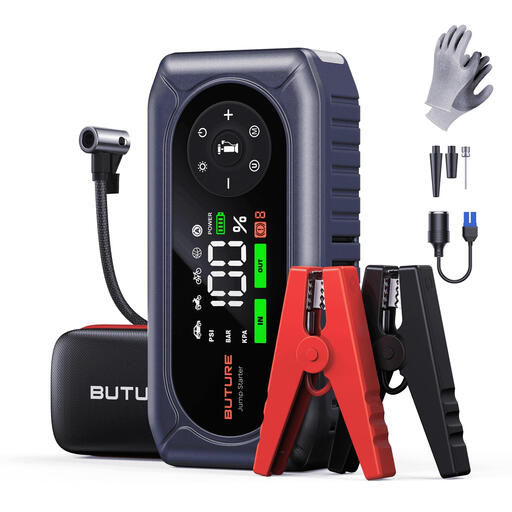
Why This Fits Their Persona: For those who want more than just an emergency starter. This 5-in-1 device is a true 'multi-tool' for the road. Perfect for camping to inflate air mattresses, as a powerful power bank for all your gadgets, and as a bright torch.
This model avoids the 'dead battery' pitfall with a clear focus on reliability. The manufacturer claims a robust design that functions in extreme temperatures and a cooling technology that reduces overheating during use by 30%.
The 5 preset inflation modes (for car, motorbike, bicycle, ball, etc.) with an automatic stop function are very convenient. The clear LCD screen displays all information at a glance, from battery level to tyre pressure.
We have compiled a complete, real-time list of products that fully satisfy these strict selection criteria and UK safety regulations.
This depends on the model and the quality of the battery. Most manufacturers recommend fully charging the jump starter every 3 to 6 months, even if you don't use it. This ensures the battery remains in good condition and the device is ready for use when you need it.
Yes, most modern lithium-ion jump starters are designed to operate within a wide temperature range, often from -20°C to 60°C. However, a cold battery delivers less power. It is therefore wise to check the manufacturer's specifications. During extreme frost, store it in a slightly warmer place if possible, but leaving it in the car is generally not a problem.
Modern jump starters are equipped with multiple safety features. These include protection against short circuits, overheating, and reverse polarity (connecting the red and black clamps incorrectly). Many models will give a warning signal or simply won't work if you connect the clamps the wrong way. Always read the manual before use, but the devices are designed to be safe and easy to use.
