
Vandaag of morgen in huis

Kwaliteit gegarandeerd

Welkomstaanbiedingen ontgrendelen: GRATIS bezorging | Tot 80% korting | Gratis 30 dagen JoyPlus-proefperiode
Download de app
A dead battery or a flat tire always happens unexpectedly and at the worst possible time. Relying on roadside assistance can be time-consuming and expensive. A jump starter with an air compressor is a multi-functional solution that puts you back in control. This device combines a powerful jump starter for your car with a portable compressor for your tires, often complemented by a power bank and a flashlight.
This article will help you understand what to look for when making a purchase and presents a selection of popular models, so you can make an informed decision.
Before you make a choice, it's helpful to understand a few key specifications. This ensures you select a model that suits your vehicle and your needs.
The most important aspect of a car jump starter is its starting power, expressed in peak amps (A). This number indicates the maximum current the booster can deliver for a short burst. A higher peak amperage is necessary for larger engines, especially diesels.
Always check the manufacturer's specifications to see what engine displacement (in liters) the emergency car starter is suitable for.
A battery booster with a compressor is twice as useful. Pay attention to the maximum pressure, expressed in PSI (Pounds per Square Inch) or Bar. Most car tires require a pressure between 30 and 35 PSI. A compressor that can reach up to 150 PSI is more than sufficient and can also be used for bicycle tires or sports balls. Useful features include an auto-shutoff function (the device stops at the preset pressure) and a digital display. This makes the portable car air compressor easy to use.
Modern jump starters are more than just tools for starting and inflating. Many models also function as a power bank with jumper cables, allowing you to charge your phone or tablet via USB ports. A built-in LED flashlight with an SOS function is a standard feature for emergencies in the dark.
Also, look for built-in safety mechanisms. Features like reverse polarity protection, short-circuit protection, and overheat protection are essential to safeguard both you and your car's electronics.
Below is a selection of models that cover different needs, from powerful all-rounders to compact emergency kits.
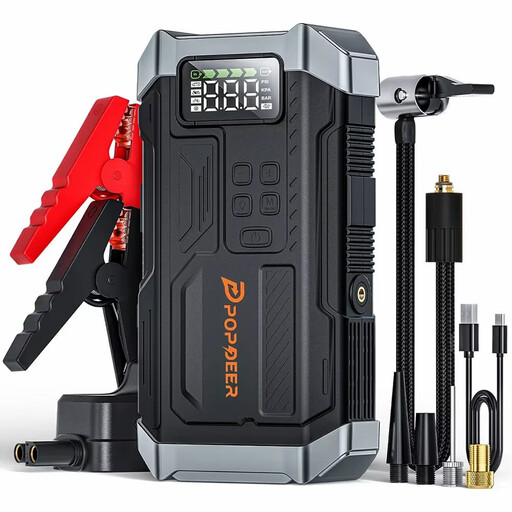
Why It Stands Out The POPDEER PD-JA3 stands out with its extremely high peak power of 5000A, making it suitable for starting heavy-duty engines. According to the manufacturer, this model can even revive vehicles with a very low battery voltage (less than 9V) using the "RST" button. Its unique cooling system is designed for better heat dissipation, which enhances safety and extends its lifespan.
Key Features
Who Is It For? For drivers of large vehicles such as SUVs, vans, or RVs with heavy-duty diesel engines. It's also a great choice for those who seek maximum power and reliability for a wide range of situations.

Why It Stands Out This model from ACEZUK claims an impressive peak power of 8000A. What immediately catches the eye is its large 3.4-inch LCD screen. This display shows the battery status, operating mode, and any error messages in real-time, providing extra convenience and clarity. The manufacturer highlights its 10 built-in safety features.
Key Features
Who Is It For? For users who prefer maximum starting power and clear, direct feedback. The large screen makes this device accessible, even for those who are less tech-savvy. Suitable for virtually any type of 12V vehicle.
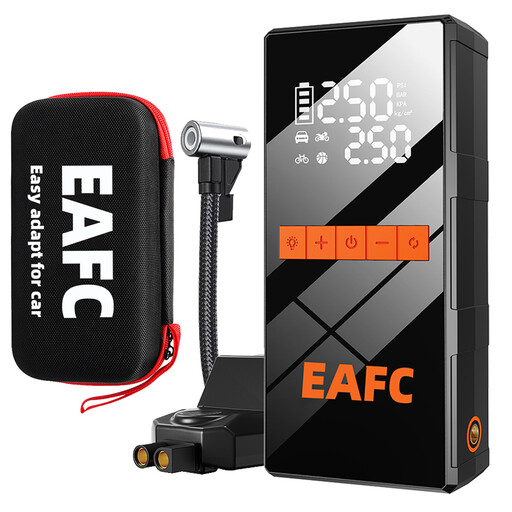
Why It Stands Out The EAFC jump starter is a more compact and budget-friendly option. With a peak power of 1200A, it's aimed at the most common passenger cars. Its strength lies in its 4-in-1 functionality packed into a compact form factor, making it easy to store in the glove compartment or under a seat.
Key Features
Who Is It For? Ideal for drivers of standard passenger cars who are looking for a reliable, all-in-one emergency kit for daily use and road trips, without the need for extreme starting power.
Besides being prepared on the road, it's sometimes fun to look back in time. Are you looking for unique electronics from a different era? Then check out our surprising collection of VHS television combos.
1. How often should I charge a jump starter? Most manufacturers recommend fully charging the jump starter every 2 to 3 months, even if you don't use it. This helps keep the internal battery in good condition and ensures it's ready for use when you need it.
2. Can I leave a jump starter in my car? Yes, you can, but be mindful of extreme temperatures. Most models have a specified operating temperature range, for example, from -20°C to +60°C (-4°F to 140°F). In the summer, avoid leaving the device on the dashboard in direct sunlight to prevent overheating.
3. Is a jump starter with a compressor safe for a beginner? Yes. Modern car jump starter models are equipped with multiple safety features. Protection against connecting the clamps incorrectly (reverse polarity), short circuits, and overcharging are standard. The compressor often has an auto-shutoff function that makes inflating tires simple and safe, even for those with no experience.
