
Vandaag of morgen in huis

Kwaliteit gegarandeerd

Welkomstaanbiedingen ontgrendelen: GRATIS bezorging | Tot 80% korting | Gratis 30 dagen JoyPlus-proefperiode
Download de app
A dead battery always happens unexpectedly. On a cold morning, in a rush to get to work, or in the middle of the night. Waiting for roadside assistance is an option, but being self-reliant is better. A portable jump starter is the perfect solution. However, the market is flooded with models that promise the world. Many drivers fall for marketing traps and end up with a device that fails them when it matters most.
As a Joybuy Product Recommendation Officer, I'm here to help you cut through the noise. We'll discuss the common pitfalls and the specifications that truly matter, so you can make an informed decision for your specific needs.
Before you consider a purchase, it's crucial to recognise the most common marketing tricks. These often lead to buyer's remorse.
To avoid a bad purchase, there are a few technical specifications you must check. These determine whether a jump starter is suitable for your vehicle and safe to use.
As mentioned, the starting current is crucial. A small petrol car will be fine with a jump starter providing 300-400A of starting current. A larger SUV or a jump starter for diesel engines requires considerably more power, often around 800A or more, because diesel engines have a higher compression ratio. Most models are a 12V jump starter, which is standard for passenger cars, motorcycles, and campervans. Always check the manufacturer's recommendations for the engine displacement (litres) the device can handle.
The capacity, expressed in milliampere-hours (mAh), determines how many times you can start a car or charge your phone. A model with 15,000 to 20,000 mAh is a good middle ground for most users. Besides a jump starter with a power bank, there are also models with a built-in jump starter with an air compressor. This is useful for inflating your tyres on the go and saves you from buying a separate device.
A reliable battery booster comes with smart jumper cables featuring clear indicator lights or a display. These show whether the clamps are connected correctly and if it's safe to start the car. Features like spark-proof technology and reverse polarity protection are indispensable for a safe roadside emergency. A sturdy casing and an included storage case protect the portable jump starter and keep everything organised.
Not everyone has the same needs. That's why we've highlighted a few options that suit different user profiles.
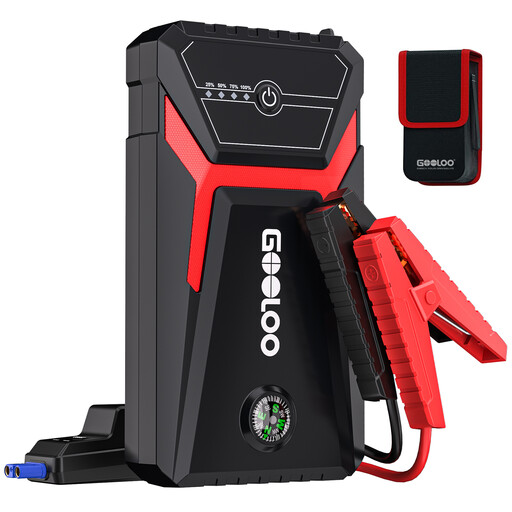
Why This Fits Their Persona: Ideal for those seeking a reliable, no-fuss solution for a standard petrol or smaller diesel car. Compact enough for the glove compartment and easy to use, it's perfect for peace of mind during the daily commute.
This model focuses on what's truly necessary: sufficient starting power (1500A peak) for most cars and all essential safety features, without making you pay for superfluous specs.
Equipped with 10 safety protections and doubles as a handy power bank with two USB ports. The bright LED flashlight with an SOS function is a practical addition for emergencies.
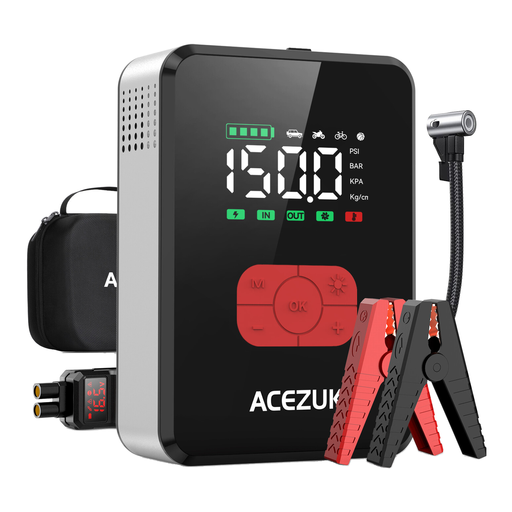
Why This Fits Their Persona: For those who need more than just a jump start. The built-in compressor is perfect for inflating camper or bike tyres, and its high peak power is suitable for the larger (diesel) engines found in campervans and vans.
This isn't a one-trick pony. It combines a powerful jump starter with a functional air compressor, saving you from lugging around multiple separate devices. Its value lies in its versatility.
The 150 PSI compressor with an auto-shutoff function is a major advantage. The large 3.3-inch screen on the clamps provides clear feedback, enhancing safety and ease of use.
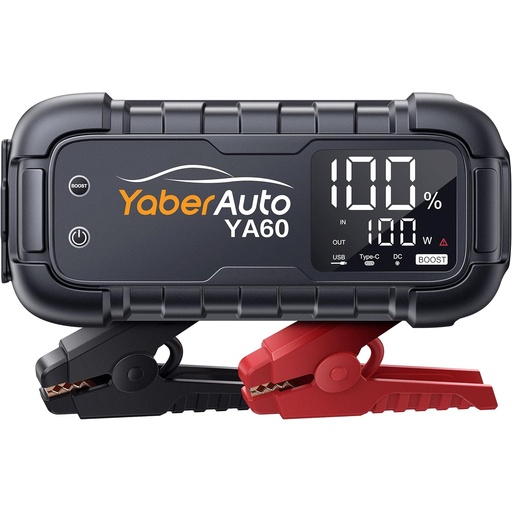
Why This Fits Their Persona: For the professional or owner of heavy-duty vehicles (large diesel engines up to 12.0L). This model delivers extreme power and charges incredibly fast, minimising downtime. Its 150W DC output can even power a car fridge or air compressor.
While other models exaggerate their peak power, the YA60 actually delivers the force needed for the toughest jobs. The 65W fast charging isn't a gimmick; it fully charges the device in just 1.5 hours.
The 65W two-way fast charging technology is a standout feature, allowing you to quickly charge laptops as well. Its rugged, water- and dust-resistant housing makes it suitable for use in harsh conditions.
We have compiled a complete, up-to-date list of products that fully meet these strict selection criteria and European safety regulations.
Most manufacturers recommend charging a jump starter every 3 to 6 months, even if you don't use it. Lithium-ion batteries slowly lose their charge over time. By periodically charging it, you ensure the battery remains in good condition and is always ready for use. Some newer models, such as those with sodium-ion technology, claim a much longer standby time.
Yes, you can, but it's important to check the specifications. Most jump starters have an operating temperature of around -20°C to 60°C (-4°F to 140°F). In a typical winter, the device will generally function well. However, extreme cold can temporarily reduce the battery's performance. It's best to store it in a place where the temperature doesn't drop too far below freezing.
A jump starter offers one major advantage: you don't need a second vehicle. With traditional jumper cables, you are dependent on another car. A jump starter with a battery is a self-contained solution that allows you to start a dead battery anywhere, anytime. Furthermore, modern jump starters are much safer thanks to their built-in protections, which minimise the risk of damage from incorrect use.
