
Vandaag of morgen in huis

Kwaliteit gegarandeerd

Welkomstaanbiedingen ontgrendelen: GRATIS bezorging | Tot 80% korting | Gratis 30 dagen JoyPlus-proefperiode
Download de app
A dead battery. It happens to everyone, and always at the worst possible moment: on a cold morning, in a rush to get to work, or in a remote parking lot. In the past, cumbersome jumper cables and the help of another driver were the only solution. Today, a compact, portable jump starter offers a convenient alternative.
But the market is flooded with models that promise the world. High amperages, huge battery capacities, and countless extra features make the choice difficult. As a Product Recommendation Officer at Joybuy, I see the issues consumers face daily. Many devices underperform in practice compared to what their packaging suggests. Before you make a purchase, it's crucial to recognize the following common pitfalls.
Manufacturers often use technical specifications that sound impressive but can be misleading in practice. Pay attention to the following three points to avoid a bad purchase.
To make an informed choice, focus on the specifications that truly matter. Here are the three most important factors to check before purchasing a battery booster.
Look beyond the peak amps and check what type and size of engine the jump starter is suitable for. Manufacturers usually specify this in liters (e.g., "suitable for up to 8.0L gasoline engines and 6.0L diesel engines"). A diesel engine requires significantly more starting power than a gasoline engine of a similar size, especially at low temperatures. As a rule of thumb:
A portable jump starter should be safe and easy to use. Modern lithium-ion batteries are lightweight and hold their charge for a long time. A capacity between 15,000 and 25,000 mAh strikes a good balance between portability and power.
Always check for built-in safety features. Essential protections include:
A clear display that shows the status and any error messages is a major plus.
A built-in tire inflator is a valuable addition if you regularly drive long distances, go camping, or have an older car. Pay attention to the maximum pressure (expressed in PSI or Bar) and whether it has an automatic shut-off feature. This prevents you from over-inflating the tire.
If you also plan to use the jump starter as a power bank, look at the USB outputs. A Quick Charge (QC) or Power Delivery (PD) port can charge your devices significantly faster.
To help you choose, we have selected a few models that suit different user profiles, based on their objective specifications.
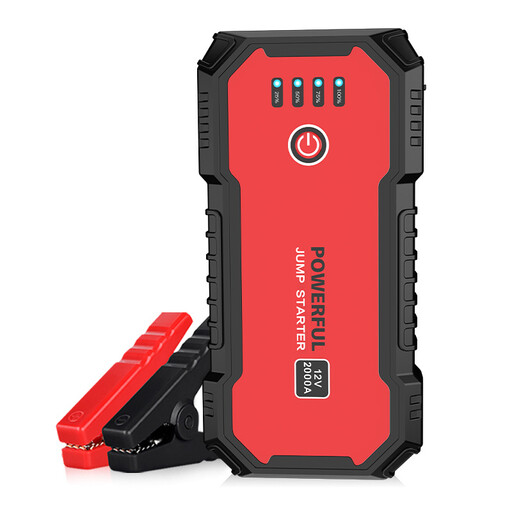
Why This Fits Their Persona: Ideal for drivers of standard gasoline cars or compact diesel vehicles who need a reliable, no-nonsense solution. Compact enough for the glove compartment, it provides peace of mind for daily commutes.
This model focuses on the core function: jump-starting. It avoids the pitfall of unnecessary extras and offers a realistic 1500A peak power suitable for most common cars, without over-advertising.
Compact and lightweight (430g): Easy to store. QC3.0 18W fast charging: Quickly charges your phone in an emergency.
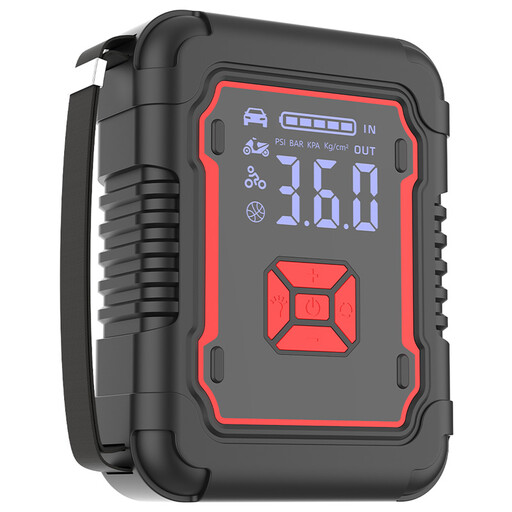
Why This Fits Their Persona: Perfect for RV owners, van drivers, and anyone who wants to be prepared for more than just a dead battery. The combination of a powerful jump starter and a full-fledged compressor makes this an ideal tool for the road.
This is not an "all-in-one" gimmick. The specifications are solid for both functions: 3000A peak power for large engines and a 150 PSI compressor with an auto-stop feature. The functions complement each other without compromising performance.
Powerful 150 PSI compressor: Suitable for car and motorcycle tires. 20,000mAh capacity: Ample power for multiple starts and charging devices.
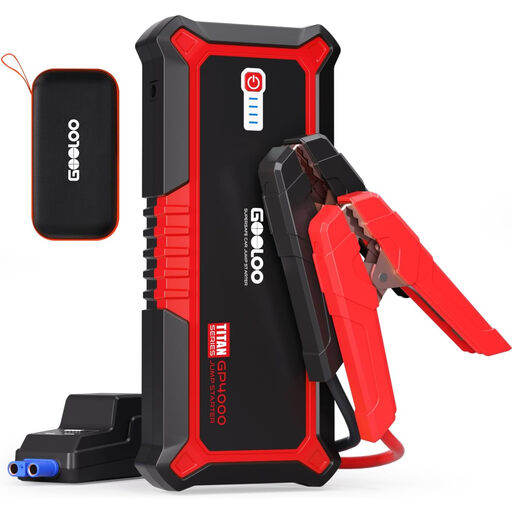
Why This Fits Their Persona: For the driver of a large diesel SUV, commercial van, or tractor, starting power isn't a luxury—it's a necessity. This model delivers the power needed to reliably start even large engines (up to 10.0L diesel, according to GOOLOO).
This model focuses purely on maximum starting power. The high 4000A peak power is backed by a robust design and heavy-duty metal clamps built for intensive use, ensuring it delivers on its promise of strength.
Extremely high power: Suitable for virtually all 12V vehicles. "BOOST" button: Provides a solution for even deeply discharged batteries.
We have compiled a complete, up-to-date list of products that meet these strict selection criteria and safety regulations.
Most manufacturers recommend charging the jump starter every 2 to 3 months, even if you don't use it. Lithium-ion batteries have low self-discharge but will lose some charge over time. Regular charging ensures the battery remains in good condition and is always ready for use.
Yes, you certainly can, provided you choose the right model. Diesel engines require significantly more starting current than gasoline engines, especially at temperatures below freezing. Check the jump starter's specifications to see if it is explicitly suitable for your type and size of diesel engine. Models with higher starting power and a "boost" function for cold conditions are the recommended choice for this purpose.
That depends entirely on your needs. For the average driver who primarily sticks to city driving, a basic model without a compressor is often sufficient. However, if you're an avid camper, frequently drive long distances through rural areas, or have a vehicle with tires that regularly lose pressure, then an integrated tire inflator is a very valuable addition that saves you from buying a separate compressor and prepares you for more than just a dead battery.
