
Vandaag of morgen in huis

Kwaliteit gegarandeerd

Welkomstaanbiedingen ontgrendelen: GRATIS bezorging | Tot 80% korting | Gratis 30 dagen JoyPlus-proefperiode
Download de app
A dead battery always happens unexpectedly. Whether you're rushing to work, about to leave for vacation, or stranded in a deserted parking lot. A reliable jump starter isn't a luxury in these moments; it's a necessity. It gives you the freedom to start your own car with a dead battery without waiting for roadside assistance.
But the jump starter market is flooded with marketing claims that overpromise and underdeliver. As a Product Recommendation Officer at Joybuy, I see where consumers go wrong every day. Before you invest in a battery booster, watch out for these three common pitfalls.
To avoid buyer's remorse, focus on the specifications that truly matter. These are the objective criteria that determine if a car jump starter is right for you.
The most important question is: can the jump starter handle my engine? This depends on the cranking current.
Today's jump starter is more than just a starting aid.
A safe jump starter is a must. Look for the following features:
Not every jump starter is suitable for every user. Below is a selection tailored to different needs, based on their specifications.
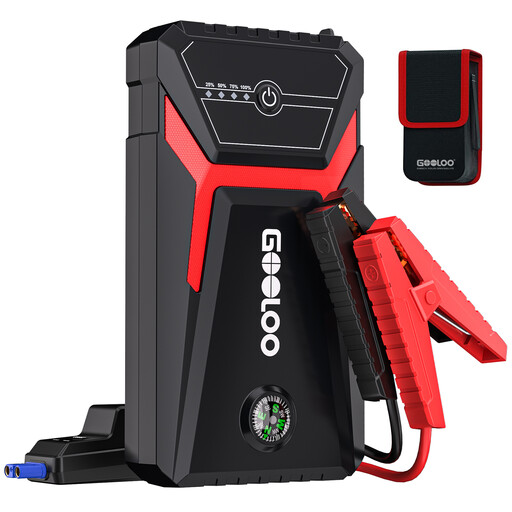
Why This Fits Their Persona: Perfect for those seeking a compact, reliable, and affordable solution for a standard passenger car. It's small enough for the glove compartment and powerful enough for most gas and smaller diesel engines.
This model focuses on the essentials. The 1500A peak current is realistic for engines up to 6.0L gas/4.0L diesel and comes with smart cables offering 10 safety features, minimizing the risk of damage from misuse.
Compact and lightweight: Weighs less than a kilogram. Safety: Equipped with a smart chip and cables with 10 built-in protections.
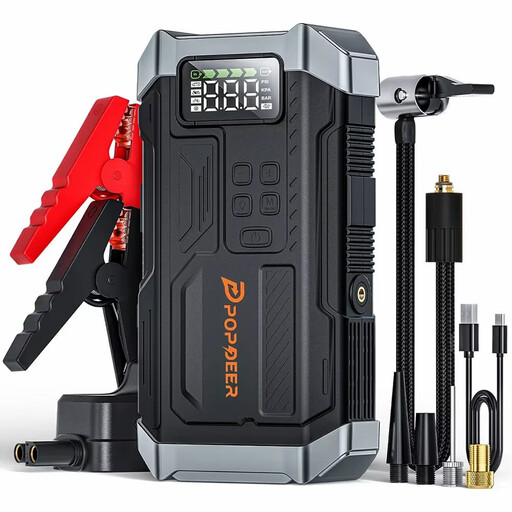
Why This Fits Their Persona: This is a multifunctional workhorse. Ideal for those who travel with an RV, 4x4, or motorcycle and want to be prepared for more than just a dead battery. The built-in compressor is a huge plus.
Instead of just focusing on a high peak current, this model combines a powerful starting function (for engines up to 10L gas/8L diesel) with a practical, high-powered compressor (150 PSI). The features are useful and well-integrated.
4-in-1 functionality: Jump starter, 150 PSI air compressor, power bank, and LED light. Powerful: Suitable for large gas and diesel engines.
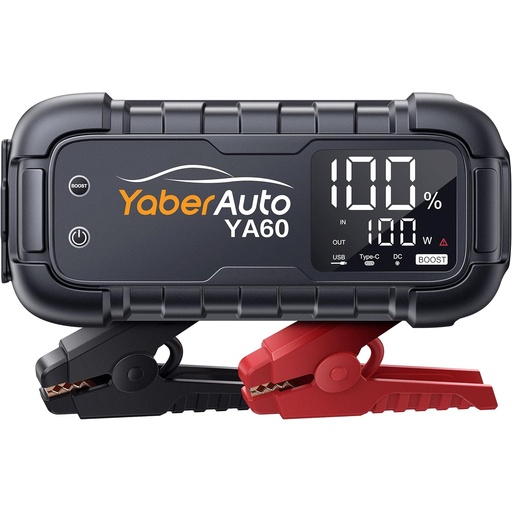
Why This Fits Their Persona: For owners of large SUVs, vans, tractors, or boats with heavy-duty diesel engines, pure power is not a luxury. This model is designed for the toughest jobs, with specifications to back it up.
Where other models exaggerate, the YA60 delivers performance that matches its claims. The specification for diesel engines up to 12.0L is a clear indicator of serious starting power. The large 26800mAh battery and 65W fast charging are functional, not just marketing.
Maximum power: Suitable for all gas engines and diesel engines up to 12.0L. Fast charging: Recharges itself in 1.5 hours thanks to 65W input and can charge laptops via USB-C.
We have compiled a complete, up-to-date list of products that fully meet these strict selection criteria and safety regulations.
Most manufacturers recommend charging a lithium-ion jump starter every 3 to 6 months, even if you don't use it. This helps keep the battery in good condition and ensures it's ready for use when you need it. Some newer models, such as those with a sodium-ion battery, have a much lower self-discharge rate and can remain on standby for years.
Yes, this is possible with most modern jump starters. Look for a model with a "Boost" or "Force Start" button. A standard jump starter needs a small amount of voltage from the car battery to detect that it is connected correctly. With a completely dead battery (0 volts), this won't work. The boost function bypasses this detection and forces current to the battery, allowing you to start it. Always read the manual for the correct procedure.
Yes, a modern jump starter with "smart" jumper cables is designed to be safe for the sensitive electronics (ECU) in your car. These cables have built-in protection circuits that guard against the most common errors, such as connecting the clamps backward (reverse polarity) or short-circuiting. As long as you choose a model with these protections and follow the instructions, the risk of damage is minimal.
