
Vandaag of morgen in huis

Kwaliteit gegarandeerd

Welkomstaanbiedingen ontgrendelen: GRATIS bezorging | Tot 80% korting | Gratis 30 dagen JoyPlus-proefperiode
Download de app
A dead battery is always unexpected and inconvenient. Whether it's on a cold Monday morning or in a supermarket car park, the result is the same: you're stranded. A jump starter, also known as a booster pack or battery booster, is a lifesaver in these moments. This compact device provides just enough power to start your engine, without needing another vehicle and jumper cables.
But the market for these devices is filled with marketing claims that create more confusion than clarity. Many car owners fall into the same traps, buying a product that fails when it really matters. Let's review the most common mistakes so you can make an informed decision.
Manufacturers often advertise an extremely high peak current (measured in Amps, A), such as 6000A or 8000A. This number sounds impressive, but it only represents a fraction of a second of maximum output. What really matters for starting your engine is the starting current: the continuous power the booster can deliver. A model with a lower but stable starting current is often more effective than one with an inflated peak rating.
The internal battery's capacity, expressed in milliampere-hours (mAh), is often used as a key selling point. A high mAh value suggests you can use the booster countless times or charge many devices with it. In reality, the efficiency of the 12V conversion and the quality of the battery cells are far more important. A cheap power bank with jumper cables with a supposedly high capacity might be depleted after just one starting attempt.
A jump starter operates with high currents. A model without the proper safety features is a risk to both you and your car's electronics. Cheap, unbranded versions often lack essential protections against short circuits, reverse polarity (connecting the clamps incorrectly), and overheating.
To avoid a bad purchase, it's wise to look beyond the marketing buzz and focus on the specifications that truly matter.
The required peak current depends directly on your engine. A small petrol car needs significantly less starting power than a large diesel SUV. As a rule of thumb:
Always check the manufacturer's specifications, which often list the maximum engine displacement (in litres).
Modern jump starters are often more than just a portable starting aid. Many models also function as a:
Consider which extra features offer real added value for you.
A reliable jump starter must come with smart jumper cables that have built-in safety features. Look for the presence of protection against:
Below is a selection of products, categorised by different user profiles. These recommendations are based on objective product features and functionality.
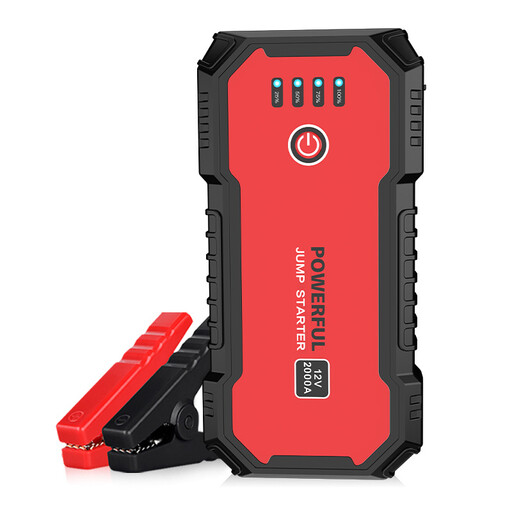
Why This Fits Their Persona: Compact, lightweight, and fits easily in the glove compartment. Ideal for most petrol and smaller diesel cars. No unnecessary extras, just a reliable jump starter for daily use and peace of mind.
Focuses on a realistic 1500A peak current that is sufficient for most passenger cars, without exaggerating with marketing figures. The capacity is tailored for jump-starting, not for endlessly charging a laptop.
Very compact and light (approx. 430g). Features a QC3.0 fast-charging port for charging a phone.

Why This Fits Their Persona: Perfect for camper van owners, boat owners, or families on the go. It combines a powerful jump starter with a compressor for tyres, air mattresses, or balls. A multifunctional tool for the road.
Besides a high peak current, it offers a concrete, useful extra feature (the compressor) instead of just empty numbers. The safety features are clear, including a screen on the clamps that indicates potential issues.
2-in-1 functionality (jump starter and compressor). Large 3.4-inch LCD screen for clear status information and pressure display.
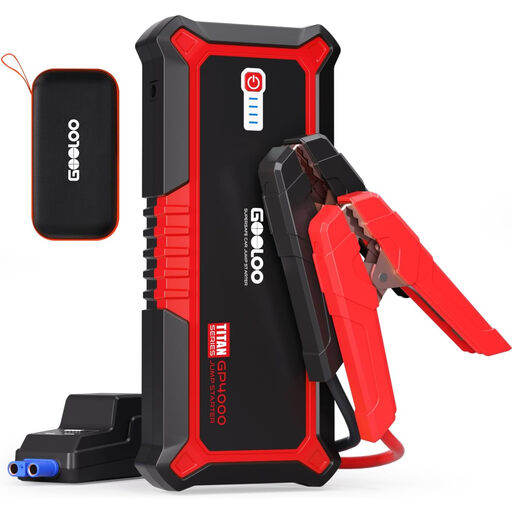
Why This Fits Their Persona: Designed for heavy-duty work. Ideal for owners of a large SUV, van, camper, or a vehicle with a large diesel engine. According to the manufacturer, it's suitable for all petrol engines and diesel engines up to 10.0L.
The 4000A peak current is functional here, aimed at delivering the high power needed for large engines. The description clearly specifies the engine size, which inspires confidence. The metal clamps are robust for intensive use.
Very high peak current for large engines. Features a "BOOST" button to start even completely dead batteries.
We have compiled a complete, up-to-date list of products that meet these selection criteria and the applicable safety regulations.
Most manufacturers recommend charging the jump starter every 2 to 3 months, even if you don't use it. This helps keep the internal battery in good condition and ensures it's ready for use when you need it. Always consult your specific model's manual for the exact advice.
Yes, that's generally not a problem. Most models are designed to operate within a wide temperature range, for example, from -20°C to +60°C. However, it's wise not to leave the device in direct sunlight behind the windscreen in summer, as temperatures can get extremely high there. Storing it in a cold car during winter is typically safe.
Not necessarily. The most important thing is that the jump starter is suitable for your vehicle. An emergency car starter with an extremely high peak current is unnecessary and more expensive if you have a small city car. Match the specifications to the engine displacement (in litres) and type (petrol or diesel) of your car. A suitable model is more effective and better for your wallet.
