
Vandaag of morgen in huis

Kwaliteit gegarandeerd

Welkomstaanbiedingen ontgrendelen: GRATIS bezorging | Tot 80% korting | Gratis 30 dagen JoyPlus-proefperiode
Download de app
Imagine this: you're faced with a dead battery on a cold morning, or you discover a flat tire right before an important appointment. A jump starter with a compressor seems like the perfect all-in-one solution. But the market is flooded with models that promise a lot but deliver little. Many car owners buy a device that ends up letting them down when they need it most.
As a Joybuy Product Recommendation Officer, I see where things go wrong every day. Before you invest in a car emergency starter, it's crucial to see past the marketing claims. These are the three most common pitfalls that can cost you money and frustration.
Manufacturers advertise with impressive peak currents of 3000A, 7000A, or even more. However, this number is often misleading. The peak power is the maximum current the device can deliver for a fraction of a second. What really matters is the starting power: the sustained current needed to actually turn your engine over. A cheap 12v jump starter with a supposedly high peak power might, in practice, be too weak for a mid-size diesel engine in the winter.
Most jump starters use a standard lithium-ion battery. These have two drawbacks: they slowly lose their charge (self-discharge) and their lifespan decreases, especially when stored in a hot or cold car. You charge it fully, put it in your trunk, and a year later, the battery is too weak or even dead. A battery booster with compressor that isn't ready to go is useless. Therefore, pay attention to the self-discharge rate and the lifespan expressed in charge cycles.
A jump starter with tire inflator sounds convenient, but the compressor is often the weak link. Models with a low air flow rate (expressed in liters per minute) take forever to inflate a car tire and overheat quickly. A maximum pressure of 150 PSI means little if the pump needs to cool down after five minutes.
To avoid a bad purchase, it's wise to look beyond the marketing and focus on a few key specifications.
Starting Power and Engine Compatibility: Don't just check the peak power; look specifically at which engine sizes (in liters, for gasoline and diesel) the portable jump starter is rated for. A 2.0L gasoline engine requires less power than a 3.0L diesel engine. A good rule of thumb is to choose a model that can comfortably handle your car's engine.
Battery Technology and Capacity (mAh): The capacity in milliampere-hours (mAh) gives an indication of how many times you can charge a phone or how long the flashlight can run. For starting power, the battery type is more important. Newer technologies, like sodium-ion, offer advantages such as much lower self-discharge, a longer lifespan (more charge cycles), and better performance in extreme temperatures. A power bank with jump starter like this remains reliable for years.
Compressor Performance (L/min and Features): A good car tire inflator has a decent air flow rate (e.g., 25 L/min or more). This ensures a tire can be inflated within minutes. Features like an automatic shut-off when the set pressure is reached and preset programs for cars, motorcycles, or bicycles make it much easier and safer to use.
We've highlighted some popular choices and matched them with different user profiles. These models offer a practical solution to the pitfalls mentioned earlier.
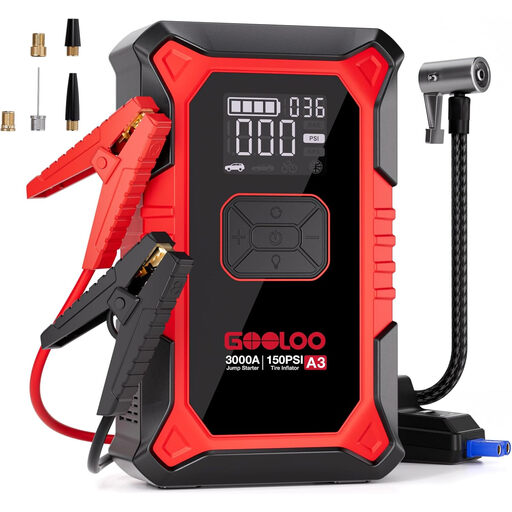
Why This Fits Their Persona: Ideal for the daily commuter with a standard gasoline or compact diesel car. This model offers a great balance between price and performance, without paying for excessive, extreme specs.
With a 3000A peak power and suitability for 9.0L gasoline/6.5L diesel engines, this model bypasses the pitfall of underpowered 'budget' models. The compressor has a solid air flow rate (35L/min) and convenient preset modes.
The combination of a powerful jump starter and a smart tire inflator with a digital display and auto-shutoff function offers great ease of use at an accessible price.
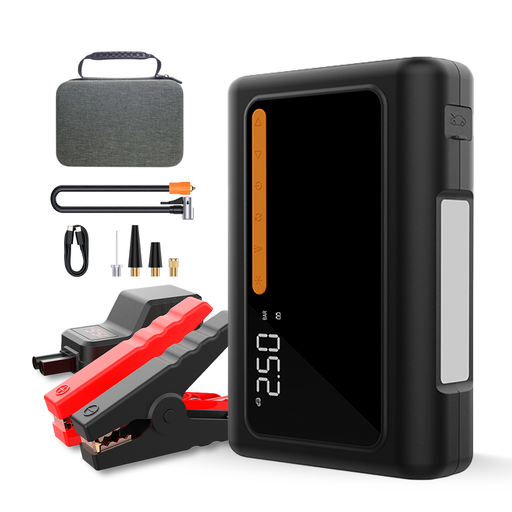
Why This Fits Their Persona: For the driver who invests in durability and reliability. Perfect for those who want to leave the device in their car for years, confident that it will work in freezing cold or summer heat.
This model tackles the poor battery pitfall head-on. According to the manufacturer GOKKCL, it uses a sodium-ion battery with an extremely low self-discharge rate (~1% per month) and a lifespan of up to 6,000 cycles. You don't need to constantly recharge it.
The wide operating temperature range (-40°C to 80°C) and the battery's stable, fire-safe chemistry make this a worry-free choice that you can permanently store in your car.
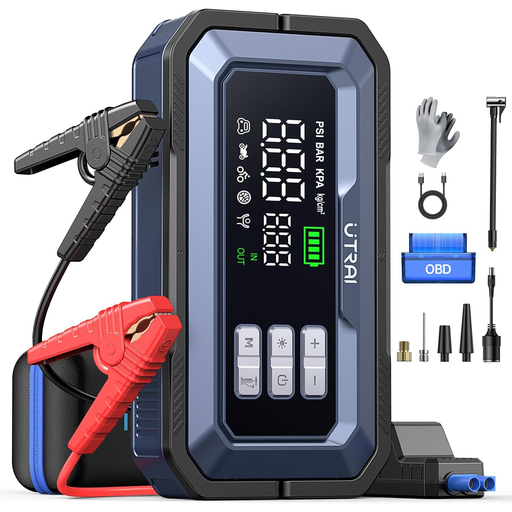
Why This Fits Their Persona: For owners of large SUVs, RVs, vans, or heavy-duty diesel engines. Also suitable for the serious DIYer who appreciates extra features like an OBD2 fault code reader and a powerful 12V output.
This model solves the pitfall of insufficient starting power. With a 7000A peak power and suitability for diesel engines up to 14L, there's no doubt this device can handle even the most demanding jobs. The extra features are not gimmicks but genuinely functional.
Its versatility is a major plus. Besides its immense starting power, it functions as a 160W DC power source for devices like a portable cooler or car vacuum, and the included OBD2 adapter is a unique addition.
A jump starter is a key part of your emergency kit, just like a reliable car jack. We have compiled a complete, up-to-date overview of products that meet these strict selection criteria.
This largely depends on the battery type and its self-discharge rate. For traditional lithium-ion models, it's recommended to check and top them up every 3 to 4 months. Models with low self-discharge, such as those with a sodium-ion battery, may only need charging once a year or even less. Always check the manufacturer's recommendation.
A jump starter is designed to give an extra boost to a battery that has insufficient voltage to start the engine. Many models have a 'boost' function to start even very low batteries (sometimes down to 0V). However, a physically defective or permanently damaged battery cannot be brought back to life with a jump starter and will need to be replaced.
Not necessarily. An extremely high peak power is unnecessary for a small city car and just drives up the price. It's more important to choose a model whose starting power and recommended engine compatibility match your vehicle. A reliable model with lower but accurate power is more valuable than a cheap model with an exaggerated, unrealistic peak power rating.
