
Vandaag of morgen in huis

Kwaliteit gegarandeerd

Welkomstaanbiedingen ontgrendelen: GRATIS bezorging | Tot 80% korting | Gratis 30 dagen JoyPlus-proefperiode
Download de app
It's a familiar scenario: you're ready to leave, you turn the key, and... nothing. A dead battery is always unexpected and incredibly inconvenient. A jump starter, also known as a booster pack, is the lifesaver you need. This compact device provides your battery with just enough power to start the engine, without relying on another vehicle or roadside assistance.
But the market for these handy devices is flooded with marketing claims and technical specifications that confuse more than they clarify. Before making a purchase, it's crucial to know what to look for. We've listed the most common pitfalls for you.
Many buyers base their choice on specifications that seem impressive but mean little in practice. Here are the three main deceptions to watch out for:
To avoid buyer's remorse, it's better to focus on a few concrete specifications that truly matter.
Look beyond the peak current and check the engine displacement (in litres) for which the car battery starter is suitable. A heavy-duty diesel engine requires significantly more starting power than a small petrol engine. A good 12V jump starter will clearly state its compatibility, for example, "suitable for up to 8.0L petrol and 6.0L diesel engines." This is the most reliable indicator of the battery booster's performance.
A portable jump starter should be not only powerful but also safe. Modern models are equipped with smart jumper cables that protect against short circuits, reverse polarity, and overheating. An indicator light or audible signal that shows whether the clamps are connected correctly is an indispensable feature. This protects both you and your car's sensitive electronics.
If you're considering a multifunctional emergency car starter, check the specifications of the extras. Does the compressor have a maximum pressure (PSI) high enough for your car tyres? Does the flashlight provide enough light to work under the bonnet at night? A few well-executed features are more valuable than a long list of gimmicks.
To help you with your choice, we have selected a number of jump starters that fit different user profiles. These recommendations are based on objective product specifications.
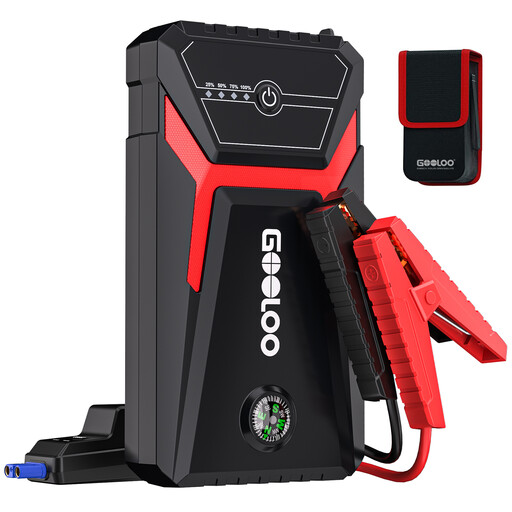
Why it's a match: Ideal for those seeking a reliable, no-nonsense jump starter for a standard petrol car (up to 6.0L) or a smaller diesel. It's compact enough for the glove compartment and provides peace of mind without unnecessary complexity.
This model focuses on the core function: starting your car. The specifications are realistic, and the price isn't inflated by subpar extras.
Offers a great balance of price, performance, and essential safety features for most cars.
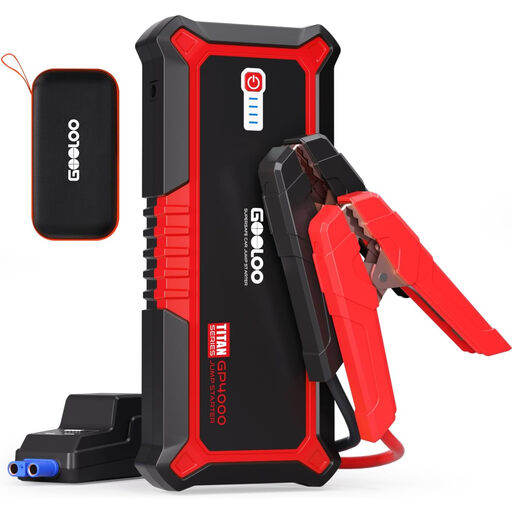
Why it's a match: For drivers of large SUVs, vans, or heavy-duty diesels (up to 10.0L). This model offers the assurance of excess capacity and is built for heavy-duty use and extreme conditions.
It delivers genuinely high starting power, not just a marketing 'peak current'. The 'BOOST' button, according to GOOLOO, can even force-start a car with a very low battery voltage.
Extremely powerful and reliable for virtually all 12V vehicles. The robust, all-metal clamps are designed for durability.
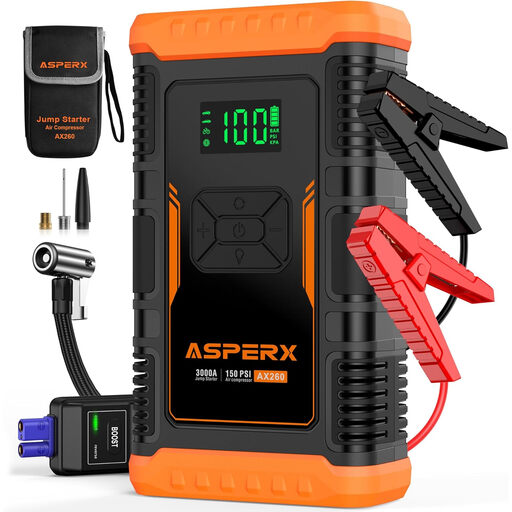
Why it's a match: The perfect companion for RV owners, outdoor enthusiasts, or anyone who wants to be prepared for both a dead battery and a flat tyre. A truly multifunctional emergency tool.
This is no 'all-in-one' gimmick. The compressor has a specified pressure of 150 PSI and an airflow of 35L/min, making it genuinely useful for a car tyre.
Combines a powerful 3000A booster pack with a functional air compressor, giving you two essential emergency tools in one compact device.
A good jump starter is an investment in peace of mind. If the models above aren't exactly what you're looking for, browse our full collection.
Most manufacturers recommend fully charging the jump starter every 3 to 6 months. This helps maintain the internal battery's health and ensures it's ready for use when you need it. A modern jump starter has low self-discharge but will still lose some charge over time.
Yes, a jump starter is designed to be stored in a vehicle. However, you should check the manufacturer's recommended temperature range. Extreme heat in the summer (e.g., in direct sunlight on the dashboard) or severe frost in the winter can affect the battery's long-term lifespan. Most models function perfectly within a range of -20°C to +60°C.
Absolutely. Virtually all jump starters sold today are equipped with 'smart' jumper cables. These include multiple built-in safety features, such as protection against reverse polarity (connecting the clamps incorrectly), short circuits, and overvoltage. This minimises the risk of damage to your car's ECU (onboard computer) or other sensitive electronics.
