
Vandaag of morgen in huis

Kwaliteit gegarandeerd

Welkomstaanbiedingen ontgrendelen: GRATIS bezorging | Tot 80% korting | Gratis 30 dagen JoyPlus-proefperiode
Download de app
There you are. On a cold morning, in a hurry to get to work, and your car won't start. A dead battery. In the past, this meant waiting for roadside assistance or fumbling with jumper cables and a second car. Today, the solution is more compact and much faster: a portable jump starter.
But the market is flooded with models that promise the world. As a Product Recommendation Officer at Joybuy, I'm here to help you see through the marketing hype. Before you invest in this handy car starting aid, it's crucial to know the common pitfalls that can lead to a bad purchase.
Many specifications look impressive but are misleading in practice. Pay attention to the following points to avoid wasting your money.
Manufacturers advertise with sky-high peak currents (Amps), sometimes as high as 8000A. However, this number only represents a fraction of a second and says little about the actual, sustained starting power needed to crank an engine. A useless, brief surge isn't what your car needs on an icy day.
A battery capacity of 20,000 mAh sounds like a massive power bank, but it's not a direct guarantee of starting power. This value is mainly relevant for charging your phone or tablet. For starting your car, the battery's discharge rate (the 'C-rate') is far more important. A high mAh rating on a cheap model doesn't guarantee a powerful start.
A cheap battery booster without 'smart' jumper cables is a risk. Features like reverse polarity protection, short-circuit protection, and overheating protection are not luxuries, but an absolute necessity. They protect your car's sensitive electronics and prevent dangerous situations like sparks or even battery damage.
To make the right choice, focus on the specifications that really matter.
The most important specification is the starting current required to start your engine. A larger engine, especially a diesel, requires a higher current.
The capacity (mAh) determines how many times you can start a car or charge your phone. Most models function as a handy power bank with jumper cables. Also, pay attention to the battery type. In addition to the common lithium-ion batteries, there are now models with sodium-ion technology. According to manufacturers, these offer a longer lifespan and better performance in extreme temperatures.
Extras like a jump starter with an air compressor can be very useful for inflating your tires on the go. A built-in LED light is virtually standard, but the brightness and functions (SOS, strobe) vary.
To help you choose, we've matched several popular models to different user profiles.
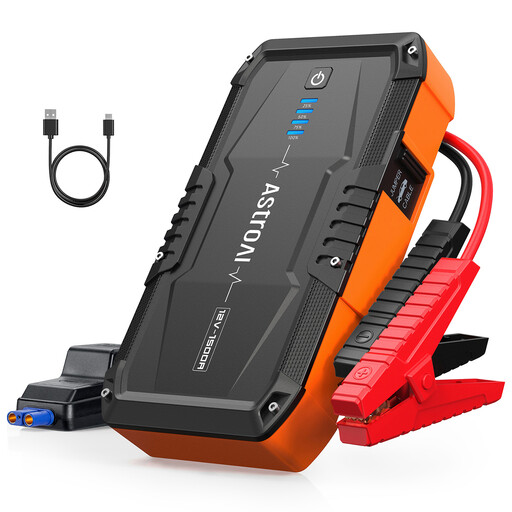
Why This Fits Their Persona: Ideal for those seeking a reliable, no-nonsense solution for a city car or a smaller family vehicle. It's compact enough for the glove compartment and powerful enough for most petrol engines.
This model focuses on the essentials: reliable starting. It lacks superfluous, expensive features and offers a realistic 1500A peak power for its target audience, without exaggeration.
Features 8 built-in safety functions and a special 'BOOST' button for completely dead batteries. The metal clamps are of solid quality.
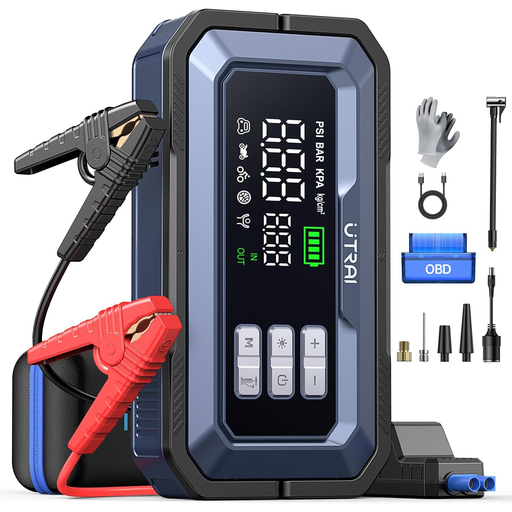
Why This Fits Their Persona: For those who want more than just a jump start. Perfect for RV owners, boaters, or anyone who wants an all-in-one emergency kit. It starts large engines, inflates tires, and functions as a powerful power bank and work light.
Where other models skimp on extras, this one delivers a functional 150 PSI compressor and a 160W DC output. The features are practical and well-integrated, not just a marketing gimmick.
Extremely powerful (starts diesel engines up to 14L). The built-in air pump with an auto-stop function and the bright 2000-lumen work light make this a highly versatile device.
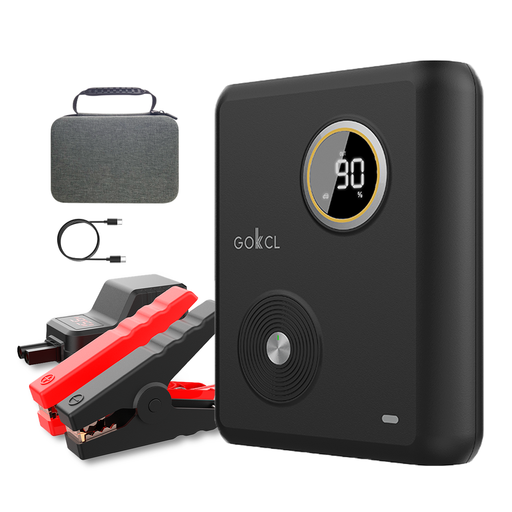
Why This Fits Their Persona: For those who invest in longevity and the latest technology. This jump starter uses a sodium-ion battery, which is safer and has a much longer lifespan than traditional lithium models.
It addresses the fundamental weakness of lithium batteries: degradation and temperature sensitivity. According to the manufacturer, this model has a standby time of up to 5 years and is safe to use from -40°C to 80°C.
The sodium-ion technology is inherently safer (no risk of fire or explosion if damaged) and can handle up to 6000 charge cycles according to its specifications, which is many times more than a lithium battery.
We have compiled a complete, up-to-date list of products that meet these selection criteria and current safety regulations.
Most manufacturers recommend charging a jump starter every 3 to 6 months, even if you don't use it. Lithium batteries have a low self-discharge rate, but they do lose charge over time. Regular charging ensures the battery remains in good condition and is always ready for use.
Yes, a modern portable jump starter with 'smart' jumper cables is designed to be safe. These cables have built-in protections against reverse polarity (connecting them incorrectly), short circuits, over-voltage, and overheating. An indicator (often a light or a sound) shows if the clamps are connected correctly before any power is delivered.
No, not every car jump starter is suitable for a diesel engine. Diesel engines have a higher compression ratio and require significantly more starting current than petrol engines of a similar size. Always check the jump starter's specifications and ensure it is explicitly rated for the engine displacement (in litres) of your diesel vehicle.
