
Vandaag of morgen in huis

Kwaliteit gegarandeerd

Welkomstaanbiedingen ontgrendelen: GRATIS bezorging | Tot 80% korting | Gratis 30 dagen JoyPlus-proefperiode
Download de app
A dead battery always comes as a surprise. That clicking sound instead of a starting engine is a familiar problem for many drivers, especially on cold mornings. A jump starter, also known as a car booster, offers a solution. It's a compact, portable battery that lets you get your car, motorcycle, camper, or boat running again, without depending on roadside assistance or a second vehicle.
However, the market is flooded with models that promise the world. Before you make a purchase, it's crucial to see through the marketing hype. As a Joybuy Product Recommendation Officer, I'll help you make the right choice by exposing the most common pitfalls.
Many jump starters look impressive on paper but fall short in practice. Watch out for these three common deceptions:
Manufacturers prominently advertise enormous peak power ratings, like 3000A or even 6000A. This number represents the maximum current the device can deliver for a fraction of a second. While it sounds impressive, the continuous starting current is far more important. This is the power the booster must supply for several seconds to actually turn the engine over. For example, a jump starter for a diesel engine needs a much higher and more sustained starting current than one for a small petrol engine. A continuous current that is too low results in a useless emergency starter.
A high capacity in milliampere-hours (mAh) is often presented as a sign of a powerful power bank with jumper cables. The pitfall is that this number usually reflects the capacity of the internal 3.7V battery cells. When charging your phone (5V) or laptop (around 20V), energy is lost during the voltage conversion. A more reliable metric is Watt-hours (Wh), as this indicates the total stored energy, regardless of the voltage.
A jump starter with an air compressor sounds like the ideal solution for any emergency. However, be critical. On cheaper models, one of the functions is often subpar. You might end up with a battery booster that can't start your car, or a compressor that takes fifteen minutes to inflate a tyre slightly. A multifunctional device is convenient, but only if every feature works as it should.
To avoid a bad purchase, focus on the specifications that truly matter. Check these three points before buying a portable jump starter.
Look beyond the peak Amps and check the engine displacement (in litres) for which the jump starter is suitable. Manufacturers usually specify this for both petrol and diesel engines (e.g., "up to 8.0L petrol / 6.0L diesel"). A diesel engine requires significantly more power to start. Make sure the 12v jump starter you choose has more than enough power for your vehicle.
If you also plan to use the car starter as a power bank, look for the capacity in Watt-hours (Wh) if it's listed. Also, check the output of the USB ports. A port with Power Delivery (PD) of, for example, 65W can charge a laptop, whereas a standard USB port is not powerful enough for that.
A good jump starter has built-in protection against the most common mistakes. Essential features include protection against:
Sturdy, well-insulated clamps and a robust housing are indicators of a durable and safe product.
To help you choose, we've matched several popular models with different user profiles.
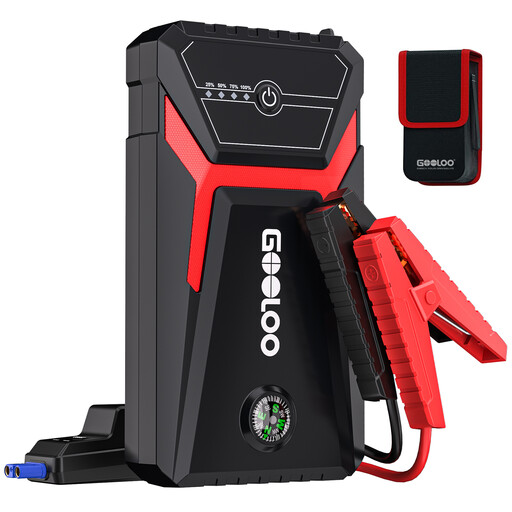
Why This Fits Their Persona: Ideal for the average driver with a petrol or compact diesel car. This model is compact, affordable, and focuses on its core task: providing reliable jump-starting power without unnecessary features.
This model avoids the peak current myth by offering a realistic 1500A, which is more than sufficient for the specified engines (up to 6.0L petrol/4.0L diesel). It focuses on reliability rather than marketing figures.
Compact and lightweight design, fits easily in the glove compartment. Includes the necessary safety features for worry-free use.
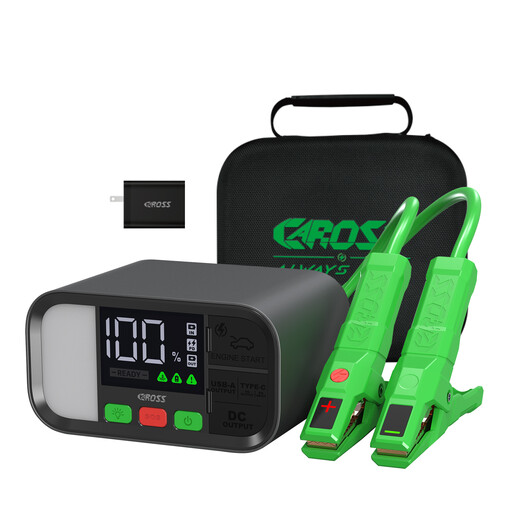
Why This Fits Their Persona: For those who value design, ease of use, and fast charging capabilities. Perfect for starting a mid-size car or SUV, but also for rapidly charging a laptop on the go.
The Smart Connect technology with non-polarized clamps makes incorrect connection impossible. This addresses a common risk with cheaper models. The focus on PD65W fast charging is an honest and useful specification, rather than a vague mAh claim.
Bi-directional 65W PD fast charging (charges the booster and your devices quickly) and a clear 3-inch screen for detailed status information.
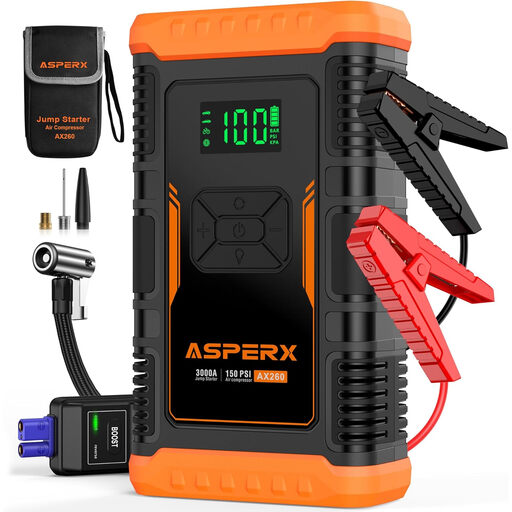
Why This Fits Their Persona: The perfect companion for RV owners, boaters, or campers. This device combines a powerful jump starter with a functional air compressor for inflating tyres, air mattresses, or inflatable boats.
This model avoids the "all-in-one" pitfall by offering a compressor with a specified airflow (35L/min) and a maximum pressure of 150 PSI. This is functional enough for car tyres, unlike weaker models.
A true 2-in-1 solution that performs on both fronts: powerful starting (3000A peak) and practical inflation. The LCD screen for the compressor is a handy addition.
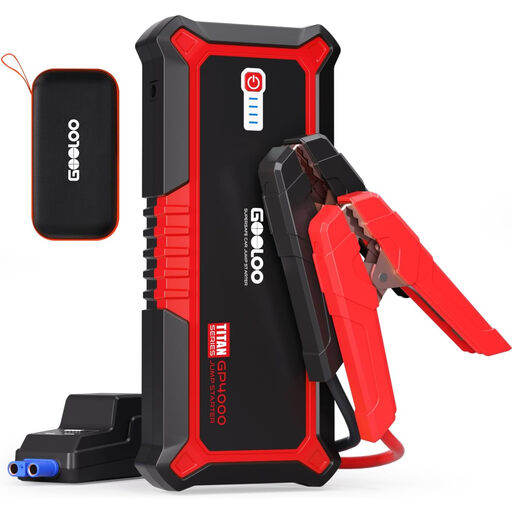
Why This Fits Their Persona: Designed for the owner of a heavy-duty van, large SUV, RV, or other vehicle with a large diesel engine. This model delivers the raw power needed to start even a stubborn diesel engine in the cold.
This model goes beyond peak Amp marketing by actually delivering the power for engines up to 10.0L diesel. The "BOOST" button is an honest feature that acknowledges that deeply discharged batteries require extra power.
Extremely high starting power (4000A peak) and a special boost function for the most difficult starting situations. Robust, all-metal clamps for durability.
We have compiled a complete, up-to-date list of products that fully meet these strict selection criteria and European safety regulations.
Even when not in use, a jump starter slowly loses its charge. Most manufacturers recommend fully charging the device every 2 to 3 months. This ensures the battery remains in good condition and the booster is always ready for use when you need it.
Yes, a jump starter is designed to be stored in your car. However, extreme temperatures can affect the battery's lifespan. Avoid leaving the booster on the dashboard in direct sunlight during the summer. Most models function properly within a temperature range of -20°C to 60°C (-4°F to 140°F), which is generally sufficient for most climates.
Not necessarily. As discussed earlier, peak Amperage isn't the whole story. A 4000A booster is overkill and unnecessarily expensive if you have a small city car. It's more important to choose a model that matches your vehicle's engine. A booster that's too powerful isn't harmful, but one that's too weak is a waste of money. Choose the right balance between power and your specific needs.
