
Vandaag of morgen in huis

Kwaliteit gegarandeerd

Welkomstaanbiedingen ontgrendelen: GRATIS bezorging | Tot 80% korting | Gratis 30 dagen JoyPlus-proefperiode
Download de app
A dead battery always comes as a surprise. Whether it's on a cold morning or after a long holiday, the sound of a starter motor failing to turn over is frustrating. Fortunately, the days of clumsy jumper cables and waiting for help are over. A modern jump starter, also known as a booster pack, is a compact and powerful solution that gets you back on the road in minutes.
But the market is flooded with models that promise the world. Before you make a purchase, it's crucial to know what to look for. Many marketing claims are misleading and can leave you with a useless device.
These are the 3 most common pitfalls:
To avoid a bad purchase, focus on the specifications that truly matter. A good car jump starter is an investment in peace of mind.
Ignore the peak power and look at the starting current and the recommended engine displacement (in liters). A compact gasoline car needs far less starting power than a large diesel SUV.
Always verify that the jump starter is suitable for a 12V system, which is standard for virtually all passenger cars, motorcycles, and vans in the UK and Europe.
Most jump starters use a lithium-ion battery. These are compact and powerful. Pay attention to the following features:
We have made a selection based on objective specifications, tailored to different user profiles.
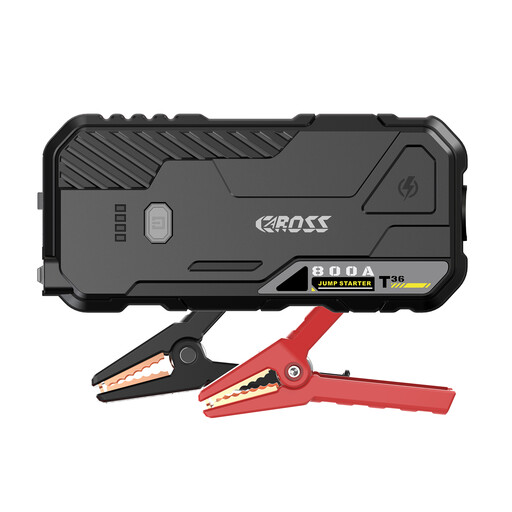
Why This Fits Their Persona: Ideal for drivers of city cars and hatchbacks. This model is compact enough for the glove compartment and provides sufficient power for most common gasoline engines. No unnecessary features, just a reliable solution for emergencies.
This model focuses on a realistic 800A peak power, which is more than enough for its target audience, instead of advertising with unnecessarily high figures.
Compact size, spark-proof technology, and a 'Boost' function for very weak batteries. The 10,000mAh battery also serves as a handy power bank.
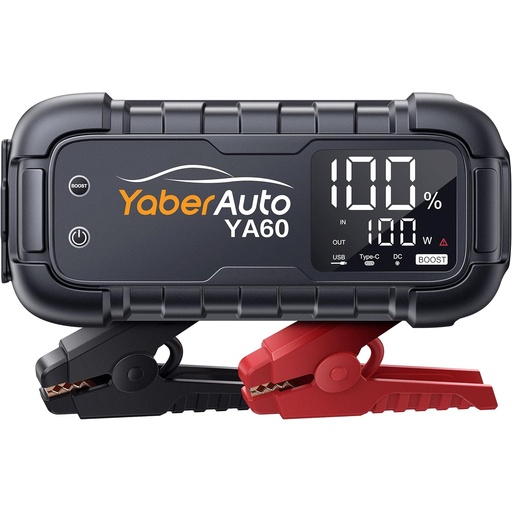
Why This Fits Their Persona: For those who drive a powerful SUV, van, or RV and also need a serious power bank. This device starts the toughest engines while simultaneously charging a laptop via the 65W USB-C port or a portable fridge via the 150W DC output.
The high capacity (26,800mAh) is supported by 65W fast charging, allowing the booster itself to be fully charged in just 1.5 hours. This minimises the risk of being caught with a dead booster.
Extremely powerful (starts all gasoline and up to 12.0L diesel engines) and functions as a fully-fledged mobile charging station with a 150W DC output.
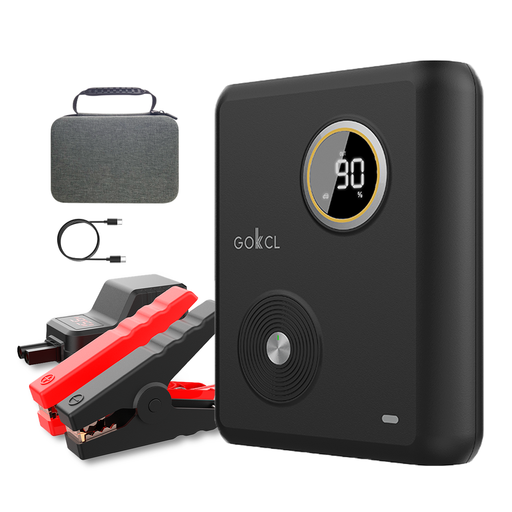
Why This Fits Their Persona: Perfect for boat owners, campers, or anyone who wants a jump starter that will last for years without maintenance. The sodium-ion technology is designed for extreme reliability and a long lifespan, even in freezing cold or scorching heat.
This model tackles the self-discharge pitfall head-on. According to the manufacturer, it has a standby time of up to 5 years, so you don't have to constantly think about recharging it.
Unique sodium-ion battery with an extremely long lifespan (6,000+ cycles, according to the manufacturer) and a wide operating temperature range (-40°C to 80°C).
We have compiled a complete, up-to-date list of products that fully meet these strict selection criteria and current safety regulations.
This depends on the model's self-discharge rate. For most lithium-ion jump starters, it is recommended to check and top them up every 3 to 6 months. Models with very low self-discharge, like the sodium-ion based GOKKCL, require much less frequent charging according to the manufacturer. Always consult the manual for your specific model.
Yes, many modern jump starters have a special "Boost" or "Force Start" function. This is intended for batteries that are so depleted that the booster doesn't automatically detect them. By pressing this button, you force the power supply to the battery, allowing you to start the engine. Use this feature with caution and follow the instructions in the manual.
No, not necessarily. An extremely high peak amperage is unnecessary for a standard passenger car and is often a marketing gimmick. It is more important that the starting power and engine compatibility of the jump starter match your vehicle. A booster that is too weak won't start your car, but an overly powerful one offers no extra benefit and is often unnecessarily expensive and bulky. Choose a model that fits your car.
