
Vandaag of morgen in huis

Kwaliteit gegarandeerd

Welkomstaanbiedingen ontgrendelen: GRATIS bezorging | Tot 80% korting | Gratis 30 dagen JoyPlus-proefperiode
Download de app
A dead battery always happens when you least expect it. You hear that single click, and then silence. A good jump starter is the lifesaver that gets you back on the road without waiting for roadside assistance. But the market is flooded with models that promise the world. Before you invest in a jump starter, it's crucial to know what to look for. Many devices aren't worth the money due to misleading marketing and hidden flaws.
As a Joybuy Product Recommendation Officer, I'm here to help you make the right choices. Here are the three most common traps buyers fall into:
To avoid a bad purchase, focus on the specifications that truly matter. These determine whether you can jump-start your car with a dead battery or if you'll be left with a useless device.
Don't be dazzled by peak amps. Look for the starting current (sometimes called 'cranking current'). For an average petrol car, 400A-600A is often sufficient. A jump starter for diesel engines needs more power, around 800A or more, because diesel engines have higher compression. A 12V jump starter is standard for passenger cars and motorcycles. Always check that the power is suitable for your engine displacement (in litres).
The capacity, expressed in milliampere-hours (mAh), determines how many times you can start a car or charge your phone. Pay attention to the nominal capacity, which is often lower than the advertised capacity. Even more important is the battery type. Most models are lithium-ion, but newer technologies like sodium-ion offer advantages. According to the manufacturer GOKKCL, their sodium-ion model has a much lower self-discharge rate, allowing it to remain ready to start for years without intermittent charging.
A jump starter with a compressor is ideal for those who want to be prepared for both a dead battery and a flat tyre. These all-in-one devices often include a powerful LED light and USB ports. However, consider whether you really need these features. A model that focuses purely on jump-starting is often more compact and lighter. For campers or people who travel a lot, a multifunctional device can be a real asset.
Below is a selection of jump starters tailored to different user profiles. These recommendations are based on objective specifications and functionality.
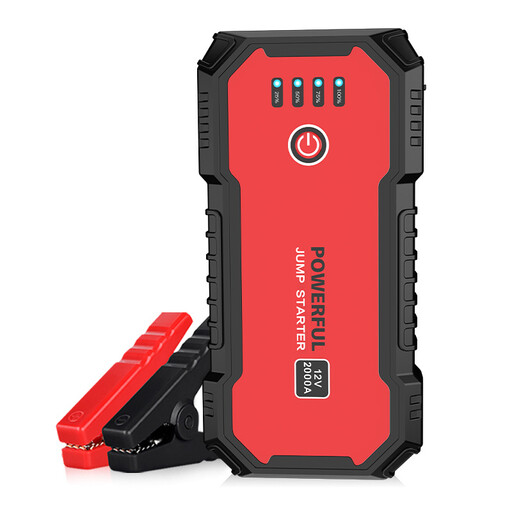
Why This Fits Their Persona: This is a no-nonsense battery booster for those seeking a reliable, compact solution for a standard petrol or smaller diesel car. It fits easily in the glove compartment and does what it's supposed to do: start your car.
Focuses on the core function without expensive extras. The 1500A peak current is realistic for most cars, and the 14000mAh capacity is sufficient for emergencies.
Very compact and lightweight (430g). Equipped with a QC3.0 fast-charging port to also quickly charge your phone.
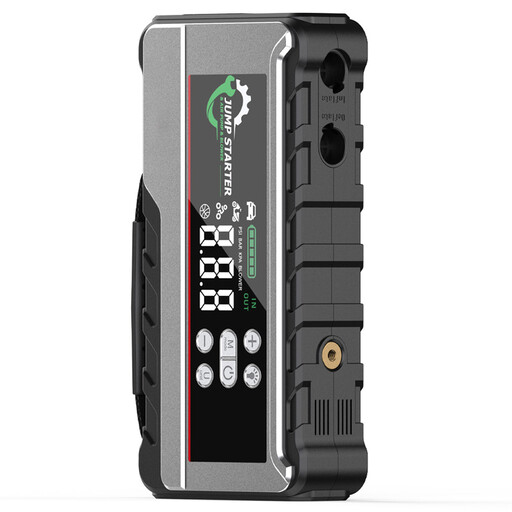
Why This Fits Their Persona: Perfect for campers and travellers. This device combines a powerful jump starter with a 150 PSI compressor, a power bank that can even charge a laptop (PD65W), and an air blower for air mattresses.
Although it's an all-in-one, it delivers on all fronts. The 3000A peak current and 24800mAh battery are substantial, and the compressor is a full-fledged feature, not a gimmick.
The PD65W fast-charging function is a major plus, allowing you to charge your laptop on the go. The built-in air blower is unique and handy for outdoor activities.
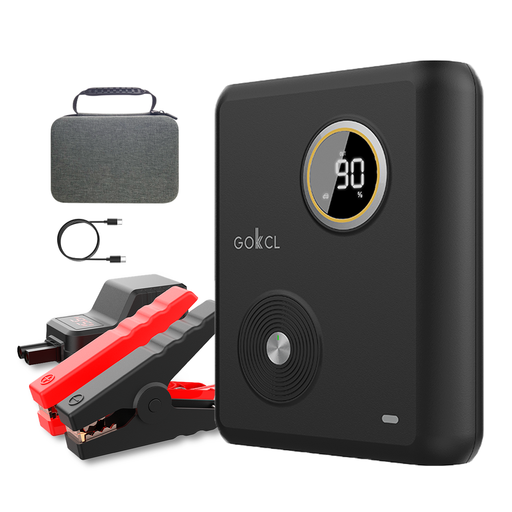
Why This Fits Their Persona: For those who demand absolute reliability. The sodium-ion technology is designed for extreme temperatures and has an extremely low self-discharge rate. You charge it once and, according to the manufacturer, can rely on it for up to 5 years.
Tackles the 'always dead' problem at its root. The extremely low self-discharge rate (~1% per month according to the manufacturer) means you don't have to constantly think about charging it.
Works in a wide temperature range (-40°C to 80°C). The battery can be revived even after a complete discharge, something often not possible with lithium-ion.
We have compiled a complete, up-to-date list of products that fully meet these strict selection criteria and UK safety regulations.
This largely depends on the type. Standard lithium-ion models should be checked and topped up every 3 to 6 months to ensure they are fully charged when you need them. Models with newer technology, such as sodium-ion, have a much lower self-discharge rate and require less frequent charging. Always consult the manufacturer's manual for specific advice.
Yes, modern jump starters are equipped with multiple safety mechanisms. These include protection against sparks, short circuits, overheating, and reverse polarity (connecting the clamps incorrectly). As long as you follow the instructions, using a quality car jump starter is safe for your vehicle's onboard computer and other electronics.
Not necessarily. Although most cars have a 12V system, a jump starter for a diesel engine requires a higher starting current (Amps) than one for a petrol engine of a similar size. This is due to the higher compression of diesel engines. Always check that the specifications of the battery booster, particularly the starting current and the recommended engine displacement (in litres), match your car's requirements.
