
Vandaag of morgen in huis

Kwaliteit gegarandeerd

Welkomstaanbiedingen ontgrendelen: GRATIS bezorging | Tot 80% korting | Gratis 30 dagen JoyPlus-proefperiode
Download de app
A dead battery always happens unexpectedly and at the worst possible moment. On a cold morning, in a rush to get to work, or late at night in a deserted parking lot. A jump starter is the lifesaver you need. But the market is flooded with models that promise impressive specs. Unfortunately, these often lead to a bad purchase. Before you invest in a battery booster, it's crucial to see through the marketing hype.
Many buyers fall for the same traps:
To choose a reliable car jump starter that won't let you down, focus on the following three points.
Don't be dazzled by the highest number. The most important specification is the recommended engine size. A manufacturer will always indicate the engine size (in litres) for which the booster is suitable, often specified for petrol and diesel. A diesel jump starter typically requires more power than one for a petrol engine of the same size.
Always check the manufacturer's specifications and compare them with your own vehicle's engine size.
A good portable jump starter is more than just a battery with cables. Modern devices should come with a smart jumper cable with built-in safety features. Look for the following functions:
Most jump starters use a lithium-ion battery. A newer technology is sodium-ion, which manufacturers claim offers advantages in safety at extreme temperatures and a longer lifespan.
Many modern jump starters are multifunctional. A jump starter with a power bank function is useful for charging your phone, tablet, or other USB devices on the go. Look for the presence of fast-charging ports like USB-C or Quick Charge (QC).
A built-in LED light is also a valuable addition. Most models offer multiple light modes, such as a steady beam, a strobe, and an SOS signal. This is invaluable for a breakdown in the dark.
Based on objective specifications and functionality, we have selected a number of models that suit different user profiles.
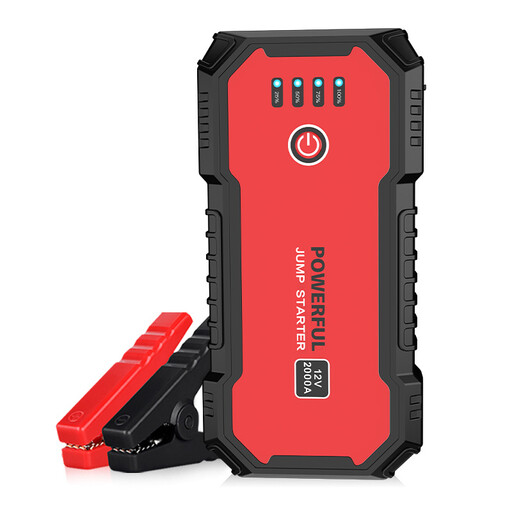
Why This Fits Their Persona: Ideal for the driver of a standard car or motorcycle. This model offers a solid balance between price and performance, without making you pay for overkill power you don't need. Compact enough for the glove compartment.
This model focuses on realistic performance for the most common vehicles and is equipped with the necessary safety features, so you're not skimping on reliability.
QC3.0 18W fast charging: Quickly charges your phone in an emergency. Compact and lightweight (430g): Easy to store and carry.
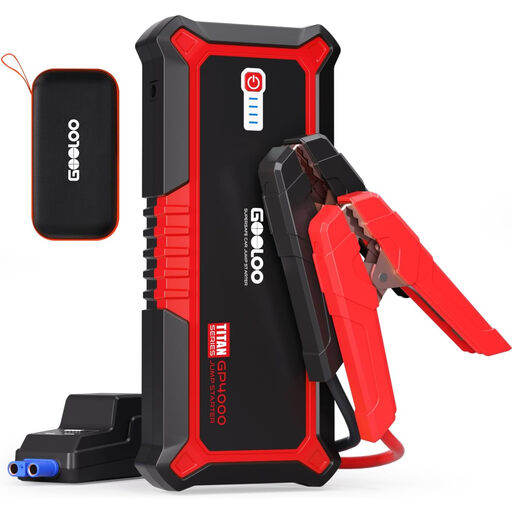
Why This Fits Their Persona: For owners of an SUV, van, RV, or a heavy-duty diesel engine. This is a powerful booster that provides the confidence to start even larger engines, even with a nearly dead battery, thanks to its "BOOST" function.
Where other models exaggerate, this one actually delivers the power needed for large engines (all petrol engines and up to 10.0L diesel), making its peak power claim functional.
Powerful starting capacity: Suitable for virtually all 12V vehicles. Robust, all-metal clamps: Designed for durability and reliable use.
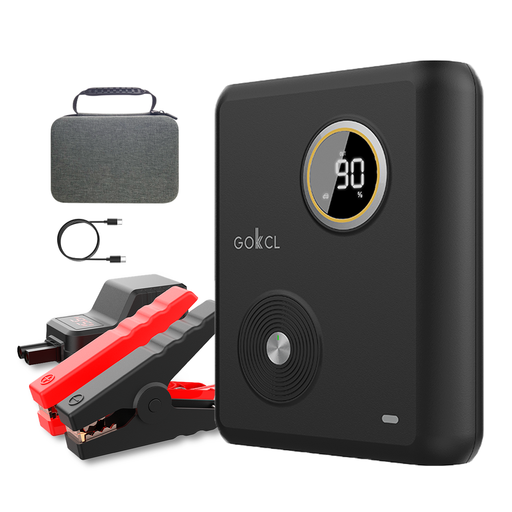
Why This Fits Their Persona: For those who invest in durability and the latest, safest technology. This model uses a sodium-ion battery, which you can leave in your car with peace of mind, regardless of the temperature.
Tackles the pitfall of unreliable batteries. According to the manufacturer, its sodium-ion technology is more stable and safer than lithium, with a much longer lifespan and minimal self-discharge.
Extreme temperature range: Operates from -40°C to 80°C (-40°F to 176°F), according to the manufacturer. Long standby time: Minimal self-discharge, so it's always ready for use.
We have compiled a complete, up-to-date list of products that fully meet these strict selection criteria and safety regulations.
Even when not in use, a jump starter slowly loses its charge. It is advisable to fully charge the booster every 3 to 6 months. This ensures the battery remains in good condition and the device is ready for use when you need it. Always consult the manufacturer's manual for specific recommendations.
Yes, most modern jump starters are designed to function within a wide temperature range, for example, from -20°C to +60°C (-4°F to +140°F). Extreme cold can temporarily reduce the performance of a lithium-ion battery. Models with a sodium-ion battery are claimed by the manufacturer to perform better in cold conditions. It is always wise to check the specifications of your model.
Not necessarily. It is much more important that the jump starter matches your car's engine. A booster with an extremely high peak amperage offers no extra benefit for a small city car and is unnecessarily expensive. Conversely, a booster that is too weak will not be able to start a heavy-duty diesel engine. Therefore, choose a model that is tailored to the engine size (in litres) of your vehicle.
