
Vandaag of morgen in huis

Kwaliteit gegarandeerd

Welkomstaanbiedingen ontgrendelen: GRATIS bezorging | Tot 80% korting | Gratis 30 dagen JoyPlus-proefperiode
Download de app
A dead battery is always unexpected and inconvenient. Whether you're rushing to work in the morning, heading out with the family for a weekend getaway, or stranded in the cold late at night. Waiting for roadside assistance is an option, but being self-reliant with your own jump starter provides peace of mind and control.
However, the market for these devices is filled with marketing claims that create more confusion than clarity. As a Product Recommendation Officer at Joybuy, I see consumers struggle with their choices every day. Before you invest in a portable jump starter, it's crucial to recognise the most common pitfalls.
By avoiding these traps, you ensure that you buy a product that actually performs when you need it most.
To avoid a bad purchase, it's better to focus on a few concrete, verifiable specifications. These determine whether a car jump starter is suitable for your vehicle and needs.
This is the most important factor. The peak current (A) is the maximum burst of current the booster can deliver. The starting current is the constant current needed to turn the engine over.
Always check the engine displacement (in litres) specified by the manufacturer. This is a more reliable indicator than peak current alone.
The capacity, expressed in milliampere-hours (mAh), determines how many times you can start a vehicle or charge your phone. Pay attention to the nominal capacity, if listed, as it is more realistic.
A good jump starter is more than just a battery with jumper cables. Essential safety features protect both you and your vehicle. Look for features like:
Models with a clear display that shows the status and any errors offer extra convenience and assurance.
Not every driver has the same needs. Below is a selection of jump starters tailored to different user profiles.
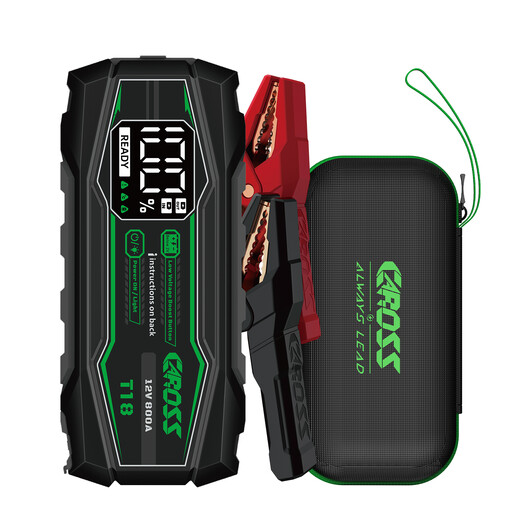
Why it's a match for the commuter: This model is compact, easy to use, and fits neatly in the glove compartment. It's ideal for drivers of standard passenger cars who need a reliable, no-nonsense solution for emergencies without paying for excessive power.
Avoids the 'peak current myth' by offering a realistic 800A, more than enough for most petrol cars (up to 4.0L), without exaggeration.
The clear 2.3-inch digital screen and built-in safety features (spark-proof, reverse polarity protection) make it user-friendly and safe.
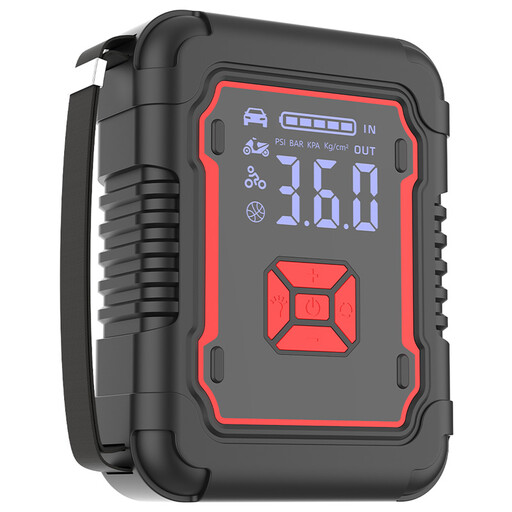
Why it's a match for the adventurer: This is a multifunctional Swiss Army knife. Besides starting larger engines (SUV, van), the built-in compressor can also inflate car or bike tyres. An ideal all-in-one solution for road trips and camping.
Counters the 'useless extras' pitfall by providing a compressor with a practical 150 PSI pressure and an auto-stop function, making it genuinely useful for tyre maintenance.
Combines four functions (jump starter, compressor, power bank with fast charging, and LED light) in one compact device, saving space and weight.
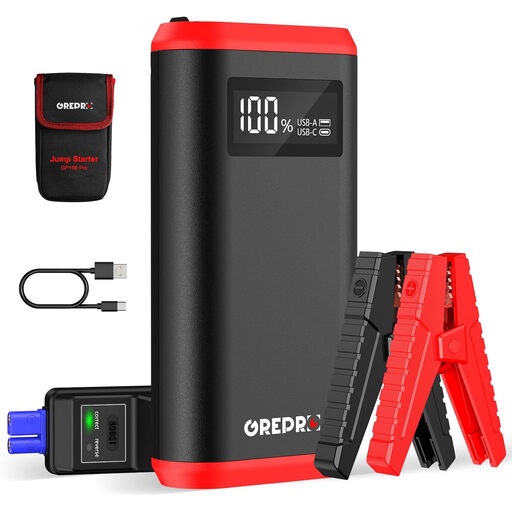
Why it's a match for the heavy-duty vehicle owner: With specifications for engines up to 10.0L petrol and 8.0L diesel, this model delivers the serious starting power needed for large SUVs, vans, RVs, and boats. This is a workhorse, not a gadget.
The high 3000A peak current isn't just empty marketing here; it's backed by clear specifications for large engines, making the power functional and not just for show.
The LCD screen shows the exact remaining power, which is crucial for a device that needs to be reliable for heavy-duty jobs. The 'force start' button can help with extremely low battery voltages.
We have compiled a complete, up-to-date list of products that meet these strict selection criteria and safety regulations.
1. How often should I charge a jump starter? Most manufacturers recommend fully charging a jump starter every 3 to 6 months, even if you don't use it. This helps keep the internal battery in good condition and ensures it's ready for use when you need it. Always consult your specific model's manual for the best maintenance advice.
2. Can I leave a jump starter in my car during winter or summer? This depends on the model and battery type. Standard lithium-ion boosters have an operational temperature range, often between -20°C and 60°C (-4°F and 140°F). Extreme heat or cold can negatively affect performance and lifespan. Some newer models, for example those with a sodium-ion battery, claim a wider temperature range, making them more suitable for being stored permanently in the car.
3. Is a jump starter the same as jumper cables with a battery? Yes, these terms are often used interchangeably. A jump starter, booster pack, or battery booster is essentially a compact, portable battery (similar to a power bank) with jumper cables attached. The major advantage is that it allows you to start your car independently, without needing a second vehicle.
