
Vandaag of morgen in huis

Kwaliteit gegarandeerd

Welkomstaanbiedingen ontgrendelen: GRATIS bezorging | Tot 80% korting | Gratis 30 dagen JoyPlus-proefperiode
Download de app
By the Joybuy Product Recommendation Officer | Published on July 14, 2026
It's a familiar scenario: you get in the car, turn the key, and... nothing. A dead battery always happens unexpectedly and at the worst possible moment. Waiting for roadside assistance is an option, but being in control yourself is more practical. A jump starter, also known as a booster pack or battery booster, is a compact and powerful solution that gets you back on the road in minutes.
The market for these devices is vast, and the specifications can be confusing. This article is designed to help you make an informed decision. We'll highlight the key considerations and present several popular choices based on their specifications and features.
Before you purchase a car jump starter, it's good to know which features are important for your situation. Here are a few practical points to consider.
The peak current, expressed in amps (A), is the most important figure. This indicates how much power the car jump starter can deliver to start an engine. A larger engine, especially a diesel engine, requires a higher peak current than a small gasoline engine.
Always check the manufacturer's specifications to see which engine displacement (in liters) the jump starter is suitable for.
Besides starting your car, many jump starters also function as a power bank with jumper cables. The capacity, expressed in milliampere-hours (mAh), determines how many times you can start a car or how often you can charge your phone or laptop.
Some models offer extras that can be very handy:
Modern jump starters are equipped with various safety features. Look for things like protection against short circuits, reverse polarity, overheating, and sparking. Smart jumper cables often indicate with lights or a sound signal whether you have connected them correctly. This makes the process much safer, even for those who are less technically inclined.
Below is a selection of jump starters that stand out for their specifications and features.
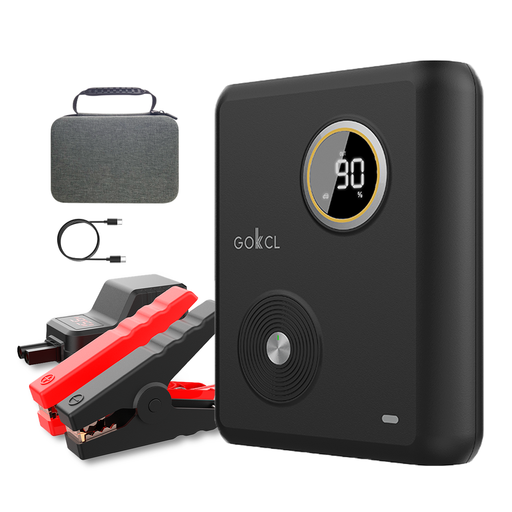
Why it stands out: This model uses a sodium-ion battery instead of the common lithium-ion battery. According to the manufacturer, Shenzhen Qimei New Energy Technology, this offers significant advantages in terms of lifespan and reliability. The battery can be fully discharged without permanent damage and has a very low self-discharge rate.
Pros:
Who is it for? For the car owner seeking a low-maintenance and highly durable solution that is reliable in all weather conditions.
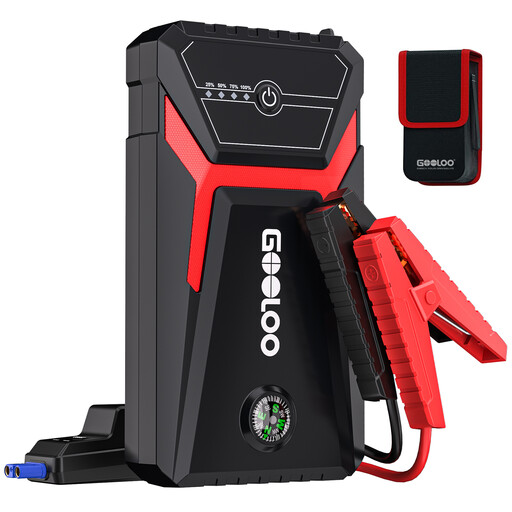
Why it stands out: The GOOLOO GE1500 is a compact and accessible all-rounder. It offers enough power for most common passenger cars and combines this with the functionality of a power bank.
Pros:
Who is it for? For the driver of a standard passenger car (gasoline or smaller diesel) who is looking for a reliable and affordable emergency solution.
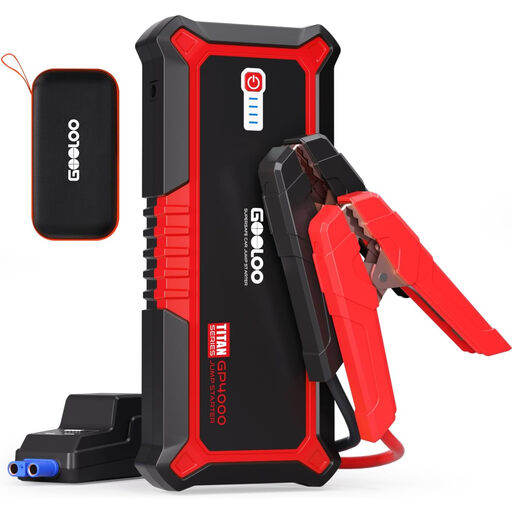
Why it stands out: With a peak current of 4000A, the GP4000 is a powerhouse. This model is designed for heavy-duty tasks and can start even large engines without any trouble.
Pros:
Who is it for? For owners of large vehicles such as pickup trucks, campers, vans, and boats, or for anyone who simply wants the assurance of extra power.
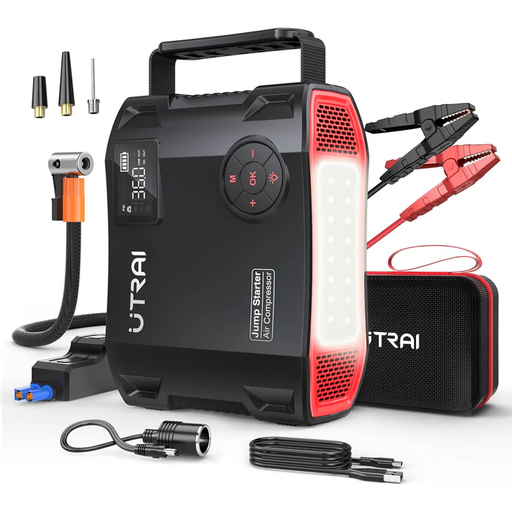
Why it stands out: The UTRAI JS5 is more than just a jump starter; it's a complete emergency kit. The combination of an extremely high peak current and a built-in air compressor makes this a highly versatile device.
Pros:
Who is it for? For the adventurer, camper, or professional who needs a multifunctional and powerful tool for both starting the car and handling other emergencies on the road.
These recommendations represent a selection of the available options. There are many more models with different specifications and price points. If you're looking for other options, check out our broader assortment.
Discover more options in our Car Portable Power Pack category
Although the exact steps may vary by model, the general procedure is as follows:
Always read the manual for your specific model for the correct instructions.
No, not every jump starter is powerful enough for a diesel engine. Diesel engines have a higher compression ratio and therefore require a significantly higher peak current to start, especially in cold weather. Always check that the peak current (A) and the recommended engine displacement (L) of the jump starter match those of your diesel vehicle.
This depends on the battery type and the self-discharge rate of the device. Most manufacturers of lithium-ion models recommend charging the jump starter every 3 to 6 months to keep the battery in good condition. Models with a sodium-ion battery, like the GOKKCL GK03, have a much lower self-discharge rate and, according to the manufacturer, need to be recharged less frequently. It is good practice to check the charge status periodically.
