
Vandaag of morgen in huis

Kwaliteit gegarandeerd

Welkomstaanbiedingen ontgrendelen: GRATIS bezorging | Tot 80% korting | Gratis 30 dagen JoyPlus-proefperiode
Download de app
A dead battery always happens unexpectedly. Whether it's on a cold morning or after your car has been sitting for a long time, the clicking sound of a car that won't start is a familiar problem. In the past, you had to rely on jumper cables and a helpful neighbor. Today, a jump starter, also known as a booster pack, offers a compact and self-contained solution.
But with so many options, finding the right car jump starter can be challenging. This guide is designed to help. As a Joybuy Product Recommendation Officer, I'll cut through the marketing jargon to break down the specs and help you choose a model that fits your vehicle and needs.
Before you buy a jump starter, it's helpful to understand a few key specifications. This ensures you choose a model that can actually start your car.
The most important specification is the peak current, measured in amps (A). This number indicates how much power the battery jump starter can deliver to crank your engine. A larger engine, especially a diesel, requires a higher peak current than a small petrol engine.
Always check the manufacturer's specifications to see what engine displacement (in liters) the jump starter is rated for.
Most modern jump starters use a lithium-ion battery, which makes them compact and powerful. An emerging technology is sodium-ion, which manufacturers claim offers advantages in extreme temperatures and has a longer lifespan.
Safety is crucial. A good jump starter has built-in protections against:
Many jump starters are more than just a starting aid. A jump starter power bank is equipped with USB ports to charge your phone, tablet, or other devices. This is convenient for travel or camping trips.
Some larger models are a jump starter with an air compressor. With these, you can not only start your car but also inflate your tires, making it a versatile emergency tool to keep in your trunk.
Based on specifications and functionality, we've highlighted a few interesting models for you.

Why it stands out: The GOOLOO GP3000 is a powerful all-rounder. With a peak current of 3000A, it's suitable for a wide range of vehicles, including large SUVs and diesel vans.
Pros:
Who is it for? For owners of larger cars, SUVs, or diesel vehicles who need a reliable and powerful car jump starter that can also serve as a power bank.
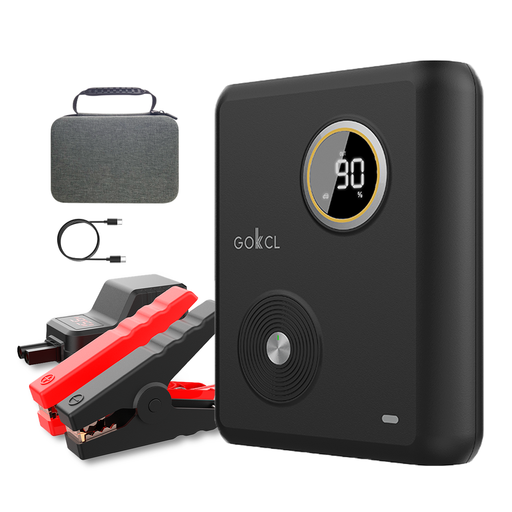
Why it stands out: This model uses a sodium-ion battery. The manufacturer, Shenzhen Qimei New Energy Technology, claims this technology has a very long standby time (up to 5 years) and performs better in extreme temperatures (-40°C to 80°C / -40°F to 176°F).
Pros:
Who is it for? For those looking for a low-maintenance jump starter that you can leave in your car with peace of mind, regardless of the season. Ideal for people who want to be prepared without constantly having to think about it.
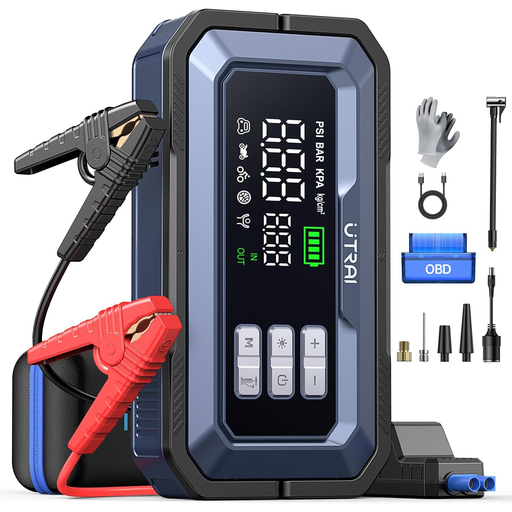
Why it stands out: The UTRAI JS-30 is a complete emergency kit. With an extremely high peak current of 7000A, a built-in air compressor, and even an OBD2 fault code reader, this is one of the most versatile devices on the market.
Pros:
Who is it for? For the professional, the RVer, or the driver who wants to be prepared for anything. This is more than a jump starter with an air compressor; it's a mobile roadside assistance station.
These recommendations cover a wide range of needs, from daily use to heavy-duty applications. However, if you're looking for a model with different specifications, a more compact size, or a different price point, many more options are available.
Check out our full assortment for more choices and find the lithium portable jump starter power bank that's perfect for you.
See more jump starters on Joybuy.nl
Using one is generally simple and safer than traditional jumper cables. Make sure the car and the jump starter are turned off. First, connect the red clamp to the positive (+) terminal of the battery, then connect the black clamp to the negative (-) terminal. Turn on the jump starter, wait a moment, and start the car. After a successful start, remove the clamps in reverse order (black first, then red).
No, a jump starter is not a battery charger. The device delivers a short, powerful burst of current to start the engine. Once the engine is running, the car's alternator will recharge the battery. To fully charge a dead battery, you need a separate battery charger.
This depends on your engine. As a rule of thumb:
