
Vandaag of morgen in huis

Kwaliteit gegarandeerd

Welkomstaanbiedingen ontgrendelen: GRATIS bezorging | Tot 80% korting | Gratis 30 dagen JoyPlus-proefperiode
Download de app
A clicking sound instead of a roaring engine. It's every driver's nightmare, especially on a cold morning or when you're in a hurry. A dead battery is a common problem, but thankfully, the solution is simple and affordable: a portable jump starter. This compact device gives your vehicle the necessary jolt of power to get back on the road, without depending on jumper cables and a second car.
But the market for jump starters is flooded with marketing claims and technical specifications that confuse more than they clarify. As a Joybuy Product Recommendation Officer, I'm here to help you make the right choices. We'll look past the hype and focus on what truly matters, so you can avoid a bad purchase.
Before you buy a battery booster, it's crucial to recognise the most common marketing traps. Manufacturers often use impressive numbers, but they don't always tell the whole story.
To make an informed choice, we'll focus on three concrete specifications that determine if a jump starter is right for you.
The required starting power depends on your engine. A 12V system is standard for almost all passenger cars and motorcycles. The amperage determines which engines you can start.
Most jump starters use a lithium-ion battery, which is compact and powerful. Also, consider the extras that might be useful for you:
Always check if the car jump starter is equipped with smart jumper cables that offer the following protections:
These features make it safe to use, even if you're not technically inclined.
To help you choose, we've selected a few models that fit different user profiles.
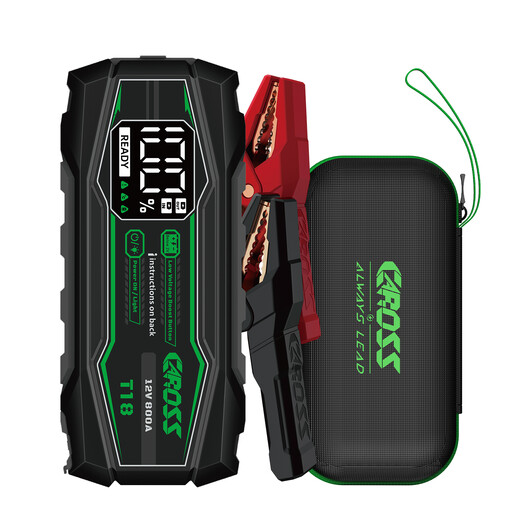
Why This Fits Their Persona: Ideal for drivers of standard passenger cars (gasoline or small diesel) who need a reliable, compact, and no-nonsense solution. Fits easily in the glove compartment and provides peace of mind for daily commutes.
This model doesn't focus on an exaggerated peak current but offers a realistic 800A that is perfect for its target audience. It includes all essential safety features, such as spark-proof and reverse polarity protection.
Compact and lightweight, with a clear digital screen for easy operation. Comes with a convenient storage case.
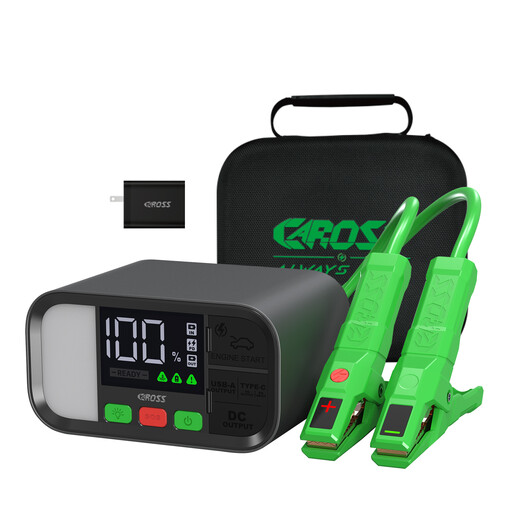
Why This Fits Their Persona: For the driver of a larger SUV or diesel car who values technology and ease of use. The PD65W output makes it a fully-fledged power bank for laptops, ideal for those who work on the go.
This model distinguishes itself with smart technology. According to the manufacturer, its Smart Connect technology with polarity-free clamps makes incorrect connection impossible, shifting the focus to safety and innovation rather than just brute force.
The bi-directional PD65W fast charging is a major plus. The aluminum housing feels premium, and the large 3-inch screen is very clear.
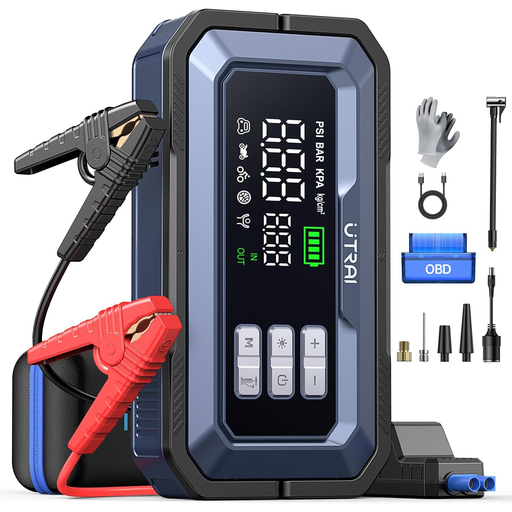
Why This Fits Their Persona: This is more than a jump starter; it's a complete emergency kit. Perfect for campers, outdoor enthusiasts, and anyone who wants to be fully prepared for roadside trouble. Start the car, inflate the tyres, and light up the entire area.
While many multi-function devices fall short in one or more areas, this model delivers on all fronts according to its specifications. The compressor has a respectable pressure of 150 PSI, and with 7000A peak power, the starting capability is suitable for very heavy-duty engines.
A true all-in-one solution. The combination of a powerful jump starter, an air compressor, a 160W DC output, and a bright work light makes this an extremely versatile device.
We have compiled a complete, up-to-date list of products that fully meet these strict selection criteria and safety regulations.
Most manufacturers recommend charging the jump starter every 3 to 6 months, even if you don't use it. This helps keep the internal battery in good condition and ensures it's ready for use when you need it. Always consult the manual for your specific model for precise advice.
Yes, most jump starters are designed to operate within a wide temperature range, often from -20°C to 60°C (-4°F to 140°F). Extreme cold can temporarily reduce the battery's performance, but a quality model will still be able to start your car. It is wise, however, to keep the booster fully charged during the winter months.
Not necessarily. It's more important to choose a model that matches your vehicle. A jump starter with 3000A is unnecessary and more expensive if you have a small city car. Conversely, a booster that's too weak will struggle with a heavy-duty diesel engine. Match the power to your engine size for the best price-to-performance ratio.
