
Vandaag of morgen in huis

Kwaliteit gegarandeerd

Welkomstaanbiedingen ontgrendelen: GRATIS bezorging | Tot 80% korting | Gratis 30 dagen JoyPlus-proefperiode
Download de app
You turn the key, only to hear a disappointing click. A dead battery. It happens to everyone, often at the most inconvenient moment. Waiting for roadside assistance isn't always an option. A portable jump starter provides the solution: you're back on the road in minutes, without depending on anyone else.
But the market is flooded with models promising impressive specs. Unfortunately, these marketing claims often lead to a regrettable purchase. As a Joybuy Product Recommendation Officer, I'll help you separate fact from fiction, so you can choose a model that actually delivers on its promises.
Before we look at products, it's crucial to recognize the most common traps. Manufacturers often use technical specifications that create more confusion than clarity.
You see it everywhere: "3000A!", "4000A!". This peak amperage (A) sounds powerful, but it's often a theoretical maximum that the jump starter can only deliver for a fraction of a second. It says little about the actual power to start an engine, especially in cold weather. Focusing too much on this number can lead you to buy a model that looks strong on paper but falls short for your larger diesel or gasoline engine.
A jump starter with a power bank function is convenient, but the advertised capacity in milliampere-hours (mAh) can be misleading. This number often represents the capacity of the internal battery cells, not the actual energy available to charge your phone or laptop. Due to energy loss during conversion, the effective output can be up to 30% lower. You might think you're buying a powerhouse, but you may only be able to charge your phone once.
A cheap battery jump starter can pose a risk to both you and your vehicle's electronics. Basic models sometimes lack crucial protections. Without spark-proof technology, reverse polarity protection (protecting against connecting the clamps incorrectly), and safeguards against short-circuiting or overheating, a simple mistake can lead to battery damage or even dangerous situations.
To make an informed choice, we need to look past the marketing and focus on the specifications that truly matter.
Don't just focus on peak amperage; check if the manufacturer also provides information on starting power. More importantly, consider the compatibility with your engine. A general guideline:
Most portable jump starters use lithium-ion batteries. They are compact and powerful. Pay attention to the capacity expressed in Watt-hours (Wh) if listed; this is a more reliable indicator of total energy than mAh. A higher Wh rating means more starting attempts or more charges for your devices.
A reliable car battery booster must have a "smart" cable with a suite of protections. Always check for the presence of:
Based on these objective criteria, we have selected a few products that suit different user profiles.
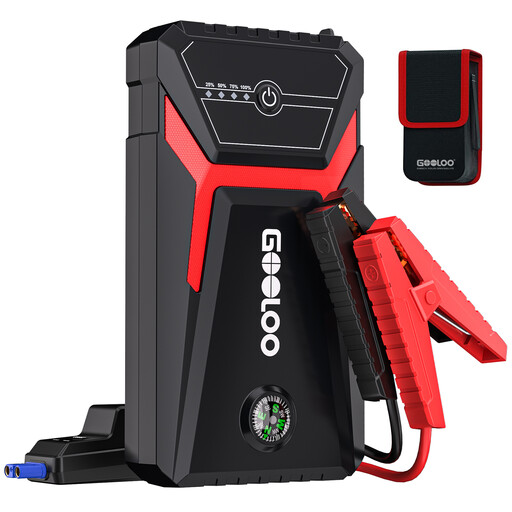
Why This Fits Their Persona: Ideal for those seeking a reliable, no-nonsense solution for a standard passenger car (gasoline or diesel). It's compact enough for the glove compartment and provides enough power for most situations, without making you pay for unnecessary specs.
This model focuses on realistic performance (1500A peak for 6.0L gasoline/4.0L diesel) and is equipped with 10 safety features, thus avoiding the trap of unsafe budget models.
Equipped with a smart chip and protected jumper cables. It also functions as a handy power bank with multiple USB outputs for charging devices.
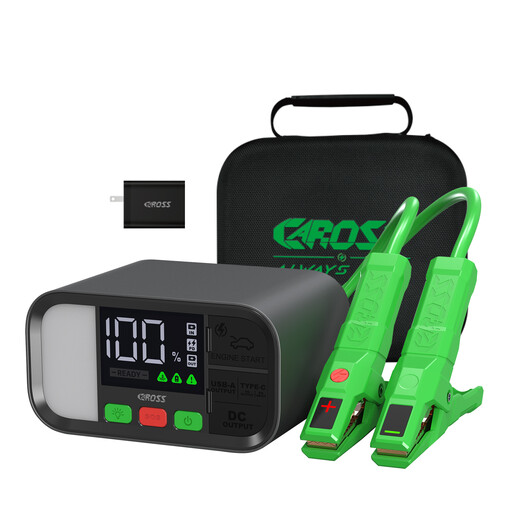
Why This Fits Their Persona: For those who rely on their car daily and value ease of use and extra functionality. The 65W fast-charging feature is perfect for charging a laptop on the go, and the clear screen provides an instant status overview.
This model bypasses the misleading capacity trap by offering a powerful 65W PD output, which proves its usability as a power bank. The "Smart Connect" technology with non-polarized clamps eliminates the risk of incorrect connection.
Large 3-inch digital screen for clear information. The aluminum housing and included 65W charger and storage case underscore its focus on quality and completeness.
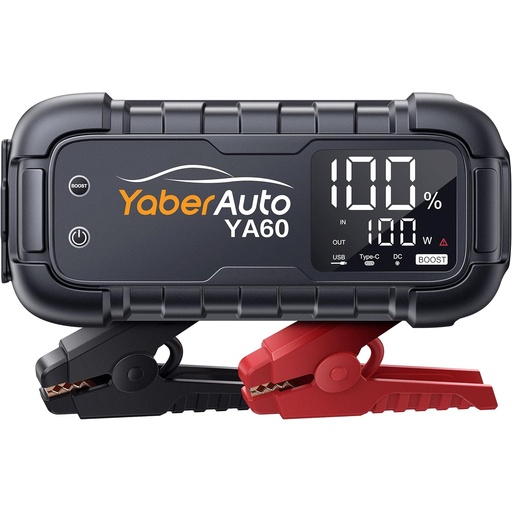
Why This Fits Their Persona: Designed for heavy-duty work. With a peak power of 8000A and suitability for diesel engines up to 12.0L, this is the solution for RVs, vans, boats, and agricultural vehicles. The 150W DC output is a unique extra for powering other automotive equipment.
Where other models exaggerate their peak amperage, this model delivers the actual power needed for large engines. The "BOOST" button for completely dead batteries is a functional addition, not a marketing gimmick.
Extremely high peak power (8000A) and a large battery capacity (26800mAh). The 65W two-way fast charging function ensures the booster itself can be fully recharged in just 1.5 hours.
We have compiled a complete, up-to-date list of products that fully meet these strict selection criteria and safety regulations.
Most manufacturers recommend charging a lithium-ion jump starter every 3 to 6 months, even if you don't use it. This helps keep the battery in good condition and ensures it's ready when you need it. Some newer models, such as those with sodium-ion technology, have much lower self-discharge and require less frequent charging.
No, a modern jump starter with smart safety features is designed to be safe for your car's electronics. The built-in protections against reverse polarity, short circuits, and overvoltage prevent damage. However, it is important to follow the manufacturer's instructions carefully.
Traditional jumper cables require a second vehicle with a working battery to start your car. This means you are dependent on help from others. A portable jump starter is a self-contained power bank powerful enough to start your engine on its own. This gives you complete independence and is much faster and more convenient in an emergency.
