
Vandaag of morgen in huis

Kwaliteit gegarandeerd

Welkomstaanbiedingen ontgrendelen: GRATIS bezorging | Tot 80% korting | Gratis 30 dagen JoyPlus-proefperiode
Download de app
A dead battery always happens unexpectedly and at the worst possible moment. Whether it's on an icy morning or in a supermarket car park, it's a frustrating experience. A jump starter, also known as a battery booster, is the modern solution that frees you from relying on roadside assistance or helpful neighbours with jumper cables.
But the market is flooded with models that promise the world. Before you invest in this handy car starter, it's crucial to know what to look for. Many devices aren't worth the money due to misleading specifications and weak performance.
The 3 pitfalls when choosing a jump starter:
To make a smart choice, focus on the specifications that determine performance and reliability.
Ignore the flashy peak current and look for the starting current (sometimes called ‘cranking amps’). This is the power your car actually needs. An average petrol car will be fine with 300-500A of starting current, but a larger SUV or a diesel engine needs significantly more, often in the range of 600-1000A. The peak current is only relevant as an indication of the maximum 'boost' the device can provide for a short burst.
The capacity, expressed in milliampere-hours (mAh), determines how many times you can use the battery booster before it needs recharging. Pay attention to the rated capacity, which gives a more honest picture of the usable energy.
Most jump starters use lithium-ion batteries. An interesting development is the rise of sodium-ion batteries. According to manufacturers like GOKKCL, these offer advantages such as a much longer standby time (years instead of months), a wider temperature range (-40°C to 80°C), and greater fire safety.
Always check what engine size (in litres) the emergency car starter is suitable for. A distinction is made between petrol and diesel engines. A starter for an 8.0L petrol engine is not automatically suitable for an 8.0L diesel engine, as diesels have higher compression and require more starting power.
Modern jump starters are equipped with smart jumper cables that protect against:
These features make them safe to use, even for those with no technical knowledge.
We have selected a number of models that suit different user profiles, based on their objective specifications and functionality.
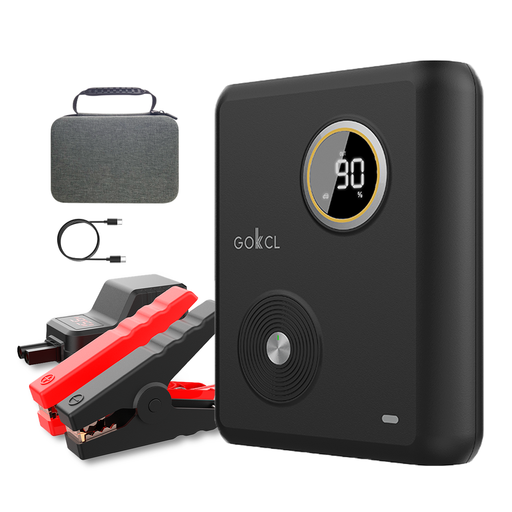
Why This Fits Their Persona: Ideal for those seeking a 'set-it-and-forget-it' solution. The focus is on maximum long-term safety and reliability, without the need for constant recharging. Perfect for the driver who values peace of mind above all else.
According to the manufacturer, the sodium-ion technology has a self-discharge rate of only ~1% per month, which bypasses the 'mAh myth'. You don't need to charge it every 3 months; it's ready to start for years.
Long standby time: Up to 5 years of standby per charge, according to GOKKCL. Stable in extreme temperatures: Works reliably from -40°C to 80°C, safe to leave in the car.
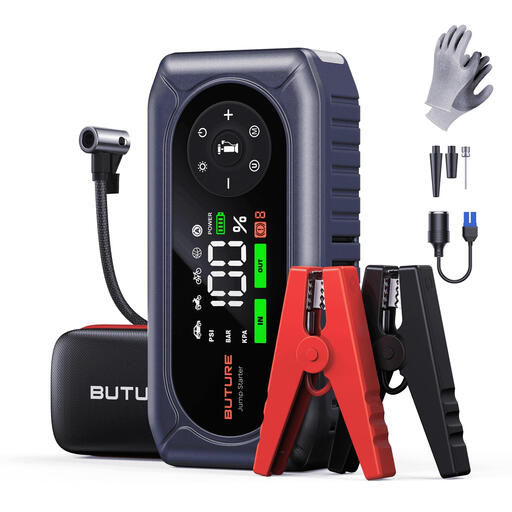
Why This Fits Their Persona: For the adventurer who needs a multifunctional tool. This device combines a powerful jump starter with a fully-fledged air compressor, ideal for inflating camper or bike tyres and charging devices far from civilisation.
This is not a weak 'all-in-one' compromise. The 4500A peak current is suitable for large engines (up to 9.0L petrol/8.0L diesel) and the 150 PSI compressor is a serious tool, not a gimmick.
Powerful 5-in-1: Combines a strong jump starter, 150 PSI digital compressor, power bank, and 500-lumen LED light. Smart compressor: Automatic stop function prevents over-inflation.
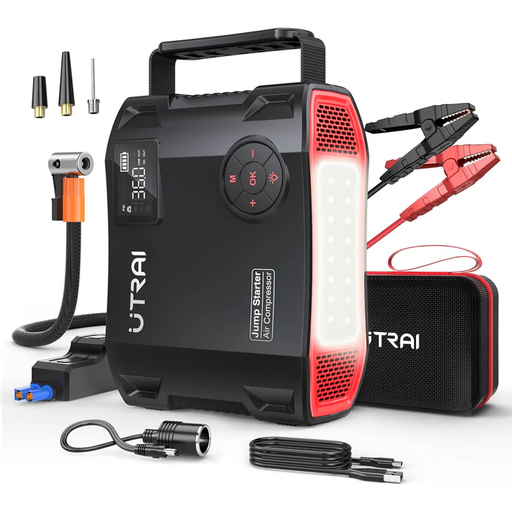
Why This Fits Their Persona: For those who depend on a large, heavy vehicle. This jump starter delivers the serious power needed to start large diesel engines (up to 10.0L). The 160W DC output is a unique bonus for powering other 12V equipment.
This model debunks the 'peak current myth' by actually delivering the extreme performance needed for heavy-duty engines. Its specifications are focused on pure power, not just marketing.
Extremely high starting power: 6000A peak current for all petrol engines and diesels up to 10.0L. 160W DC output: Can directly power devices like a car cooler or vacuum cleaner.
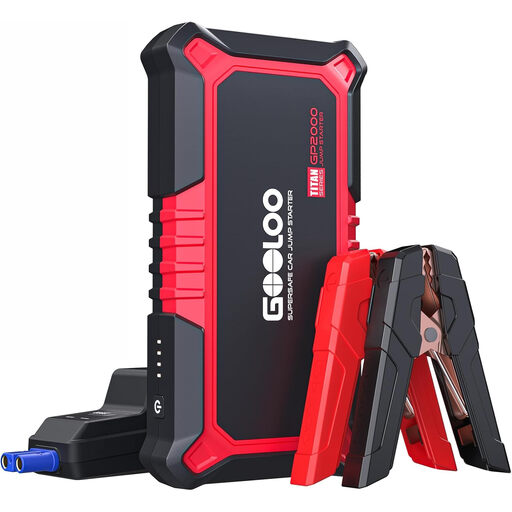
Why This Fits Their Persona: A compact, reliable, and affordable solution for the daily driver with a standard passenger car. It fits easily in the glove compartment and does what it's supposed to do: start your car without any fuss.
This model focuses on the core function. It avoids the 'all-in-one' compromise by providing a solid starting function without unnecessary extras that drive up the price or reduce quality.
Compact and lightweight: Weighs only 545 grams and is easy to store. Good value for money: Offers sufficient power (2000A peak) for most cars (up to 8.0L petrol/6.0L diesel).
We have compiled a complete, up-to-date list of products that fully meet these strict selection criteria and safety regulations.
This depends on the model and battery technology. Most lithium-ion jump starters should be charged every 3 to 6 months to keep the battery in good condition. Models with very low self-discharge, such as those with sodium-ion technology, can hold their charge for much longer according to the manufacturer. Always consult the manufacturer's manual for specific maintenance advice.
Yes, a modern jump starter is safe. They are equipped with 'smart' jumper cables that provide a range of protections, including safeguards against reverse polarity, short-circuits, over-voltage, and overheating. These systems prevent damage to your vehicle's sensitive electronics, even if you accidentally connect the clamps incorrectly.
No, this is a common mistake. Diesel engines have a higher compression ratio and require significantly more power (a higher starting current) to start than petrol engines of a similar size. Always check that the specifications of the battery booster explicitly state that it is suitable for the engine displacement (in litres) of your specific diesel engine. A starter that is too weak will not be able to start a diesel engine.
