
Vandaag of morgen in huis

Kwaliteit gegarandeerd

Welkomstaanbiedingen ontgrendelen: GRATIS bezorging | Tot 80% korting | Gratis 30 dagen JoyPlus-proefperiode
Download de app
A dead battery always strikes unexpectedly and at the worst possible moment. Waiting for roadside assistance is often the only option. A portable jump starter offers a solution. With one, you can be back on the road in minutes, without depending on anyone else.
However, the market for these devices is flooded with marketing claims that create more confusion than clarity. Before you invest in a car battery starter, it's crucial to recognise the common pitfalls that lead to a bad purchase.
power bank with jumper cables may provide far fewer starts than promised.jump starter with an air compressor, flashlight, and USB ports sounds convenient. But if these extra features are low-quality, they undermine the reliability of the main function: starting your car. A poor compressor or a weak flashlight adds little value if the car jump starter itself fails.To choose a model that suits your car and your needs, focus on the specifications that truly matter. Don't get distracted by marketing jargon.
The most important specification is the starting power, expressed in amperes (A). It's crucial to distinguish between two values:
battery booster can deliver for a very short time. This number is often heavily featured in marketing.A gasoline engine up to 2.0 litres typically requires a jump starter with around 400-600A of starting current. A larger gasoline or diesel engine (especially in cold weather) needs significantly more, around 800A or higher. Always check the compatibility with your engine's displacement (litres).
The capacity determines how many times you can start a car or charge your phone. Instead of focusing on the misleading mAh value, it's better to look at Watt-hours (Wh), if listed. This is a more reliable indicator of the total energy.
Most modern portable jump starters use a Lithium-ion (Li-ion) battery. These are compact and lightweight. Pay attention to the manufacturer's recommendation to charge the portable jump starter every 2 to 3 months to ensure the battery's longevity.
A good jump starter is equipped with built-in safety protections. Without these features, an incorrect connection can damage your car's electronics or the jump starter itself. Essential protections include:
These features make using a jump starter safe, even for those with no technical expertise.
Based on objective specifications and functionality, we have made a selection that suits different types of users.
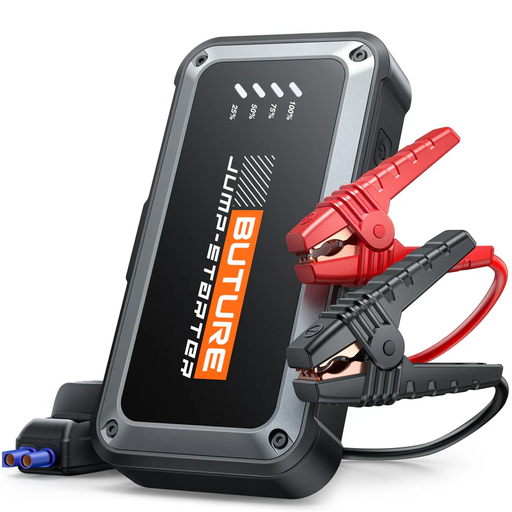
Why This Fits Their Persona: For those who rely on their car daily and need a compact, reliable solution. This model is light and small enough for the glove compartment, yet powerful enough for most passenger cars.
This model focuses on the core function: starting your car. It avoids the pitfall of unnecessary gadgets and delivers solid starting capacity in a compact form factor.
Extremely lightweight: At just 0.370 kg, it's highly portable. Wide compatibility: Suitable for gasoline engines up to 9.0L and diesel engines up to 8.5L.

Why This Fits Their Persona: Ideal for those who go on adventures with their RV, caravan, or car. The integrated compressor is perfect for inflating the tires of your car, bike, or trailer without needing to bring a separate device.
This device combines two functions that are genuinely useful for this target audience. The compressor is a fully-featured addition with 150 PSI and an auto-stop function, not a cheap gimmick.
Built-in 150 PSI compressor: With preset modes and automatic shut-off. Powerful starting capacity: Suitable for gasoline engines up to 9.0L and diesel up to 8.0L.
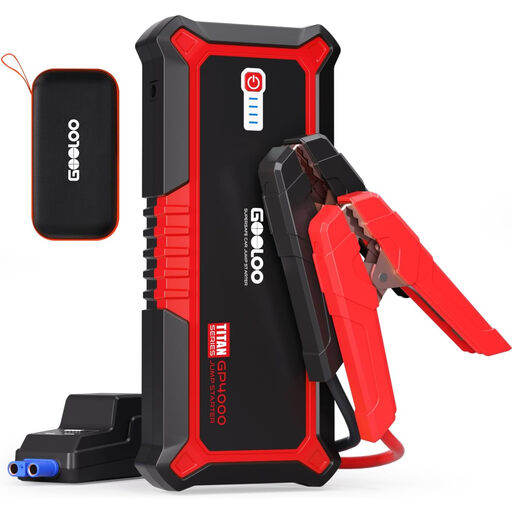
Why This Fits Their Persona: For owners of a heavy-duty SUV, van, RV, or a car with a large diesel engine. This model is designed to deliver the high starting current needed to start these engines, even at low temperatures.
While other models advertise a high peak current they can't sustain, the GP4000 is built for heavy-duty work. The "BOOST" button is a practical feature for deeply discharged batteries, not a marketing trick.
High starting power: Suitable for all gasoline engines and diesel engines up to 10.0L. "BOOST" function: Provides a solution for starting vehicles with a very low battery voltage.
We've compiled a complete, up-to-date list of products that fully meet these strict selection criteria and safety regulations.
Most manufacturers recommend fully charging a portable jump starter every 2 to 3 months, even if you don't use it. This ensures the internal lithium-ion battery remains in good condition and is always ready for use. Consult your specific model's manual for the exact advice.
No, when used correctly, a modern jump starter is safe for your car. Models with built-in protections, such as reverse polarity and spark-proof technology, prevent damage from incorrect connections. Always connect the red clamp to the positive terminal (+) first, then the black clamp to the negative terminal (-) of the battery before activating the jump starter.
That depends on your situation. For the average driver who only needs an emergency solution for a dead battery, a compact model without a compressor is often more practical and affordable. However, if you regularly go camping, own a caravan, or cycle a lot, a combined device is very convenient. It saves space and ensures you always have a solution for both a dead battery and a flat tire.
