
Vandaag of morgen in huis

Kwaliteit gegarandeerd

Welkomstaanbiedingen ontgrendelen: GRATIS bezorging | Tot 80% korting | Gratis 30 dagen JoyPlus-proefperiode
Download de app
A clicking sound and a dashboard that won't light up. A dead battery is always unexpected and inconvenient, whether you're on your way to work or starting a holiday. Waiting for roadside assistance can take hours and is often a costly affair. A jump starter, also known as a booster pack, offers an immediate and independent solution.
With a portable jump starter in your trunk, you can get your car, motorcycle, or even boat running again on your own. But the market is vast, and the specifications can be confusing. This guide will help you understand the key features and find a model that suits your vehicle and needs, so you're prepared for any situation.
Before making a choice, it's wise to consider three important aspects. These will determine if a jump starter is right for your situation.
The peak current, expressed in amperes (A), is the maximum current the jump starter can deliver to start your engine. A larger engine requires more power. A jump starter for a diesel engine typically needs a higher peak current than one for a gasoline engine of a similar size, due to higher compression.
Always check the manufacturer's specifications to see if the jump starter is suitable for your engine's displacement (in liters).
Modern jump starters are often more than just a car jump starter. Many models also function as a multi-functional emergency kit.
Most jump starters use lithium-ion batteries, which offer a good balance between power and weight. This makes them compact and easy to store. A portable jump starter fits easily in your glove compartment or under a seat. Also, pay attention to safety features, such as protection against short circuits, reverse polarity, and overheating. Newer technologies, like sodium-ion, offer alternatives with a focus on lifespan and performance in extreme temperatures.
Based on specifications and functionality, we have compiled a list of interesting options for you.

Why This Model Stands Out The ACEZUK M03 combines a very powerful starting function with the convenience of a built-in air compressor. The large 3.4-inch LCD screen displays all necessary information at a glance, from battery status to tire pressure. This makes it a complete solution for roadside emergencies.
Pros
Who Is This For? For the driver who wants an all-in-one emergency kit. Ideal if you want to be prepared for both starting a car with a dead battery and a flat tire, without needing to carry two separate devices.
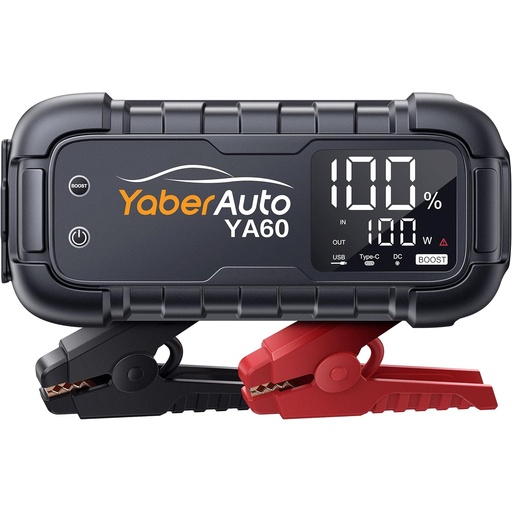
Why This Model Stands Out The YaberAuto YA60 focuses on pure power and speed. With a peak current of 8000A, it can handle even the most heavy-duty engines. Its key feature is the 65W two-way fast charging. This allows the jump starter itself to be fully charged in about 1.5 hours and can also rapidly power devices like laptops.
Pros
Who Is This For? For users with large vehicles (like RVs, vans, or heavy-duty SUVs) or professionals who depend on reliable starting power. Also ideal for those who need to charge their electronics quickly on the go.
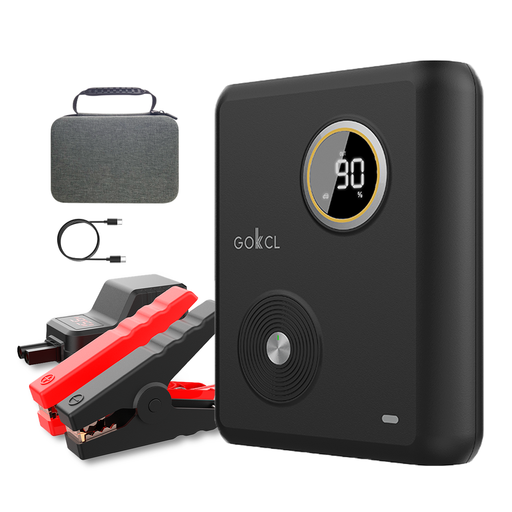
Why This Model Stands Out This model distinguishes itself with its sodium-ion battery technology. According to the manufacturer, Shenzhen Qimei New Energy Technology, this type of battery offers significant advantages in terms of safety, lifespan, and reliability. The battery is said to be non-flammable and performs stably in extreme temperatures.
Pros
Who Is This For? For the user seeking an extremely reliable and low-maintenance battery booster. Perfect for those who want to put a device in their car and not worry about it for years, knowing it will be ready for use when needed.
The right jump starter heavily depends on your personal situation and vehicle. The models listed above are just a sample of the available options. Are you looking for a more compact model, a different current rating, or specific features?
See more options here in our full remote control car battery starter category.
Using one is simple, but always follow the manufacturer's instructions. The general steps are:
No, a jump starter is not a battery charger. A battery booster delivers a short, powerful burst of current to start the engine. It does not charge the battery. After the engine has started, the car's alternator will recharge the battery while you drive. After a jump start, drive for at least 20-30 minutes to sufficiently recharge the battery.
This depends on your engine. As a rule of thumb:
