
Vandaag of morgen in huis

Kwaliteit gegarandeerd

Welkomstaanbiedingen ontgrendelen: GRATIS bezorging | Tot 80% korting | Gratis 30 dagen JoyPlus-proefperiode
Download de app
A dead battery always happens unexpectedly. Whether it's on a cold morning or after a long holiday, the result is the same: you're stranded. A jump starter or booster pack is an indispensable tool in these moments. But the market is flooded with models that promise the world. Before you buy a jump starter, it's crucial to know what to look for to avoid wasting money on a device that will let you down when you need it most.
As a Joybuy Product Recommendation Officer, I see where consumers go wrong every day. These are the three most common pitfalls:
You don't need to be a technician to choose a reliable car jump starter. Pay attention to the following three points, and you are guaranteed to make an informed choice.
Don't be blinded by the peak amps. This is the maximum current the booster can deliver for a very short time. More important is the cranking amps, the continuous current required to actually turn the engine over. Unfortunately, not all manufacturers specify this clearly. A good rule of thumb:
The capacity, expressed in milliampere-hours (mAh), determines how many times you can start a vehicle or charge your phone. A portable jump starter with 10,000 to 20,000 mAh is a solid choice. Also, pay attention to the battery type. Most models use Lithium-Ion, which offers a good balance between power and weight. Newer technologies like Sodium-Ion offer benefits such as longer standby time and better performance at extreme temperatures, according to manufacturers.
This is a non-negotiable point. A good jump starter must have at least the following protections:
Modern jump starters often indicate a safe connection with a light or an audible signal.
Not every jump starter is suitable for every user. Below is a selection tailored to different profiles, based on objective specifications.
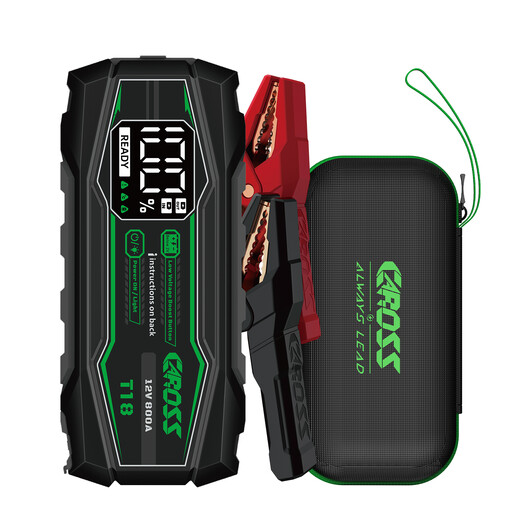
Why This Fits Their Persona: Ideal for drivers of standard passenger cars (gasoline up to 4.0L). This compact model fits easily in the glove compartment and provides peace of mind for daily commutes and weekend trips.
This model doesn't advertise an exaggerated peak current but offers a realistic 800A that suits its target audience. It includes all the crucial safety features often missing from budget models.
Compact size with a clear display, a complete safety suite (spark-proof, reverse polarity protection), and a convenient carrying case.
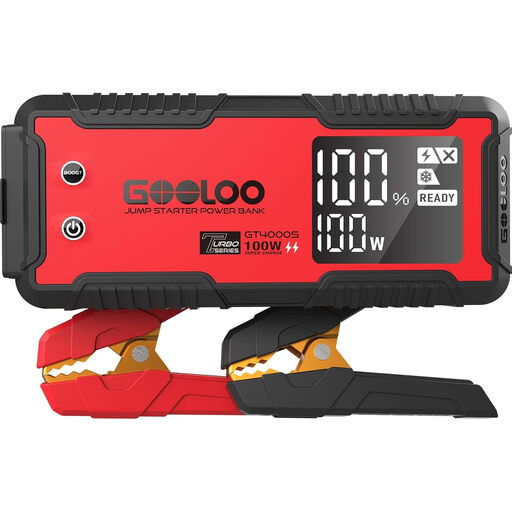
Why This Fits Their Persona: For those who own an RV, van, boat, or a large diesel SUV. Its immense starting power and ability to charge laptops make it a workhorse for demanding users.
The 4000A peak current is backed by the specification that it can start diesel engines up to 10.0L. The 100W fast-charging function is a concrete, useful feature, not an empty marketing claim.
Extreme starting power for virtually all 12V vehicles. According to the manufacturer, the unit itself fully recharges in just 1.2 hours with the included 100W charger.
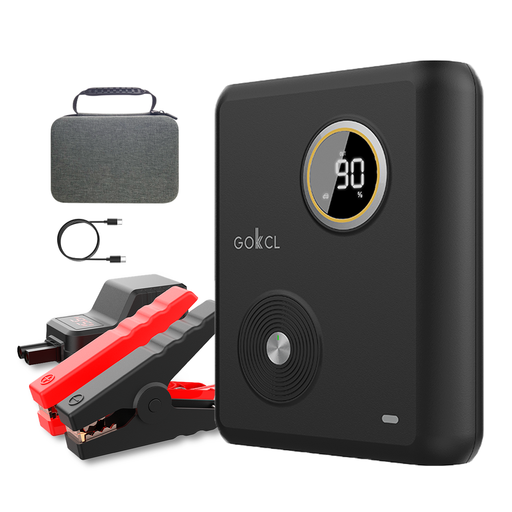
Why This Fits Their Persona: Perfect for the classic car owner, the owner of a second car that's rarely driven, or anyone who wants a 'set-and-forget' solution that can stay in the car year-round, regardless of the temperature.
This model tackles the problem of self-discharge. While lithium boosters need to be recharged every 3-6 months, the manufacturer of this sodium-ion model claims a standby time of up to 5 years, making it a truly reliable emergency tool.
Very long standby time and a wide operating temperature range (-40°C to 80°C according to the manufacturer), making it reliable in both freezing cold and hot summer sun.
We have compiled a complete, up-to-date list of products that fully meet these strict selection criteria and EU safety regulations.
For most common lithium-ion jump starters, it is recommended to fully charge them every 3 to 6 months to keep the battery in good condition. Models with low self-discharge, such as those with sodium-ion technology, require much less frequent charging according to the manufacturer. Always check the manual for your specific model for the correct maintenance advice.
Yes, a modern jump starter is safe, provided it is equipped with the proper safety mechanisms. Features like reverse polarity, short-circuit, and overheat protection are essential. They prevent damage to your car's sensitive electronics (ECU), even if you accidentally make a mistake when connecting it. Never choose a model without these basic safety features.
No, not every battery booster is powerful enough for a diesel engine. Diesel engines have a higher compression ratio and require significantly more cranking power than gasoline engines, especially in cold weather. Always check the jump starter's specifications to see if it is explicitly suitable for the type and size of your diesel engine (for example, "suitable for diesel engines up to 6.0L").
