
Vandaag of morgen in huis

Kwaliteit gegarandeerd

Welkomstaanbiedingen ontgrendelen: GRATIS bezorging | Tot 80% korting | Gratis 30 dagen JoyPlus-proefperiode
Download de app
A dead battery always happens unexpectedly. You're about to leave, and your car refuses to start. Waiting for roadside assistance or a helpful neighbour isn't always an option. A jump starter, also known as a booster pack, is the solution. It's a compact, portable battery that brings your car back to life instantly.
However, the market is flooded with models that make lofty claims. As a Product Recommendation Officer at Joybuy, I often see where things go wrong. Before you invest in this essential emergency car starter, it's wise to understand the common pitfalls.
The 2 Most Common Mistakes When Buying a Jump Starter:
To make the right choice, it's crucial to understand what the specifications mean for your situation. Focus on the following three points to find a model that actually works when you need it.
The most important specification is the current, measured in Amperes (A). There's a key difference between:
A petrol engine up to 2.0 litres typically needs a battery booster with a peak of 800A to 1200A. For larger petrol engines or diesel engines, a more powerful model with at least 1500A to 2000A is recommended. Diesel engines require more power due to their higher compression.
The capacity, expressed in mAh, determines how many times you can start a car or charge your phone. A model with 12,000 to 16,000 mAh is a good sweet spot. It provides enough power for multiple start attempts and also functions as a fully-fledged power bank with jumper cables. This allows you to easily charge your smartphone, tablet, or navigation system on the go. Look for the presence of USB ports, preferably with fast-charging technology like Quick Charge (QC).
Modern jump starters are often part of a complete car emergency kit. Two features are particularly useful here:
Not everyone has the same needs. That's why we've matched several options to specific user profiles.
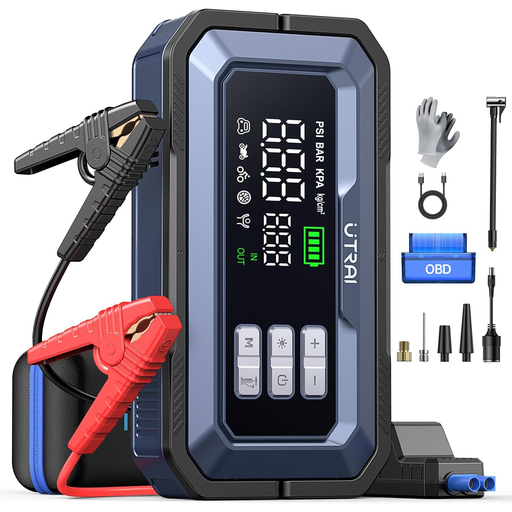
Why This Fits Their Persona: Ideal for owners of large cars, SUVs, RVs, or diesel vehicles. This model is a complete roadside emergency station, perfect for those who want to be prepared for any scenario, from a dead battery to a flat tyre or the need to power camping equipment.
With a specified peak of 7000A, this model bypasses the pitfall of an underpowered booster. It's designed for heavy-duty diesel engines up to 14L, guaranteeing realistic performance. The built-in compressor delivers up to 150 PSI, a functional value for car tyres.
Multifunctional: Combines a powerful jump starter, air compressor, 160W DC power source, and a 2000-lumen work light. High compatibility: Suitable for virtually all 12V vehicles, including large diesel engines.
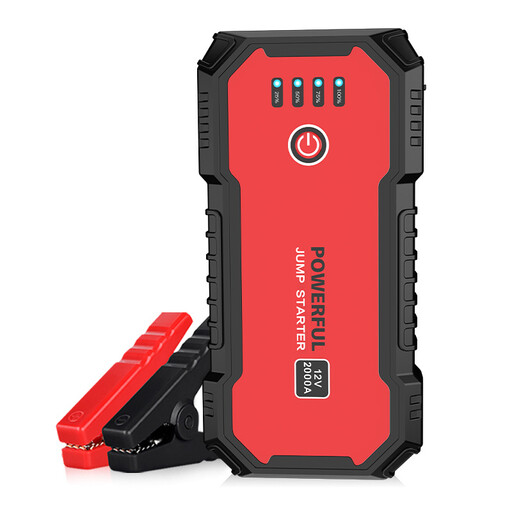
Why This Fits Their Persona: Perfect for the average driver with a petrol or compact diesel car. This model offers peace of mind without the cost of extra features you'll rarely use. It's compact enough for the glove box and focuses on the core tasks: starting and charging.
This model advertises a realistic 1500A peak, more than enough for most passenger cars, thus avoiding the trap of exaggerated claims. It focuses on a reliable starting function and a good power bank, without unnecessary extras that drive up the price.
Compact and lightweight: At 430 grams, it's easy to store and carry. Efficient charging: Equipped with a QC3.0 18W fast-charging port to quickly power up your devices.
We've compiled a complete, up-to-date list of products that meet strict selection criteria and EU safety regulations, from emergency power to lighting.
Most manufacturers recommend fully charging a jump starter every 3 to 6 months, even if you don't use it. Lithium-ion batteries suffer from self-discharge. Regular charging ensures the booster is ready for use when you need it and extends the battery's lifespan.
Yes, modern jump starters are equipped with multiple safety mechanisms. Features like reverse polarity protection, short-circuit protection, overheating, and overcharging protection are standard. These smart clamps prevent damage to the car's battery and sensitive onboard electronics, provided you follow the manufacturer's instructions.
Not every jump starter is powerful enough for a diesel engine. Diesel engines have a higher compression ratio and require significantly more starting current, especially in cold weather. Always check that the jump starter's peak and cranking amps match the recommendations for your specific engine size (in litres). When in doubt, always choose a model with a higher current rating.
