
Vandaag of morgen in huis

Kwaliteit gegarandeerd

Welkomstaanbiedingen ontgrendelen: GRATIS bezorging | Tot 80% korting | Gratis 30 dagen JoyPlus-proefperiode
Download de app
A clicking sound instead of a roaring engine on a cold morning. It's every driver's nightmare. A dead battery is always unexpected and inconvenient. A good jump starter, also known as a booster pack, isn't a luxury—it's a necessity. But the market is flooded with models that promise the world. Before you invest, it's crucial to know what to look for to avoid a bad purchase.
As a Joybuy Product Recommendation Officer, I see daily which specifications truly matter and which are just marketing fluff. Here are the three most common pitfalls and how to avoid them.
Manufacturers love to advertise with sky-high peak currents (Amps). A higher number seems better, but for a standard passenger car with a 1.6-litre petrol engine, you don't need 4000A. You're paying for power you'll never use. A booster that's too weak is useless, but one that's too powerful is a waste of money.
A jump starter often sits unused in the trunk for months. Cheaper models have a high self-discharge rate, meaning the battery slowly drains over time. The last thing you want is to discover that your rescuer needs rescuing itself. The standby time is a crucial specification that is often overlooked.
A jump starter with a compressor, flashlight, and power bank function sounds ideal. However, this multifunctionality can come at the expense of its primary function: starting your car. A weak compressor that takes forever to inflate your tyre or a battery that's too drained to start the engine after inflating it defeats its purpose.
To ensure you buy a reliable jump starter for your car, there are a few technical specifications you need to check.
The peak current (Peak Amps) indicates how much power the jump starter can deliver in a short burst. This is the most important factor. A larger engine, especially a diesel, requires a much higher starting current than a small petrol engine.
battery booster with 2000A to 3000A.portable car starter with 3000A or more.Always check the manufacturer's specifications for the recommended engine displacement (petrol/diesel).
The capacity, expressed in milliampere-hours (mAh), determines how many times you can start a vehicle or how often you can charge your phone. A higher capacity means more power, but often also a larger and heavier device.
Are you looking for a power bank with jumper cables for emergencies and charging your phone? Then a compact model with 10,000-15,000 mAh is a good balance. For those seeking a jump starter with an air compressor for camping or maintaining multiple vehicles, a model with a higher capacity and a robust housing is a better choice.
Modern jump starters are equipped with smart jumper cables that protect against the most common user errors. Non-negotiable safety features include:
A model without these basic protections is not worth the risk.
Below are some models that score well on the above criteria, matched to different user profiles.
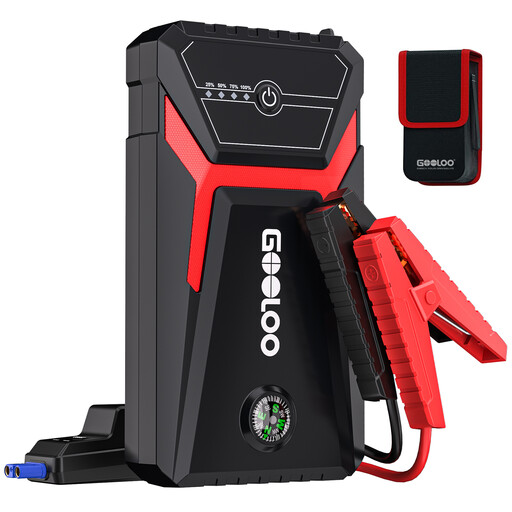
Why This Fits Their Persona: Ideal for drivers of standard passenger cars (petrol or compact diesel) who need a reliable, compact, and affordable solution for the trunk. No frills, just a solid jump starter.
With 1500A, this model provides enough starting power for most cars, without making you pay for unnecessary force. It focuses on the core function, making it a smart choice.
Compact size, easy to store. According to GOOLOO, it's suitable for 6.0L petrol engines and 4.0L diesel engines, covering a wide range of vehicles.
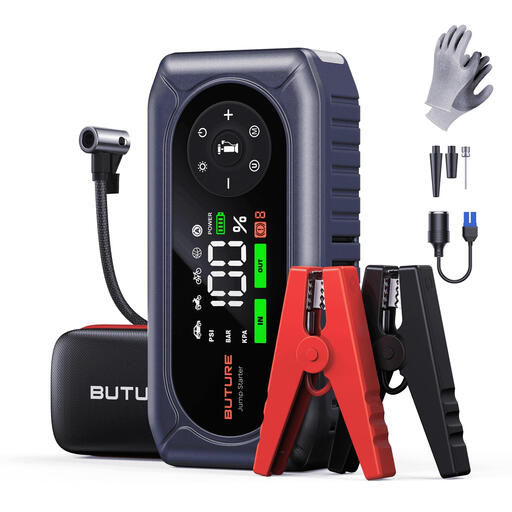
Why This Fits Their Persona: Perfect for those who want more than just a jump starter. Ideal for camper or boat owners and DIYers who also want a reliable tyre inflator on hand.
This device avoids the 'jack-of-all-trades' trap by combining a powerful 4500A jump starter with a functional 150 PSI digital compressor. The features are well-executed and don't compromise each other.
5-in-1 functionality with a powerful starting feature and a digital tyre inflator with an auto-stop function. The LCD screen provides clear status information.
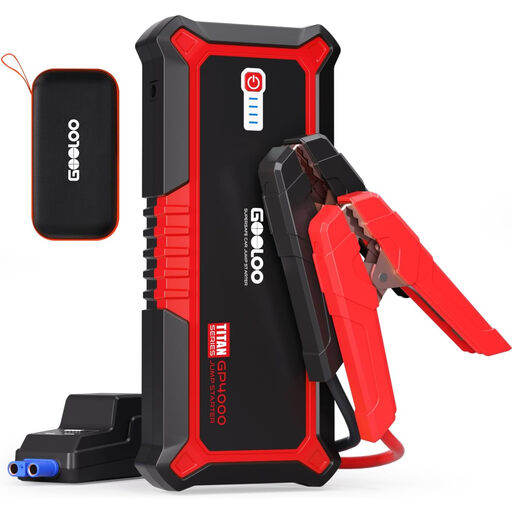
Why This Fits Their Persona: For those who don't want to take any chances. Suitable for large SUVs, vans, tractors, and heavy-duty diesel engines that require significant starting current. This is a powerhouse for the most demanding jobs.
This model isn't unnecessarily powerful; it delivers the high peak current that is essential for large engines. Where lighter models would fail, the GP4000 provides the reliability needed for heavy equipment.
Massive 4000A starting power. According to GOOLOO, it's suitable for all petrol engines and diesel engines up to 10.0L. Robust, all-metal clamps for durability.
We've compiled a complete, up-to-date list of products that fully meet these strict selection criteria and safety regulations.
Most manufacturers recommend fully charging a jump starter every 2 to 3 months, even if you don't use it. This helps keep the battery in good condition and ensures it's ready for use when you need it. Always consult your specific model's manual for the best advice.
No, not every jump starter is suitable for every car. Compatibility depends on the booster's peak current (A) and your vehicle's engine size (litres) and type (petrol/diesel). Always check that the jump starter's specifications match your car's requirements. A booster that is too weak will not be able to start a large engine.
That depends on your use case. For campers, people with a caravan or boat trailer, or anyone who regularly inflates tyres, air mattresses, or sports balls, it's a very handy addition. If you will rarely use the compressor and are keeping the jump starter in the car purely for emergencies, a more compact model without a compressor might be a more practical and cost-effective choice.
