
Vandaag of morgen in huis

Kwaliteit gegarandeerd

Welkomstaanbiedingen ontgrendelen: GRATIS bezorging | Tot 80% korting | Gratis 30 dagen JoyPlus-proefperiode
Download de app
A dead battery or a flat tire always happens unexpectedly. A jump starter with an air compressor seems like the perfect 2-in-1 solution to get back on the road without depending on others. But the market is flooded with models that promise impressive specs that often disappoint in practice. Many drivers only find out too late that their purchase isn't powerful enough for their car or that the compressor overheats after inflating just one tire.
As a Joybuy Product Recommendation Officer, I'll help you see through the marketing claims. Before you invest in a car jump starter, it's crucial to recognize the most common pitfalls that lead to a useless device in your trunk.
To avoid a bad purchase, focus on the specifications that truly matter. Don't get distracted by marketing terms and check these three points.
The starting power, expressed in Amps (A), is crucial. Instead of just looking at the peak current, it's better to check what type and size of engine the jump starter is suitable for. Manufacturers often specify this in liters (L).
The maximum pressure (PSI or Bar) indicates the pressure the compressor can reach, which is important for things like road bike tires. For car tires, however, the inflation speed, expressed in liters per minute (L/min), is just as important.
The battery capacity determines how many times you can start a car or inflate a tire before the jump starter itself runs out of power. A capacity of around 15,000 to 25,000 mAh is common. Also, pay attention to the charging options for the jump starter itself (e.g., via USB-C) and the output for charging other devices. A built-in LED light is a standard and very practical feature for emergencies in the dark.
Below are a few models that suit different user profiles, selected based on their specifications and functionality.
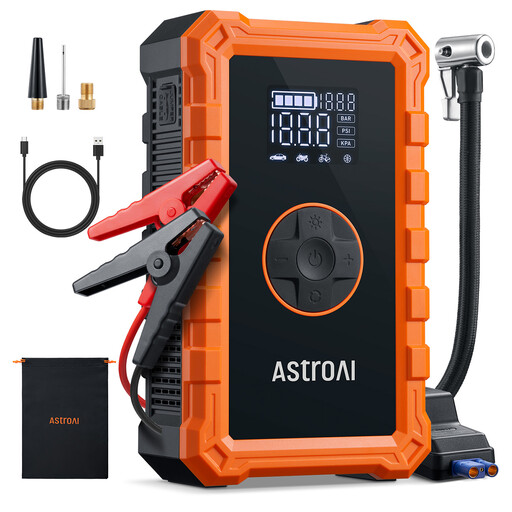
Why This Fits Their Persona: This is a balanced all-in-one solution for the average driver. It's compact, user-friendly, and offers enough power for most passenger cars, without you paying for extreme specs you don't need.
The manufacturer provides clear engine compatibility (up to 6.0L gasoline / 3.0L diesel), which bypasses the 'peak current myth.' The compressor delivers a solid 25 L/min, which is practical for emergencies and not just a marketing gimmick.
Combines a reliable jump starter and a functional 150 PSI tire inflator in one compact device. The large, clear screen makes operation simple, even for beginners.

Why This Fits Their Persona: Perfect for owners of large SUVs, RVs, or heavy-duty diesel vehicles. This model offers maximum power and reliability for those who want to be prepared for any situation and have no doubts about whether the device is powerful enough.
The 4500A peak current is backed by a concrete specification for large engines (up to 9.0L gasoline / 8.0L diesel). Its robust construction and cooling system are designed to prevent overheating during heavy use.
Extremely powerful starting capability for virtually all 12V vehicles. The 5-in-1 functionality (jump starter, compressor, power bank, 500-lumen lamp) makes it a complete emergency kit.
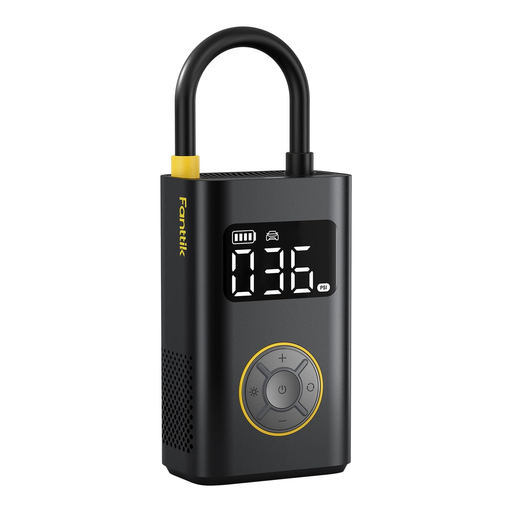
Why This Fits Their Persona: For those who primarily need a fast, compact, and reliable electric bike pump or portable air compressor. Ideal for e-bikes, motorcycles, and sports balls. The jump-start function is absent here; the focus is entirely on inflation.
This device doesn't try to be a jack-of-all-trades. By specializing as a compressor, it delivers superior performance in that one area. According to Fanttik, it can inflate a car tire from 30 to 35 PSI in 1 minute, avoiding the 'slow compressor' pitfall.
Very compact and portable design with integrated hose storage. The auto-stop function and preset modes make it very easy to use for different objects.
We have compiled a complete, up-to-date list of products that fully meet these strict selection criteria and safety regulations.
It is recommended to fully charge the jump starter every 3 to 6 months, even if you don't use it. Lithium-ion batteries slowly lose their charge over time. Keeping it charged ensures it's ready for use when you need it and extends the battery's lifespan.
Yes, most jump starters are designed to be stored in a vehicle. However, check the manufacturer's specifications for the recommended temperature range. Extreme heat in the summer or freezing cold in the winter can affect the battery's performance and lifespan. It's best to store it in a place where the temperature remains moderate, such as in the glove compartment or under a seat.
Yes, a maximum pressure of 150 PSI is more than enough for the tires of most RVs and SUVs, which typically require a pressure between 35 and 80 PSI. The most important factor here is not the maximum pressure, but the inflation speed (L/min) and whether the compressor is designed for prolonged use without overheating. For larger tires, a model with a higher airflow is recommended.
