
Vandaag of morgen in huis

Kwaliteit gegarandeerd

Welkomstaanbiedingen ontgrendelen: GRATIS bezorging | Tot 80% korting | Gratis 30 dagen JoyPlus-proefperiode
Download de app
A dead battery or a flat tire always strikes at the worst possible moment. A jump starter with an air compressor seems like the perfect all-in-one solution. But the market is flooded with models that overpromise and underdeliver. Before you invest in a device that could leave you stranded, it's crucial to know what to look for.
Many drivers fall into the same traps: they buy a device based on inflated specs, only to find it fails when they need it most. Here are the three most common mistakes you can avoid.
12v portable air compressor that overheats after inflating one tire, or takes fifteen minutes to do so. Without clear specifications on air pressure (PSI) and airflow (L/min), you're buying an impractical gadget.emergency car starter that's dead after two months in your trunk is useless. Cheaper models often use inferior batteries and lack crucial safety features. Without protection against sparks, short circuits, and incorrect connections, you risk damaging your car's electronics—or worse.To avoid a bad purchase, focus on the specifications that truly matter. These are the objective criteria that determine if a car jump starter will get the job done.
Cranking power, measured in amps (A), is crucial. A small gasoline car requires less power than a large SUV with a diesel engine.
battery jump starter is suitable for. A diesel jump starter requires significantly more power than one for gasoline. Check if the model is rated for your specific engine (e.g., up to 10.0L diesel).A good built-in car tire inflator saves you a trip to the gas station. Pay attention to two values:
A reliable power bank with jumper cables must always be ready for use and safe.
Based on these objective criteria, we have selected several models that fit different user profiles.

Why This Fits Their Persona: Ideal for the driver who wants one reliable device for the most common problems: a dead battery and flat tires. Suitable for most gasoline and diesel cars.
The compressor has a clear 150 PSI specification with auto-shutoff, which bypasses the 'useless compressor' trap. The 10 built-in safety features address security concerns.
Multifunctional: jump starter, compressor, power bank, and flashlight in one. The large 3.4-inch LCD screen displays status and tire pressure, enhancing ease of use.
Why This Fits Their Persona: For owners of RVs, vans, boats, or large diesel SUVs. This model provides the extra power needed to start larger, more demanding engines, especially in colder conditions.
It tackles the 'peak current trap' by being rated for all gasoline engines and diesel engines up to 10.0L, according to the manufacturer. This provides assurance that the power rating isn't just a marketing number.
High cranking power combined with the functionality of a 150 PSI compressor. A complete emergency solution for those who depend on a larger vehicle.
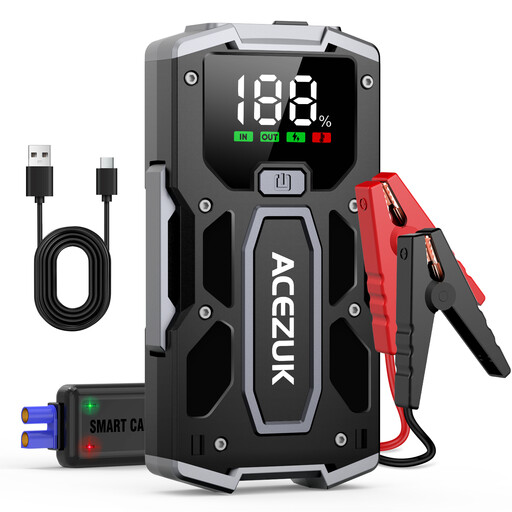
Why This Fits Their Persona: For those who just need a powerful, compact emergency starter and don't require a built-in compressor. It fits easily in the glove compartment and provides peace of mind for the most common problem: a dead battery.
This model focuses on one job and does it well. It avoids the trap of a mediocre all-in-one solution by offering a powerful jump-starting function with all the necessary safety features, without the extra bulk of a compressor.
Very compact and lightweight, yet powerful enough for engines up to 7.0L gasoline or 5.5L diesel. Its 2.5-inch display shows battery status and temperature, which is unique for a model in this class.
We have compiled a complete, up-to-date list of products that fully meet these strict selection criteria and safety standards.
Even when not in use, a battery slowly loses its charge. It is advisable to fully charge your jump starter every 2 to 3 months. This ensures the battery remains in good condition and is always ready for use when you need it.
Yes, modern jump starters with 'smart' jumper cables are designed to be safe. They include multiple protections, such as reverse polarity protection (if you connect the clamps incorrectly), short-circuit protection, and overvoltage protection. This prevents damage to your car's sensitive electronics.
No, this is a common mistake. Diesel engines have a higher compression ratio and require significantly more power to start, especially in cold weather. Always check the manufacturer's specifications. Look for a model that is explicitly recommended as a diesel jump starter and verify that its maximum engine displacement rating (e.g., up to 10.0L) matches your vehicle.
