For a quick afternoon break with firm pears, a centrifugal juicer is a good fit if speed and minimal chopping are your priorities. If you’re using softer ingredients or prefer juice with more pulp, a slow juicer is worth comparing. With either type, check how the pear needs preparing, what sort of sieve it has and how easy it is to clean. Don’t assume that slow juicing produces healthier juice. When considering a specific electric juicer, also check that it’s the Dutch-market version, carries the required CE marking and comes with the relevant safety information.
Who is this buying guide for?
The quick-break juicer
You want to make a glass of pear juice without spending your whole break on preparation and juicing. Speed and the size of the feed chute matter, as does how long it takes to clean the sieve. The Consumentenbond describes centrifugal juicers as a quick option.
Fan of softer fruit blends
You also use softer fruit and have time for a little extra preparation to compare slow juicers. Check how your chosen model handles soft ingredients; Hurom warns that some very soft ingredients can collect separately in the juicing chamber.
Cleaning-conscious juice maker
You make small portions and want to know which parts need cleaning after each glass. Manufacturers describe cleaning features for individual models, so check the instructions for the exact version.
What to look for in a juicer for pears
Centrifugal juicer
A good fit if: you want to make juice from firm pears quickly during a short break. The Consumentenbond highlights the speed and often generous feed chute of this type of juicer.
The trade-off: according to the Consumentenbond, centrifugal juicers are generally noisier and less suitable for soft ingredients; much of the fibre remains in the pulp.
Slow juicer
A good fit if: you also want to process softer ingredients and have more time for preparation and cleaning. Check the manual for the specific model.
The trade-off: the Consumentenbond describes slow juicing as slower and often more involved when it comes to chopping and cleaning. This doesn’t prove that the juice has greater nutritional value.
Blender or eat the pear whole
A good fit if: keeping more of the whole fruit matters more to you than clear juice. The Voedingscentrum recommends eating fruit rather than drinking it.
The trade-off: a smoothie has a different texture from juice. Eating a whole pear is an alternative to juice, not the same kind of drink.
The Consumentenbond describes centrifugal juicers as a quick option, while the Voedingscentrum recommends eating fruit whole rather than drinking it. So what’s practical also depends on the texture you want and how much time you’re willing to spend cleaning.
| What to consider |
What to look for |
Who it matters to |
| Making a glass quickly |
Compare the juicing mechanism and feed chute; remove the pear pips even if the chute is generous. |
I want to make one glass quickly during a short break, without much preparation. Around 33% of consumers prioritise speed. |
| Pears and texture |
Check whether the model is suitable for soft ingredients and offers texture settings. |
If I use softer pears too, I want to know how the model handles them and what texture the juice will have. This is the main deciding factor for around 27% of consumers. |
| Cleaning after a small portion |
Check which parts can be removed and what the manual says about using the dishwasher; a rinse function doesn’t automatically mean it’s fully clean. |
After one glass, I want to clean the sieve and juicing chamber without too much effort. Ease of cleaning is a top priority for around 27% of consumers. |
| Keeping the fibre |
Decide whether you want clear juice or would prefer a smoothie or the whole pear; a juicer leaves much of the fibre in the pulp. |
If my main priority is keeping more of the pear itself, a smoothie or eating the whole pear may be a better choice than clear juice. Keeping the fibre is the main priority for around 13% of consumers. |
Common buying mistakes
-
Assuming a wide feed chute means you can juice pear pips
A generous feed chute doesn’t mean you can skip removing the pips. Hurom’s pear juice recipe says to remove them, and the Voedingscentrum advises against crushing fruit pips.
Remove the pips and, if necessary, cut the pear into pieces that fit the chute.
-
Assuming slow juicing produces demonstrably more nutritious juice
The juicing method alone doesn’t prove that juice made from your pears contains more nutrients. The Consumentenbond reports that the slow-juicer juices it tested did not contain higher levels of the nutrients mentioned than juice from centrifugal juicers.
Choose based on preparation and the texture you want. If keeping the fibre is your priority, compare a blender or eat the pear whole.
-
Assuming a rinse function means you don’t need to clean the juicer properly
A rinse function and dishwasher-safe parts are separate cleaning steps. Bosch describes them separately for the MESM731M.
Read the manual for the exact model and check which parts still need to be cleaned separately after making one glass.
Brands to compare
Philips
Worth considering if you want to compare juice texture and cleaning features across models.
- Philips lists FiberBoost and a polished sieve for the refurbished HR1919/70R1.
- The HR1919/70R1 is refurbished and isn’t necessarily the same version as the HR1919/70. Cleaning information for the HR1887/80 and HR1889/70 applies specifically to those models.
Braun
The IdentityCollection J 500 BK is a centrifugal juicer to compare if speed and a generous feed chute matter to you.
- Braun lists a 900 W motor, a large feed chute and parts that are dishwasher-safe according to the instructions for the J 500 BK.
- Braun’s stated juicing time is a manufacturer claim, not an independent test using pears. Check the sieve and the exact version.
Bosch
The VitaExtract MESM731M is a slow juicer to compare if juice thickness and cleaning are important to you.
- Bosch lists a 1000 ml juice container, adjustable juice thickness, a rinse function and dishwasher-safe parts for this model.
- Claims about vitamins and efficiency on the product page are manufacturer claims, not an independent comparison for pear juice.
Hurom
A range of slow juicers to compare if you want to juice ingredients other than pears too.
- Hurom’s pear recipe recommends removing the pips and cutting the ingredients to size.
- Hurom warns that some very soft ingredients can collect separately in the juicing chamber; this isn’t a measured comparison for a specific type of pear.
Joybuy products for juice and smoothies
This selection of Joybuy products includes slow juicers, a manual fruit press and a smoothie blender. A blender makes a different drink from clear juice. For electrical appliances, check that you’re buying the Dutch-market version, that it has the applicable CE marking and that you have the safety instructions. The NVWA explains the legal requirements for electrical appliances.
 No image available
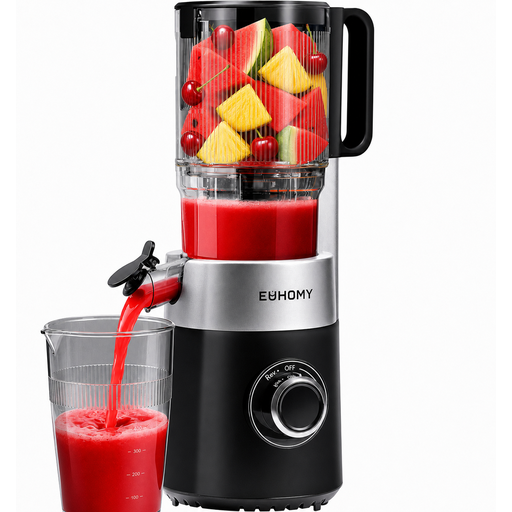
EUHOMY slow juicer
A slow juicer for anyone who wants to juice vegetables and fruit too. Bear in mind that juicing takes longer than with a centrifugal juicer.
The product description lists twin stainless-steel augers and a 135 mm feed chute.
View at Joybuy
 No image available
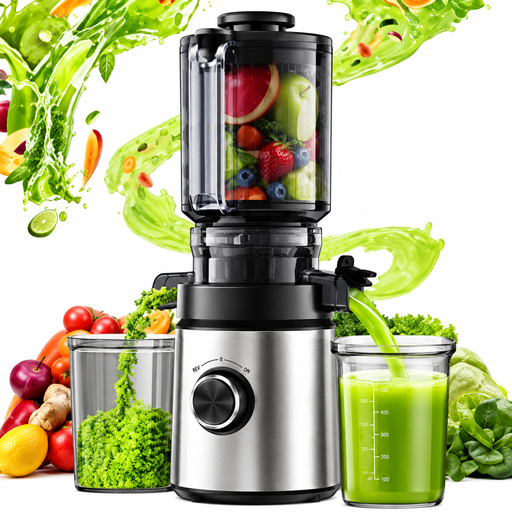
Slow juicer for fruit and vegetables, 2 l, 130 mm feed chute
A slow juicer for anyone who wants to juice fruit and vegetables and is happy to spend longer than they would with a centrifugal juicer.
The product name lists a 2 l capacity and a 130 mm feed chute.
View at Joybuy
 No image available
WOOX MX0289 slow juicer
A slow juicer for anyone who wants to juice fruit and vegetables. Bear in mind that this juicing method can take more time.
The product name lists 150 W, a 600 ml juice jug and an 836 ml pulp container.
View at Joybuy
 No image available
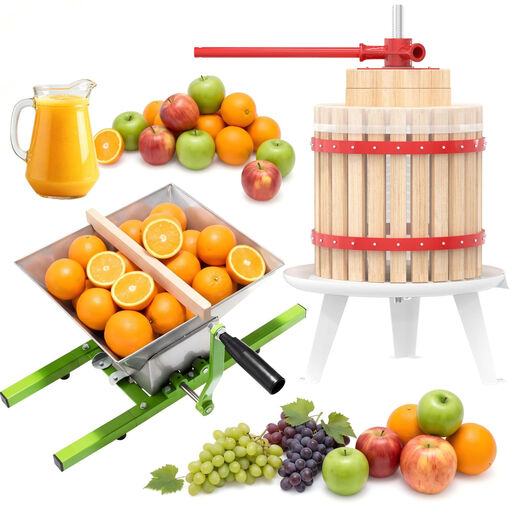
12 l manual fruit press with 7 l fruit grinder
For making fruit juice by hand. Its listed size may be less suited to making a single glass during a short break.
The product name describes a 12 l press with a 7 l fruit grinder.
View at Joybuy
 No image available
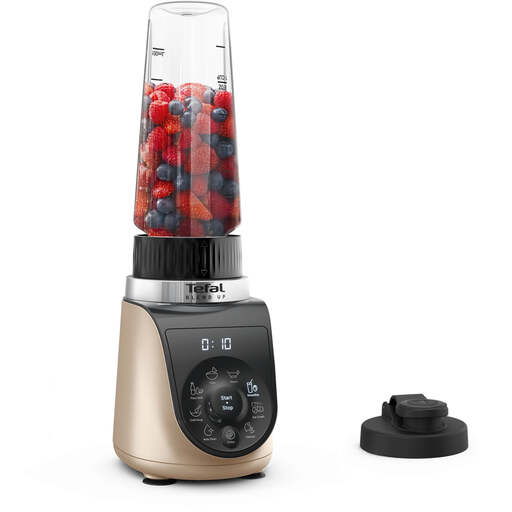
Tefal BL190A Blend Up personal smoothie blender
An alternative if you’d rather make a smoothie than clear pear juice, and want to keep more of the whole fruit in your drink.
A smoothie has a different texture from juice; the Consumentenbond and the Voedingscentrum describe a blender and a whole pear as alternatives to juicing.
View at Joybuy
Frequently asked questions
Should I remove pear pips before making juice?
Yes, remove the pips when preparing the pear. Hurom recommends doing so in its pear juice recipe, and the Voedingscentrum advises against crushing fruit pips. Also cut the pear into pieces that fit the feed chute.
Can I put my juicer’s sieve in the dishwasher?
It depends on the model and the part. Philips lists removable, dishwasher-safe parts for the HR1887/80 and HR1889/70; Braun refers to the instructions for the J 500 BK. Check the manual for your exact model before putting any parts in the dishwasher.
Is pear juice from a slow juicer demonstrably healthier?
No. Don’t assume it has greater nutritional value just because the appliance juices slowly. The Consumentenbond reports that the slow-juicer juices it tested did not contain more of the nutrients mentioned than juice from centrifugal juicers. The Voedingscentrum recommends eating fruit rather than drinking it.
Which product safety rules apply to an electric juicer in the Netherlands?
CE marking is compulsory for electrical appliances covered by the Warenwetbesluit elektrisch materiaal (Dutch Commodities Act Decree on Electrical Equipment). The NVWA explains the requirements that apply to electrical appliances. Check the marking and safety information for the specific version; a brand name or online listing alone doesn’t prove that the rules have been met.
Can I return a juicer bought online if I change my mind?
According to ACM ConsuWijzer, online consumer purchases generally come with a statutory cooling-off period of up to 14 days after delivery, with some exceptions. Check the applicable returns policy before using the juicer, and don’t assume you have an unlimited right to return a used appliance.


