
Vandaag of morgen in huis

Kwaliteit gegarandeerd

Welkomstaanbiedingen ontgrendelen: GRATIS bezorging | Tot 80% korting | Gratis 30 dagen JoyPlus-proefperiode
Download de app
Want to make vegetable juice at home quickly or squeeze oranges in no time? At first glance, every juicer might seem suitable. In practice, models vary considerably in feed chute size, ease of cleaning, noise level, capacity and the types of fruit they can handle.
The wrong choice can leave you with an appliance that requires too much preparation, clogs easily or ends up unused in a kitchen cupboard after a few weeks. This buying guide compares the key specifications to help you find a juicer that suits the way you use it.
A juicer with a wide feed chute can reduce preparation time, but always check the exact diameter. A 60 mm opening is practical for large pieces of fruit; 110 mm gives you more room for whole citrus fruits. That doesn’t automatically mean every type of fruit is suitable, though. Hard stones, very fibrous ingredients and sticky pulp can put strain on the filter or blades.
The wattage tells you something about the motor, but not about the overall experience. Also look at the number of speed settings, whether it has a pulse function, the capacity of the pulp container and the recommended operating time. A 350-watt model may be enough for everyday fruit juice, while a 600-watt centrifugal juicer could be a good choice for larger quantities or a mix of fruit and vegetables.
A juicer has parts that come into direct contact with juice and pulp. Check whether these parts can be removed and whether, according to the product information, they are dishwasher-safe. With some models, pulp can get stuck in a fine filter. A citrus juicer is often easier to clean than a centrifugal juicer, but the difference depends on the design.
A centrifugal juicer grates fruit and vegetables using a rapidly rotating filter. This type is particularly suitable when you want to make a glass of juice quickly. An electric citrus juicer is more specialised: it’s designed for oranges, lemons and grapefruits. A slow juicer generally works more slowly and uses a different extraction method. If speed and simple operation are your priorities, a centrifugal juicer could be an alternative to a slow juicer.
Think about what you’ll use it for. A citrus juicer isn’t a complete substitute for a juicer that can also process carrots, apples or leafy greens. On the other hand, a centrifugal juicer often has more parts to clean after use.
A larger feed chute means less chopping. As well as the width, check the capacity of the pulp container. According to the product information, the Tefal ZE370138 has a 60 mm feed chute and a 950 ml pulp container. That’s a useful combination when making several glasses in a row.
A compact model takes up less worktop space, but may have a smaller collection capacity. That’s often not a problem for a household of one or two. Families should check the capacity of both the pulp container and the juice jug.
Power is measured in watts. Always compare this figure with the other features. Two speeds and a pulse function can help you process different types of fruit and vegetables. A citrus juicer with several pulp settings gives you more control over the texture of your juice.
The product information for the Bear CZJ-A04B1 lists five adjustable pulp settings and separate pulp and juice collection. The manufacturer also lists a 110 mm feed chute. These features are especially useful if you want to control how much pulp ends up in your juice.
A BPA-free juicer can be an important consideration for some buyers. Check whether the claim applies to the parts that come into contact with food. The Bear CZJ-A04B1 is listed as having BPA-free plastic for food contact, according to its product specifications. Other models may, for example, list stainless steel as a material. Always follow the manual for assembly, cleaning and suitable ingredients.
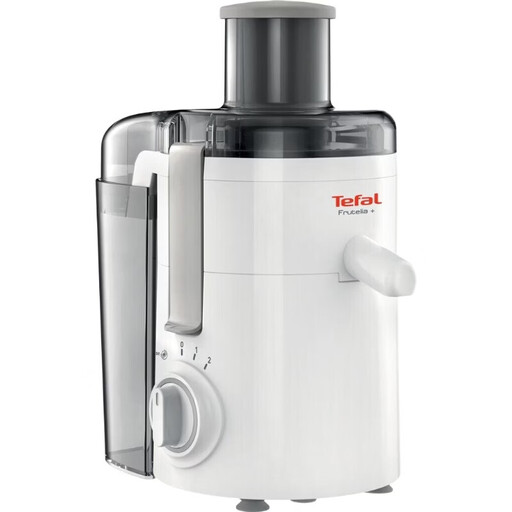
Why it suits this type of user: This model is designed for quick, everyday use, with a compact body, two speeds and a pulse function. According to the product information, the removable parts are dishwasher-safe.
The specifications clearly set out what you get: a 60 mm feed chute, 350 watts and a 950 ml pulp container, rather than relying on a power claim alone.
350 watts, two speeds plus a pulse function, a stainless steel filter and removable, dishwasher-safe parts according to the product information.

Why it suits this type of user: This electric citrus juicer is a good fit if you mainly process oranges, lemons and grapefruits and want control over how much pulp is in your juice.
According to the product specifications, the wide 110 mm opening means less chopping when preparing citrus fruit. The five pulp settings offer more flexibility than a fixed strainer.
110 mm feed chute, five pulp settings, BPA-free materials for food contact according to the product information, and removable parts.
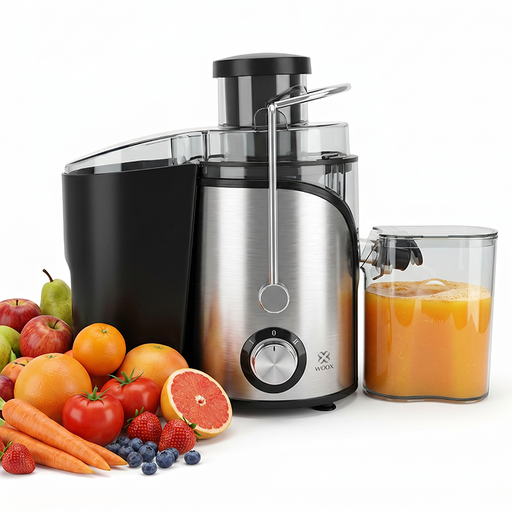
Why it suits this type of user: The wide feed chute and stated power of 600 watts make this a good fit for people who regularly process different types of fruit and vegetables.
The product information clearly sets out what not to use: avoid ingredients such as sweetcorn, sugar cane and very sticky or fibrous foods to help prevent blockages and damage.
600 watts according to the product description, a wide 3-inch opening, stainless steel construction and a design that the supplier says is easy to clean.
Wash fruit and vegetables beforehand, and only cut ingredients as small as the feed chute requires. Peel oranges and grapefruits before processing them. Never put your fingers or cutlery into the opening, and switch the appliance off before removing any parts.
If you want a juicer that’s easy to clean, rinse the filter as soon as you’ve finished using it. Dried pulp takes longer to remove. Also make sure the motor base, plug and cord never come into contact with water.
We’ve put together a complete, up-to-date list of products that meet these strict selection criteria and the applicable European safety requirements.
Yes, a centrifugal juicer can process many types of vegetables, such as carrots, cucumber and celery. Check the manual, though, and avoid hard or very fibrous ingredients that aren’t suitable for the appliance.
Its lifespan depends on how you use and maintain it, as well as the permitted operating time per session. Let the motor cool down if the manual instructs you to, clean the filter after every use and stop using the appliance if you notice an unusual smell, vibration or noise.
Energy use depends on the wattage and how long you use the juicer for. A 350-watt model used for five minutes would theoretically use around 0.029 kWh. Actual consumption may vary. For occasional juicing, the operating time is generally short.
