
Vandaag of morgen in huis

Kwaliteit gegarandeerd

Welkomstaanbiedingen ontgrendelen: GRATIS bezorging | Tot 80% korting | Gratis 30 dagen JoyPlus-proefperiode
Download de app
A juicer can make preparing fresh juice simple, but not every appliance is suited to the same ingredients or frequency of use. If you only juice oranges, you’ll need different features from a household that wants to make fruit and vegetable juice every day. So don’t focus solely on power or an impressive juice-yield percentage.
Three common pitfalls are worth keeping in mind:
A citrus juicer or electric citrus press is designed for oranges, lemons and grapefruits. These appliances are generally compact and easy to clean. They’re less suitable for apples, carrots or leafy greens.
A traditional centrifugal juicer grates ingredients quickly using a spinning filter. This type is ideal if you want to make a glass of juice quickly from hard fruit and vegetables. Bear in mind that it may produce more foam and pulp, and could be noisier.
A slow juicer presses ingredients slowly. Depending on the instructions, this can be useful for softer fruit, vegetables and fibrous ingredients. It often takes a little more preparation and cleaning, but it’s a good choice if you regularly juice a variety of ingredients.
A multifunctional food processor with a juicer attachment could be worth considering if you want one appliance for tasks such as kneading, chopping, blending and squeezing citrus fruit. The trade-off is that these systems take up more space and require more accessories.
A wide feed chute cuts down on preparation time. According to the product information, the Bear CZJ-A04B1 has a 110 mm feed chute and is designed for whole oranges and other citrus fruit. The WOOX MX0289 lists a maximum feed chute width of 130 mm, a juice jug with markings up to 600 ml and a pulp container with a capacity of 836 ml.
Also check the capacity of the jug or cup. A capacity of around 0.7 litres is enough for a few glasses. A larger collection container is more practical for families, but takes up more worktop space.
Juice residue dries quickly, so check:
With a citrus juicer, having fewer parts is usually an advantage. A slow juicer often has a pressing screw, filter and pulp outlet, which can mean more cleaning.
An appliance for everyday use needs to be practical in a Dutch kitchen, especially if you want to prepare juice early in the morning. The WOOX MX0289 lists a noise level of less than 72 dB. The manufacturer also advises against using it for more than ten minutes at a time, and recommends letting it cool down afterwards.
According to the product information, the Nedis KAJC100CWT has a maximum continuous operating time of one minute. This model is therefore mainly intended for short sessions juicing citrus fruit. Always check the instructions, and never use your fingers or cutlery near moving parts.
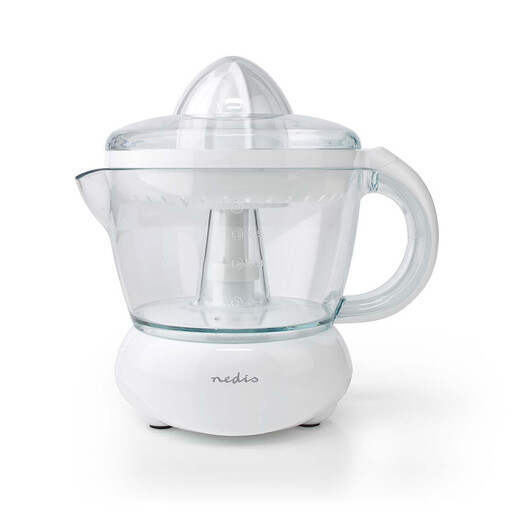
Why it suits this type of user: This compact electric citrus juicer is ideal if you want to quickly make orange, lemon or grapefruit juice now and then, without having a large juicer on your worktop.
Its intended use is clearly defined: citrus fruit, a jug of around 0.7 litres and a short operating time according to the product information. So don’t expect it to handle all types of fruit and vegetables.
25 W, automatic left-and-right rotation, removable juice jug and compact dimensions of 20 × 15 × 19 cm.
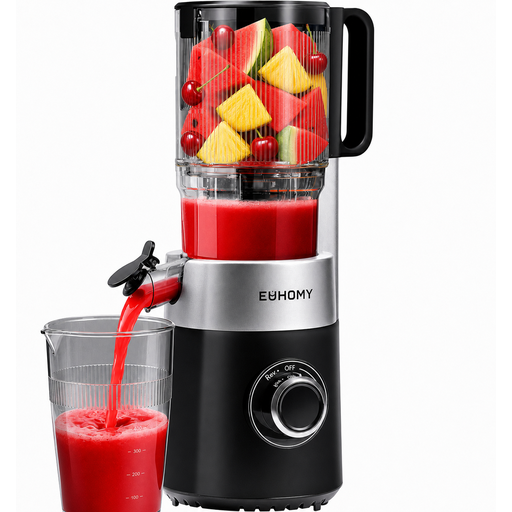
Why it suits this type of user: The combination of a large feed chute, 1.8-litre capacity and low-speed pressing method is well suited to households that regularly make several glasses of juice.
The specifications list a 135 mm feed chute and three filters. The claim of up to 99% yield is based on the brand’s own figures and depends on the ingredients and how the juicer is used.
220 W motor, 1.8-litre container, seven-stage pressing process according to the product description, and a stated noise level of 60 dB.
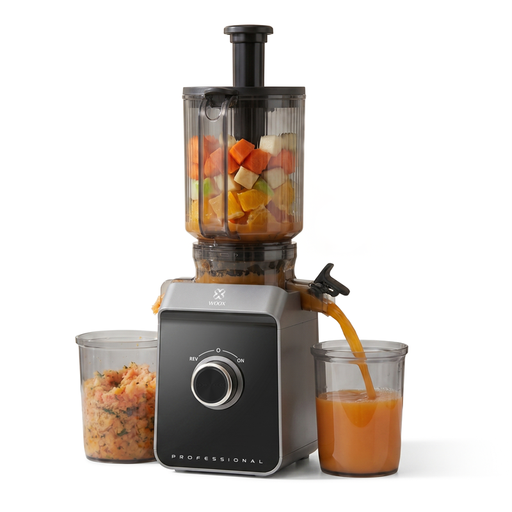
Why it suits this type of user: This slow juicer is designed for people who juice a variety of fruit and vegetables and value having separate containers for juice and pulp.
The operating time, cooling period and suitable ingredients are clearly specified. This helps prevent overloading the appliance with hard, frozen or unsuitable ingredients.
150 W, 1.8-litre chamber, 836 ml pulp container, overheating protection and a cleaning brush included.

Why it suits this type of user: If you want to knead, blend, chop and grind as well as make juice, consider a multifunctional food processor instead of a separate juicer.
The citrus juicer is part of a wider system. Check which accessories you’ll need, the dimensions and how much storage space you have before buying.
3.9-litre stainless steel bowl, citrus juicer, blender, vegetable slicer and functions for dough and minced meat according to the product description.
We’ve put together a complete, up-to-date list of products that meet these strict selection criteria and the applicable European safety regulations.
It can be, but a citrus juicer is usually easier to use for oranges, lemons and grapefruits. A standard juicer is a better choice if you also want to juice apples, carrots or other vegetables. Peel citrus fruit if the instructions say to do so.
Its lifespan depends on the materials, how often you use it, how you clean it and whether you follow the maximum operating time. Let the motor cool down if the instructions recommend it, and don’t force hard or frozen ingredients through the appliance. In the European Union, consumer products are generally covered by a legal guarantee of conformity; your exact rights depend on your circumstances and national rules.
A citrus juicer is usually only used for a short time at a stretch. Models in this selection, for example, list 25 W or 40 W. Overall energy use depends mainly on how long you use it. If you juice citrus fruit every day, a compact model may therefore be more practical than a powerful juicer that you only use for a few minutes.
