A juice extractor is a better fit if you want to process raw beetroot quickly or make juice for several colleagues. A compact slow juicer makes more sense for small portions and limited worktop space. Either way, allow time for washing, any necessary chopping, emptying the pulp and cleaning: a wide feed chute doesn’t eliminate those tasks, and a slow juicer isn’t automatically quiet when processing hard beetroot.
Who is a juicer suitable for in the office?
Shared kitchen manager
Wants to keep pulp and used parts manageable after each juicing session. The Netherlands Nutrition Centre advises washing fruit and vegetables under running water; taking the juicer apart and agreeing on a clear cleaning routine are also important for the model you choose.
Colleague with a short break
Wants to process raw beetroot quickly and weighs up a wide feed chute and ample juice capacity against noise. The Consumers’ Association describes juice extractors as fast, but often noisier.
User with a small office kitchen area
Usually makes a small portion and wants to keep worktop space free. The Hurom H310A is listed as measuring 16 × 17,2 × 39,5 cm, with a 240 ml pressing chamber; slow juicing also takes time to prepare and clean up.
What should you look for in an office juicer for beetroot?
Juice extractor
Choose this when: you want to process raw beetroot quickly or make several glasses.
Bear in mind: noise, pulp and cleaning after use.
Compact slow juicer
Choose this when: a small portion and limited worktop space matter more than speed.
Bear in mind: slower juicing and extra time for preparation and washing up; slow juicing doesn’t prove that the appliance is quiet.
Larger slow juicer
Choose this when: the team has deliberately chosen this juicing method and there’s enough space.
Bear in mind: check the terms for the exact model and its intended use.
| What to consider |
What to look for when buying |
Who should pay particular attention? |
| Cleaning and hygiene |
Check which parts can be removed and which are dishwasher-safe according to the model-specific instructions. Braun lists dishwasher-safe parts for the MultiJuice 7; check which parts this applies to on the model you’re considering. |
If I want the next colleague to find a clean kitchen, I pay particular attention to how easy it is to take apart and whether a cleaning routine is realistic. Around 28% of consumers put cleaning and hygiene first. |
| Noise during the working day |
The Consumers’ Association describes juice extractors as often noisier and slow juicers as slower. If noise is a deciding factor, ask for a demonstration in a similar space. |
If I work near the kitchen, I want to avoid the appliance disrupting conversations or focused work. Around 22% of consumers put avoiding noise disruption for colleagues first. |
| Raw beetroot and break time |
Follow the instructions for hard vegetables and check the feed chute and collection capacity. Bosch lists two speeds and a 1500 ml juice container for the MES4000; Braun lists a 75 mm feed chute for the SJ7000GY. |
With a short break, I want to know how much preparation and juicing I can fit in. Around 22% of consumers put processing beetroot and speed first. |
| Space for the appliance and washing up |
Measure the worktop and the space above the feed chute; also leave room for preparation, collecting the juice and storing used parts. Hurom lists the H310A as measuring 16 × 17,2 × 39,5 cm. |
If my office kitchen area is small, it’s not just the machine that matters, but the space needed for the whole routine. Around 17% of consumers put available space first. |
| Warranty and service terms |
Read the terms for the exact model, buyer and type of use. Kuvings lists separate warranty periods for the motor and other parts of the REVO830; check which situations those terms cover. |
If I share an appliance with colleagues, I want to know in advance which service and warranty terms apply. Around 11% of consumers put warranty and service first. |
Common buying mistakes
-
Assuming a wide feed chute means no chopping or cleaning
Raw beetroot still needs washing and may need to be cut to size. Allerhande’s beetroot recipe describes cleaning and chopping the beetroot; the Netherlands Nutrition Centre advises washing fruit and vegetables under running water.
Consider the whole routine and follow the instructions for your chosen model, rather than looking only at the width of the feed chute.
-
Taking ‘slow’ as proof that it’s quiet or more nutritious
The Consumers’ Association describes trade-offs between juicing methods, but the word ‘slow’ doesn’t prove that an appliance is quiet or produces more juice.
Choose based on how quickly you need to work, the ingredients and the upkeep. If noise matters, compare models in similar conditions.
-
Assuming the motor warranty covers the whole appliance
Kuvings lists different terms for the motor and other parts of the REVO830. Warranty terms and consumer rights are also not the same thing.
Before buying, read the terms for the exact model, buyer and intended use.
Brands to compare
Bosch
The MES4000 is a juice extractor worth considering if speed and capacity for several glasses are important.
- Bosch lists two speeds and a 1500 ml juice container for the MES4000.
- Bosch specifies a hole-free ceramic blade and a micro-sieve; these are model specifications, not independent measurements of cleaning time, noise or beetroot yield.
Braun
The MultiJuice 7 SJ7000GY is worth considering if the feed chute and cleaning requirements matter to you.
- Braun lists a 75 mm feed chute and parts that are dishwasher-safe according to the instructions.
- A manufacturer’s speed claim isn’t the same as an independent test using beetroot.
Hurom
The H310A is a compact slow juicer worth comparing if you make small portions and have limited worktop space.
- Hurom Europe lists dimensions of 16 × 17,2 × 39,5 cm and a 240 ml pressing chamber.
- These product specifications don’t tell you how quietly or quickly the model juices beetroot; also check the terms for the version on offer.
Kuvings
The REVO830 is a larger slow juicer for teams that have deliberately chosen this juicing method.
- Kuvings lists separate warranty periods for the motor and other parts.
- Check the applicable terms for the model and its intended office use; warranty information doesn’t prove a higher beetroot yield.
Juicers at Joybuy
This selection includes compact slow juicers for smaller portions and juice extractors for anyone looking to process raw beetroot or make several glasses.
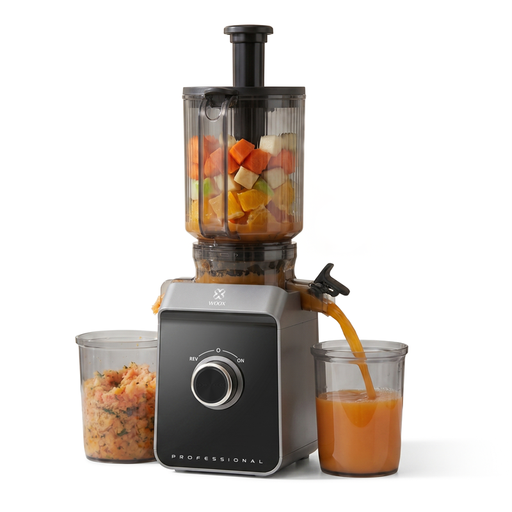 Image unavailable
WOOX MX0289 slow juicer, 150 W
Worth comparing if you’re looking for a compact slow juicer for smaller portions.
The product information lists a 600 ml juice jug and an 836 ml pulp container. The stated limit is 10 minutes of continuous use, followed by a 20-minute rest.
Joybuy
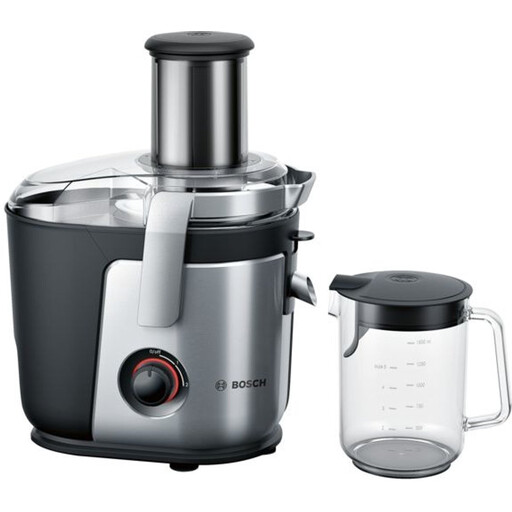 Image unavailable
Bosch MES4000 juice extractor, 1000 W
Worth comparing if you want to process hard vegetables or make juice for several glasses.
The product information lists two speeds, a 1.5-litre juice jug, a 3-litre pulp container and removable, dishwasher-safe parts.
Joybuy
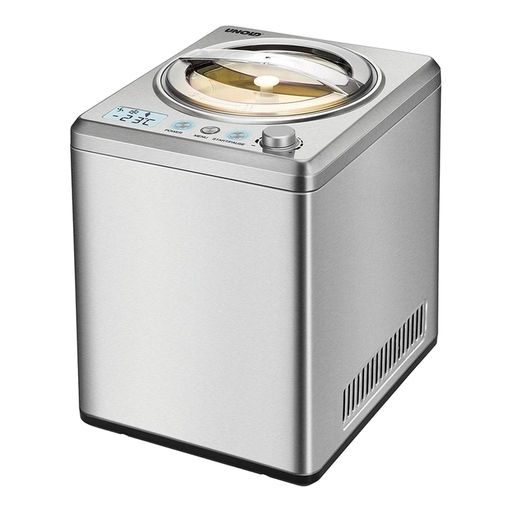 Image unavailable
Unold 48880 slow juicer, 150 W
Worth comparing if you’re looking for a slow juicer for processing fruit and vegetables.
Joybuy
Frequently asked questions
Do you need to wash and chop raw beetroot first?
Yes. Wash raw vegetables under running water, as the Netherlands Nutrition Centre advises. Allerhande’s beetroot recipe describes cleaning and chopping the beetroot; also follow your juicer’s size and operating instructions.
Is beetroot juice from a slow juicer proven to be healthier than juice from a juice extractor?
Don’t choose a slow juicer based on a general promise about nutrients or yield. The Consumers’ Association gives no reason to assume this kind of standard advantage. The Netherlands Nutrition Centre also notes that fruit and vegetables are better eaten than drunk; when you juice them, the fibre remains in the pulp.
What warranty applies if the office buys the juicer?
This depends in part on who buys it and the terms for its intended use. The Government of the Netherlands states that there is no fixed statutory warranty period in the Netherlands and explains consumer rights when a product is faulty; don’t assume that the same rights apply to every business purchase.
Is a HACCP plan required because colleagues make juice together?
Not simply because colleagues share an office. The Netherlands Food and Consumer Product Safety Authority (NVWA) describes the requirement as applying to businesses that produce, process, sell or distribute food as a food business activity. So first assess whether the actual provision of juice falls under such a business activity.


