
Serving several glasses
You want to serve the family several spinach smoothies in as few batches as possible, so the jug’s usable capacity is your main consideration.


If you want to serve several glasses in one go, focus on the jug’s usable capacity and how easy the parts are to clean after use. A personal smoothie maker is a better fit if you make individual portions and don’t mind blending in extra batches. For the consistency you want, check the blending results for the exact model too; wattage alone doesn’t tell you how smooth a spinach smoothie will be.
You want to serve the family several spinach smoothies in as few batches as possible, so the jug’s usable capacity is your main consideration.
You want to know how well ingredients such as leafy greens and fruit blend together. Even if you use frozen ingredients, wattage alone won’t tell you what results to expect.
You prefer to make a smoothie for each person and are happy to blend in extra batches in return for a compact cup.
Start with how much you want to make in each batch, then choose a suitable jug or cup. Next, compare the blending results and how easy the parts are to clean for the way you plan to use it.
| What to consider | What to look for when buying | Who is this important for? |
|---|---|---|
| Amount per batch | Compare the usable capacity with the number of glasses you want to make at once; a jug’s total capacity isn’t always the same as its usable capacity. | If I want to serve several glasses in a row at a gathering, I’d rather not have to refill as often. Around 36% of consumers prioritise making enough smoothie in each batch. |
| Desired consistency | Look for a blending test of the exact model and check which ingredients were used; wattage on its own doesn’t measure the results. | For a green smoothie, I want to know how leafy greens and fruit blend together, including when frozen ingredients are used. Around 29% of consumers prioritise blending results. |
| Cleaning | Check which parts can be removed and which the manufacturer says are dishwasher-safe; don’t assume the motor base can go in the dishwasher. | After making several batches, I want to be able to clean the jug and blades without any unnecessary hassle. Around 21% of consumers focus on ease of cleaning. |
| Individual portions | Check the cup’s capacity and which cups or lids are included with the exact version. | If I usually make one portion at a time, a smaller cup is a better fit for how I use it and the space I have for storage. Around 14% of consumers prioritise compact, individual portions. |
For the Tefal Perfectmix+ BL811D38, Tefal lists both a total jug capacity of 2 l and a usable capacity of 1.5 l. These figures don’t mean the same thing when it comes to how much you can prepare in one batch.
Compare the stated usable capacity for the exact version and plan your portions accordingly.
Power doesn’t tell you how your recipe will turn out. The fruit and vegetable smoothie tested by the Dutch Consumers' Association doesn’t contain spinach.
Where possible, check a test of the exact model and see which ingredients were used.
The manufacturer lists a 700 ml cup for the nutribullet Original NB603DG. A personal cup is designed for a different purpose than a jug for making several portions.
Choose a personal cup if you usually make individual drinks; for a group, compare how much you want to serve in each batch.
A manufacturer’s warranty or an additional warranty you buy comes on top of your statutory rights. The Dutch government notes that if a product is faulty, you should contact the retailer.
Check what extra cover is offered and whether it gives you any additional benefits.
The VitaPower MMB6172S is a jug blender worth comparing if you want to make several portions in one batch.
The Perfectmix+ BL811D38 is a jug blender with programmes to consider if you make smoothies regularly.
The 5000 Series HR3020/20 is a jug blender you can compare by capacity and controls.
The Original NB603DG is a personal blender for individual portions.
These are jug blenders for making spinach smoothies and other portions to share. Compare the listed capacities and features with the quantities you need and the cleaning routine that suits your gathering.
 No image available
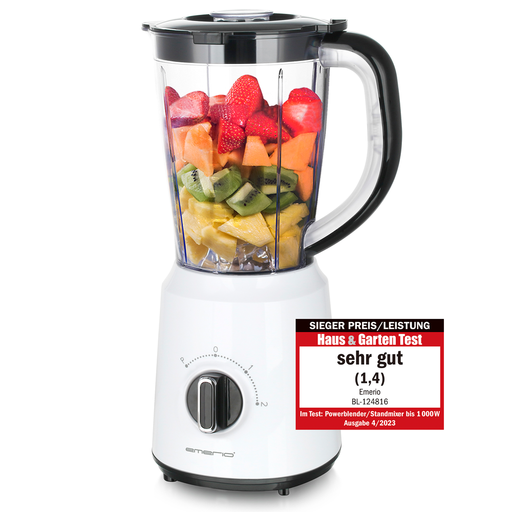
A jug blender for making several portions in one batch.
Power: 1300 W. Jug: 1.5 l. Four blades, two speeds and a pulse function.
 No image available
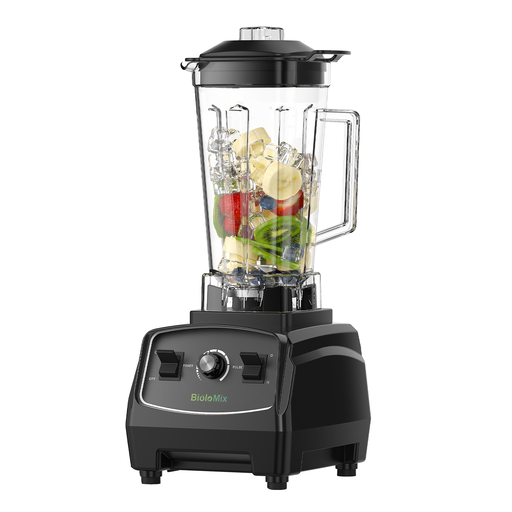
A jug blender to compare for making smoothies in several portions.
Jug: 1.5 l. Two speeds.
 No image available
A jug blender to compare if you want to make larger batches of smoothies.
Capacity: 2 l. Power: 2200 W. Six stainless steel blades and an automatic cleaning function.
 No image available
A jug blender to compare for making several portions and a range of recipes.
Power: 600 W. Capacity: 1.5 l. Three speeds and an ice-crushing function.
 No image available
A jug blender to compare for smoothie portions to share.
Power: 1200 W. Capacity: 1.5 l. Six blades, a smoothie programme and a cleaning programme.
No, wattage alone doesn’t tell you what’s needed for this recipe. If consistency matters, compare results for the exact model and check which ingredients were used in the test.
The Netherlands Nutrition Centre advises washing raw vegetables and fruit under running water. If you’re using pre-packed spinach, check the instructions on the packaging too, and make sure your hands and kitchen utensils are clean.
Don’t assume that’s safe. The Netherlands Nutrition Centre advises returning products that need refrigeration to the fridge promptly and gives 4 °C as the ideal fridge temperature. Advice for a packaged fruit smoothie doesn’t automatically tell you how long a homemade smoothie with spinach and any added dairy will keep.
If electrical equipment falls under the relevant European rules, it must meet the applicable conformity and CE marking requirements. The European Low Voltage Directive applies to equipment within voltage ranges of 50–1000 V AC or 75–1500 V DC. Check the information for the exact version; a product title alone doesn’t show that a specific appliance complies with the rules.
No, you don’t need an extended warranty to have statutory rights. A manufacturer’s warranty or an additional warranty you buy is extra; check what additional cover it provides. If a product is faulty, contact the retailer.