
Vandaag of morgen in huis

Kwaliteit gegarandeerd

Welkomstaanbiedingen ontgrendelen: GRATIS bezorging | Tot 80% korting | Gratis 30 dagen JoyPlus-proefperiode
Download de app
Choosing the right booster seat may seem straightforward, until you consider belt positioning, fitting, maintenance and space on the back seat. For children aged around 7 to 12, weight isn’t the only important factor: when choosing a car seat for children measuring 125-150 cm, your child’s height is what mainly determines whether a model is suitable.
The Jovikids ISOFIX ECE R129 booster seat is designed for this height range. Even so, it’s worth looking beyond terms such as ‘i-Size’, ‘extra thick’ and ‘ISOFIX’. Read on to find out which features you can check for yourself and which pitfalls are best avoided when buying.
An ISOFIX booster seat can be secured to your car’s anchor points. This helps keep the booster in place when your child isn’t sitting in it and can limit movement as they get in. However, on a simple booster, ISOFIX doesn’t automatically replace the three-point seat belt.
Always check how the manufacturer says to use the car’s seat belt. According to the product information, the Jovikids OHHO+ comes with a belt clip to adjust the belt position. The belt should still lie flat across your child’s chest and pelvis, and must not run across their neck.
ECE R129, also known as i-Size, is based largely on a child’s height. So, a model may be approved under R129 but still not be suitable for your child.
According to the stated product specifications, the Jovikids OHHO+ is designed for children measuring 125-150 cm. Another i-Size car seat, for example, may be suitable from 76, 100 or even 40 cm. Check the approval label, the manual and the exact height range. Don’t rely on the age given in the product title alone.
A thick cushion may feel comfortable, but comfort also depends on the seat’s width, armrests, cover, seating position and the shape of your car’s back seat. The product description says the Jovikids OHHO+ has an extra-thick seat cushion. The claim that the cushion is ‘200% thicker’ comes from the brand’s product information and isn’t the result of an independent comparison.
Also consider maintenance. A washable child car seat is handy when there are spills, mud or crumbs, but check whether the cover can be removed completely and always follow its care label.
A Group 2/3 child car seat or a 15-36 kg child car seat is often described in terms of weight. Under R129, the height range is just as important. Measure your child without shoes and compare their height with the official specification.
Check in the car that:
Don’t put an extra cushion or thick coat under the belt. This could affect how the belt sits.
Check whether your car has ISOFIX anchor points and whether they’re easy to reach. According to the product description, the Jovikids OHHO+ comes with an ISOFIX adapter and two insertion guides. Its stated dimensions are 37 × 44 × 23 cm and it weighs around 3 kg.
This makes the booster relatively easy to move between cars, but check in advance that there’s enough room next to other child car seats. Even a compact booster can take up more space than expected if it has armrests or bulky fittings.
A removable cover is a clear practical benefit. The product information for the Jovikids OHHO+ states that its cover is removable and washable. Don’t use harsh cleaning products, and only put the cover back on once it’s completely dry.
A lightweight booster seat is also handy for families who regularly switch between parents’ cars, grandparents’ cars or a childminder’s car. Store the booster somewhere dry, and after a long period in storage, check the belt guide, cover and ISOFIX parts again.
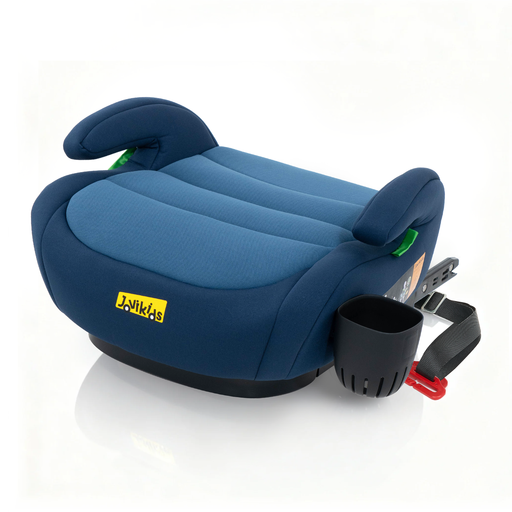
Why it suits this profile: This booster seat is designed for children measuring 125-150 cm and has a compact design for everyday use in family cars.
The height range is clearly stated. The supplied belt clip and ISOFIX insertion guides help with correct fitting, but the three-point seat belt is still essential.
According to the product information: ISOFIX adapter, washable cover, cup holder, dimensions of 37 × 44 × 23 cm and a weight of around 3 kg.
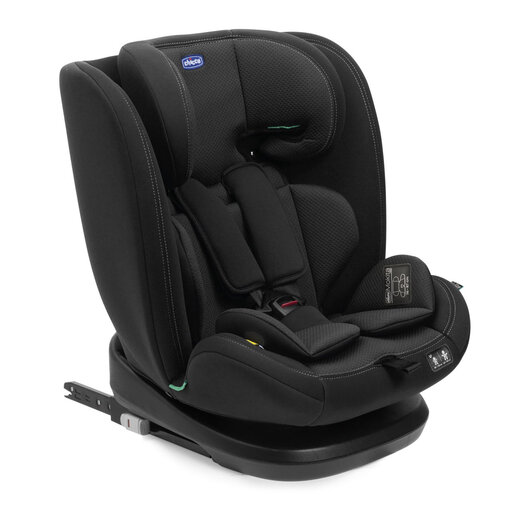
Why it suits this profile: A good choice if you’re looking for a car seat with a backrest that covers a wider height range and offers several adjustment options.
The specifications clearly explain when to use ISOFIX, Top Tether and the three-point seat belt. This means it isn’t a simple booster used in the same way at every stage of your child’s growth.
ECE R129/04 for 76-150 cm, four recline positions and an adjustable headrest. According to the specifications, the model weighs 9,4 kg.
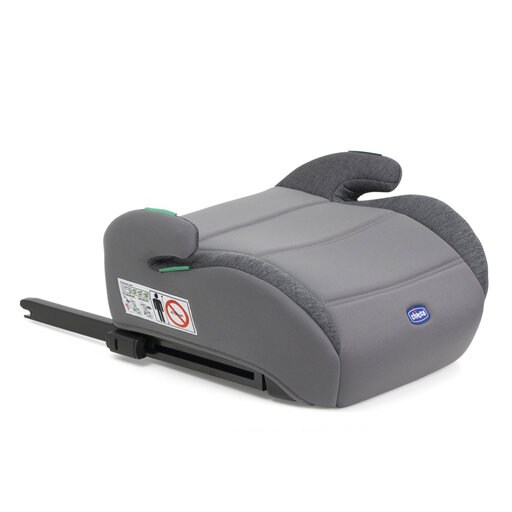
Why it suits this profile: A practical choice if you’re looking for a lightweight booster with optional ISOFIX stabilisation and straightforward belt positioning.
The product information distinguishes between the three-point seat belt and the optional ISOFIX connectors. This makes it clear which fitting secures your child.
Suitable for 125-150 cm, with a belt guide, padded armrests, removable cover and a stated weight of 2 kg.
We’ve put together a complete, up-to-date list of products that meet these strict selection criteria and comply with current European safety regulations.
Replace a child car seat after an accident if the manufacturer advises you to, even if there’s no visible damage. Also check regularly for cracks, loose parts and wear to the cover.
ISOFIX secures the booster to your car’s anchor points, but how well it works depends on correct fitting and compatibility. With a simple booster, your child is usually secured with the three-point seat belt. So ISOFIX isn’t a substitute for a correctly positioned belt.
According to the stated specifications, the Jovikids OHHO+ is designed for children measuring 125 to 150 cm. How long it can be used varies from child to child. Stop using it when your child is outside the stated height range or if the booster is damaged. Always follow the manual and check the approval label.
The Jovikids OHHO+ is listed as having a removable, washable cover. Follow the care label and the manufacturer’s instructions. Don’t use bleach or harsh cleaning products, and only put the cover back on when it’s completely dry.
