
Vandaag of morgen in huis

Kwaliteit gegarandeerd

Welkomstaanbiedingen ontgrendelen: GRATIS bezorging | Tot 80% korting | Gratis 30 dagen JoyPlus-proefperiode
Download de app
A pair of Joma football boots may be attractively priced, but choosing the wrong sole or size can quickly make them impractical. Changing surfaces are a particular challenge on Dutch pitches: artificial grass for training, natural grass at the weekend and sometimes a hard indoor or turf pitch.
So don’t focus only on the colour, model name or terms such as “lightweight”. Pay particular attention to the sole, materials, fit and the type of surface the product information says the boots are designed for.
AG, FG, TF and SG aren’t random model codes. They refer to different sole types:
Wearing FG boots on heavily used artificial grass can be uncomfortable and may wear the sole out more quickly. SG studs aren’t designed for hard artificial grass pitches either. So first check which surface you usually play on.
A boot with lots of studs won’t necessarily provide better grip on every pitch. The position, length and shape of the studs are designed for a particular surface. For example, according to the product information, the studs on the Joma Super Copa 2402 AG are designed for artificial grass. That doesn’t mean this model is also suitable for natural grass or turf.
Football boots should fit snugly, but your toes shouldn’t feel cramped. Boots that are too roomy can slip when you turn or accelerate. So don’t look at EU size alone. For example, the Joma Super Copa 2402 AG lists a foot-length range for each size. EU size 45 is shown as suitable for a foot length of approximately 288 to 292 millimetres.
Measure both feet at the end of the day and compare the longer foot with the size chart for your chosen model.
For many amateur footballers in the Netherlands, Joma AG football boots are a practical choice for artificial grass. According to the product specifications, the Joma Super Copa 2402 AG and Super Copa 2401 AG have an AG sole with plastic studs and are designed for artificial grass.
For firm natural grass, Joma FG football boots are a more suitable choice. According to the product information, the Joma Propulsion Cup 2402 FG, Joma Super Copa 2404 FG and Joma Striker 2502 FG have an FG sole for firm ground. The Joma Aguila Cup 2518 FG is also listed as suitable for natural grass.
Do you mainly play on a short, hard artificial grass pitch or a turf pitch? Then look at Joma TF football boots, such as the Joma FS Reactive 2402 TF. Its sole has a multi-stud profile with lots of small rubber studs. This distributes contact with the surface differently from an AG or FG sole.
The upper affects how the boot feels and how much care it needs:
Lightweight football boots can feel comfortable for players who accelerate and change direction frequently. However, less material doesn’t automatically mean more comfort. Also consider the width, heel fit, tongue and laces.
The models mentioned mainly have a regular fit and a traditional lace-up fastening. Lace them evenly and wear the football socks you use for matches. This helps you assess the size accurately, rather than trying the boots on with socks that are too thin or too thick.
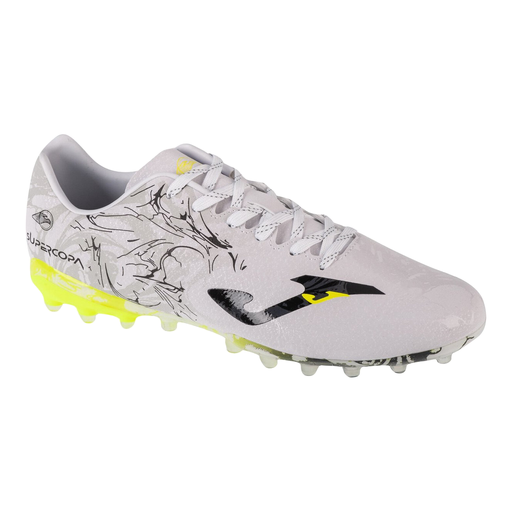
Why it suits this profile: A straightforward AG model for adults who mainly train on artificial grass and want a simple lace-up boot.
The AG designation makes it clearer that these boots are intended for artificial grass than a general model without a clearly stated sole classification.
Synthetic upper, rubber sole, regular fit and a low-cut lace-up design.
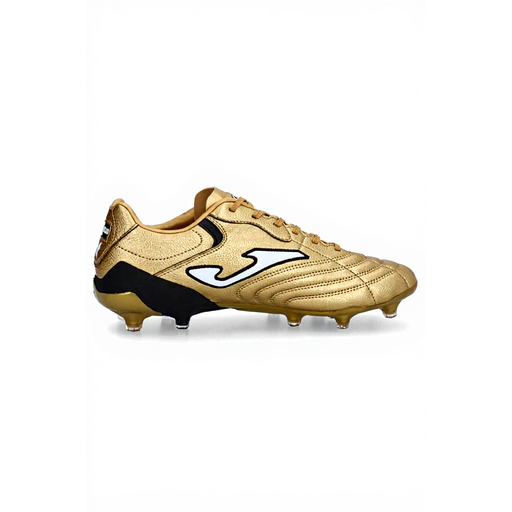
Why it suits this profile: Suitable for players on firm natural grass who value a leather upper and extra attention to fit.
The FG specification helps prevent you from choosing an artificial grass or turf sole for a firm natural grass pitch.
Natural leather upper according to the product description, padded collar and anatomically shaped insole.
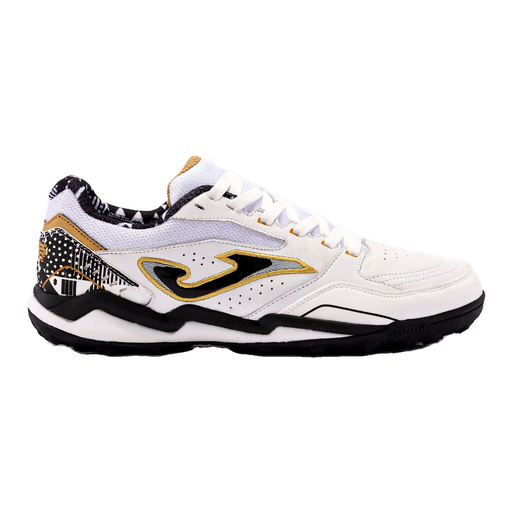
Why it suits this profile: An option for players who often train on turf or compact artificial grass pitches and want a multi-stud sole.
The TF profile makes this boot more specifically suited to turf than an FG model with longer studs.
Multi-stud rubber outsole, leather upper, ventilation perforations and rubber toe protection according to the product information.

Why it suits this profile: A lightweight FG boot for adult footballers who play on firm natural grass and value freedom of movement.
The product information explicitly states that these boots are for FG use on firm natural grass, so your choice isn’t based on looks alone.
Synthetic upper, rubber sole and, according to the product description, a lightweight construction.
We’ve put together a complete, up-to-date list of products that meet these strict selection criteria and the applicable European safety regulations.
Remove grass, mud and sand from your Joma football boots after every training session. Ideally, use a soft brush or damp cloth. Leave them to dry naturally and avoid radiators, hairdryers, washing machines and tumble dryers. High heat can damage materials and glue bonds.
Use AG, FG, TF and SG boots only on the surfaces they’re designed for. Also check regularly for loose studs and cracks in the sole. According to the product information, most of the products mentioned are covered by a statutory EU guarantee of at least two years. This guarantee is separate from normal wear and tear or damage caused by misuse.
Yes, according to the product specifications, several models are designed for artificial grass. Choose AG for artificial grass with longer synthetic grass blades and TF for turf or compact artificial grass pitches. Always check the recommendation for the specific model.
AG models are designed for Artificial Ground and have a sole profile for artificial grass. FG models are intended for Firm Ground, usually firm natural grass. If you play on both surfaces, you may need two pairs to avoid excess wear and reduced grip.
It depends on your playing time, the surface, care, body weight and playing style. A pair used only on the right surface and cleaned after use may last longer than one worn on several unsuitable surfaces. Pay particular attention to worn studs, seams coming loose and a misshapen sole.
