
Vandaag of morgen in huis

Kwaliteit gegarandeerd

Welkomstaanbiedingen ontgrendelen: GRATIS bezorging | Tot 80% korting | Gratis 30 dagen JoyPlus-proefperiode
Download de app
A pair of Joma football boots can be attractively priced, but a low price means little if the sole is not suited to your pitch. In the Netherlands, many adults play on artificial grass, while matches sometimes take place on firm natural grass. Using the wrong type of boot for each surface can lead to faster wear, reduced comfort or insufficient stability.
Pay particular attention to these three common pitfalls:
With Joma football boots, the letters in the model name often refer to the playing surface.
AG stands for Artificial Ground. This sole is designed for artificial grass pitches. The studs are generally distributed across several contact points, helping you maintain grip during short sprints and changes of direction without using a sole designed for natural grass.
For Dutch players who mainly train on artificial grass, Joma AG football boots are a logical choice. However, always check your club’s pitch regulations. An AG model is not automatically suitable for every type of artificial grass or indoor pitch.
FG stands for Firm Ground. This sole is designed for firm, relatively dry natural grass pitches. The longer, differently positioned studs are intended to provide grip in the turf.
Joma FG football boots are therefore mainly suitable for football boots for natural grass, rather than being the standard choice for artificial grass. Regularly using FG studs on artificial grass can place additional strain on the material and sole. A different sole category may be required on soft or muddy grass.
Many models in the Joma Super Copa range have an upper made from synthetic material or synthetic leather. This is practical for players looking for easy-care boots. According to the product information, these materials are designed to combine durability with comfort.
A synthetic upper generally moulds to the foot differently from natural leather. Pay close attention to the width around the forefoot. A boot that already presses firmly when you try it on will not automatically become suitable simply by wearing it more often.
A lower weight can be comfortable when you accelerate frequently or change direction often. The product information for various Joma models mentions a lightweight construction. This is a verifiable feature, but it does not mean that every lightweight boot will suit every player.
As well as the weight, consider:
The range includes football boots in sizes 40 to 44, with some half sizes available. Preferably use the size guide for the specific model. For example, the Joma Super Copa 2401 FG lists a foot-length range in millimetres. This is more useful than relying solely on EU size 42 or 43.
Ideally, try the boots on with the football socks you wear during training. Your heel should lift as little as possible, while there should be limited room for your toes to move. Boots that are too spacious can reduce stability; boots that are too tight can become uncomfortable during a long training session.
The recommendations below are based on the stated sole, materials, size, fastening and intended uses. Always check the current stock, size information and product specifications on the product page before ordering.
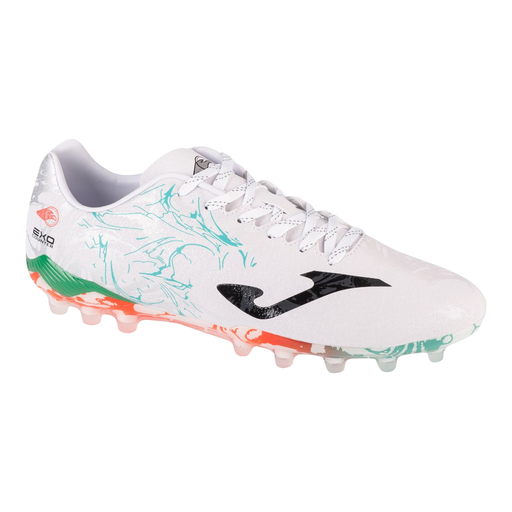
Why it suits this profile: This AG model is designed for adult women and men who mainly train on artificial grass and are looking for a straightforward lace-up construction.
The AG designation clearly indicates the intended surface. This helps prevent you from accidentally choosing an FG model for artificial grass.
Synthetic upper, rubber sole, lace fastening and size 40.5; the product information states that it has a regular fit.
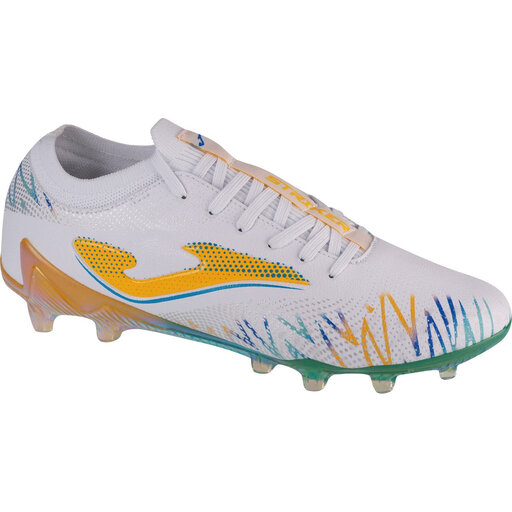
Why it suits this profile: This FG model is aimed at players who play on firm natural grass and value heel support and a close-fitting upper.
The product details explicitly mention FG and firm natural grass. This helps you avoid choosing an unsuitable AG model for natural grass.
Microfibre upper, integrated sock section, EXO Counter heel technology and regular fit according to the product listing.
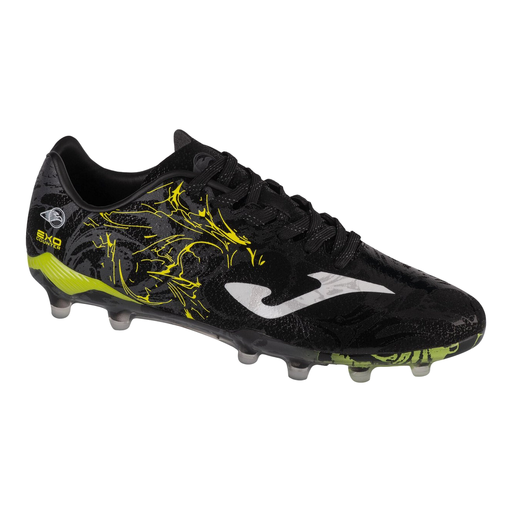
Why it suits this profile: This version is suitable for players who regularly train or play matches on firm natural grass and want a supportive heel construction.
The FG specification and size 42.5 are clearly stated. However, check that your pitch is actually firm natural grass before ordering.
Eco-leather upper, rubber outsole, Exo Counter technology and a lightweight construction according to the product information.
We have compiled a complete, up-to-date list of products that fully meet these strict selection criteria and the applicable European safety regulations.
Clean Joma football boots after every training session with a soft brush or a slightly damp cloth. Remove grass and mud from the studs before the dirt dries. Allow the boots to dry naturally, away from radiators and direct sunlight. Washing machines, bleach and high temperatures can damage the upper, adhesive bonds or sole.
Use AG boots on artificial grass wherever possible, and FG boots on the firm natural grass pitches for which they are intended. Choosing the right surface is one of the most important factors in preserving grip and material quality.
Yes, choose a model with an AG sole, such as the Joma Super Copa 2402 AG. Also check your club’s rules and the type of artificial grass pitch. An FG model is not automatically suitable for artificial grass.
That depends on playing hours, surface, care and fit. Boots used only on the recommended surface and cleaned after every training session can remain in good condition for longer. Replace them when the sole starts to come away, the studs show significant wear or the upper no longer provides a secure fit.
The range includes models for men, women and unisex use. Do not look only at the gender designation, but focus mainly on the EU size, foot length, width and fit. The product page states the available size for each version and sometimes includes additional sizing information.
