
Vandaag of morgen in huis

Kwaliteit gegarandeerd

Welkomstaanbiedingen ontgrendelen: GRATIS bezorging | Tot 80% korting | Gratis 30 dagen JoyPlus-proefperiode
Download de app
A pair of Joma football boots may look great at first glance, but the right choice mainly depends on the surface, fit and construction. If you only go by colour, price or a sporty model name, you risk buying boots that don’t provide enough grip, wear out quickly or feel uncomfortable.
FG, AG, SG, TF and IN are not random abbreviations. They indicate the surface the sole is designed for. Joma football boots for natural grass aren’t automatically suitable for artificial grass. Conversely, long or metal studs on a hard surface can be uncomfortable and wear out faster.
Terms such as “speed”, “professional” and “maximum control” mean little without supporting product detail. Look instead at the upper material, the sole type, the lining, the closure and the available size. According to Joma’s product descriptions, for example, some models are lightweight or feature Exo Counter technology; that’s a product specification, not a guarantee that every player will be faster or more comfortable.
A size 42 doesn’t fit exactly the same in every model. Check the size chart and compare the listed foot length with your own measurement. The range includes football boots from size 40 through to 45, but stock varies by model and version.
A studded sole isn’t automatically suitable for every playing surface or pitch. If in doubt, ask your club which surface you’ll be using.
A leather upper, such as on the Joma Aguila Cup 2518 FG and Joma Top Flex 2401 TF, can feel supple and mould to your foot. Leather does require regular care and should be left to air dry slowly. Synthetic leather or a combination of synthetic materials and textile is generally easier to clean.
Also check:
A good football boot hugs the foot without pinching your toes. Try them on with the socks you wear for training or matches. Fully loosen the laces before putting the boot on; this prevents the heel structure from being overstretched.
For men’s and women’s Joma football boots, not just the gender label but above all your foot length, foot width and personal preference matter. Unisex models, such as certain Top Flex versions, can suit both groups when size and fit are right.
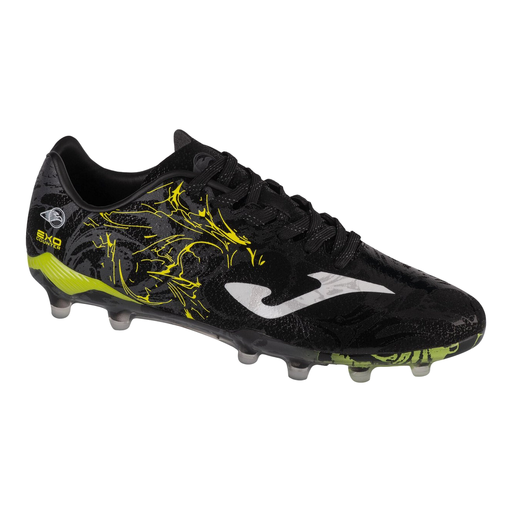
Why this fits the profile: A straightforward FG model for training and matches on firm natural grass, with a standard fit and lace-up closure.
The product information clearly states FG and natural grass. That makes the surface choice verifiable rather than based on looks alone.
Eco-leather upper, rubber FG sole and Exo Counter support according to the product description.
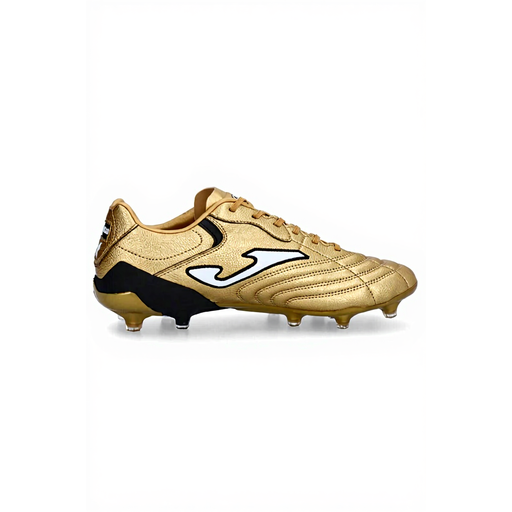
Why this fits the profile: For players who value a genuine leather upper, a classic lace construction and extra comfort around the heel.
The choice isn’t just about the look: the product details specify genuine leather, a padded collar and an anatomical insole.
Genuine leather upper, FG sole and regular fit; suitable for firm natural grass according to the product information.

Why this fits the profile: Built for futsal and indoor football, with a flexible construction and a non-marking rubber sole for sports hall floors.
The sole is explicitly described as non-marking and suitable for indoor use. That prevents a studded model being used on a smooth indoor floor.
Synthetic–textile upper, reinforced toe and EVA insole according to the product description.
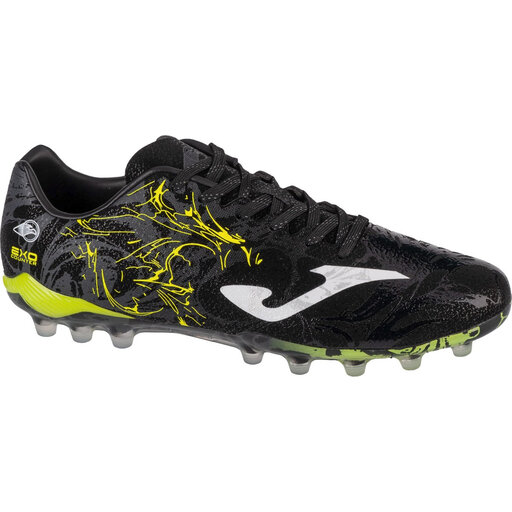
Why this fits the profile: An AG model for players who mainly train and play on synthetic pitches.
The AG designation makes the intended surface clear. Don’t use this model as a general-purpose boot for natural grass and indoor football.
Synthetic upper, rubber sole and EXO COUNTER and ONE PIECE technology according to the product data.
We’ve put together a complete, up-to-date list of products that fully meet these strict selection criteria and comply with current European safety regulations.
Lifespan depends on playing time, surface, body weight, playing style and maintenance. Clean off mud and grass after every session with a soft brush or cloth. Let boots dry at room temperature and avoid radiators, hairdryers and direct sunlight. Heat can stiffen leather and damage adhesive bonds.
Use FG, AG, SG and IN boots only as intended. The wrong surface can make the sole wear out faster and alter grip. The models mentioned are, according to the product information, covered by at least two years’ statutory guarantee within the EU; statutory guarantee concerns conformity and is separate from normal wear through use.
That depends on the sole. Choose preferably a model marked AG or, depending on the type of artificial grass, TF. An FG model is, according to the product description, meant for firm natural grass and isn’t automatically the right choice for artificial grass.
Joma Top Flex is a model line with different versions. The Top Flex 2531 IN and Top Flex 2502 IN are designed for futsal and indoor football and feature a non-marking rubber sole. Always check the addition after the model name: IN stands for indoor, while TF refers to a turf version.
Measure your foot in millimetres while standing and compare both feet with the size chart for the chosen model. Use the larger foot as your starting point. Then try them on with your usual sports socks and check that your toes can still move slightly without the heel lifting.
