
Vandaag of morgen in huis

Kwaliteit gegarandeerd

Welkomstaanbiedingen ontgrendelen: GRATIS bezorging | Tot 80% korting | Gratis 30 dagen JoyPlus-proefperiode
Download de app
A pair of Joma football boots might look suitable in photos, but the wrong sole can mean the difference between moving confidently and slipping. Adults who play on different surfaces are particularly likely to make the wrong choice because of three common pitfalls:
So if you’re looking for Joma football boots, first decide where you’ll wear them. Then consider the model, material, colour and price.
The abbreviation on the boot is a useful starting point. Always check the product page and your club’s or sports hall’s rules.
Joma indoor football boots and Joma futsal boots with an IN designation are designed for flat indoor surfaces. A non-marking rubber sole won’t leave black scuffs and is designed to grip smooth sports floors. Joma Top Flex models feature a flexible construction, a cushioned insole and a rubber indoor sole.
Don’t use IN boots as your standard football boots for outdoor artificial grass. Their flat sole doesn’t have the right stud pattern, and it may wear down more quickly.
Joma AG football boots have a studded sole designed specifically for artificial grass. The Joma Super Copa 2402 AG has a rubber sole with strategically positioned plastic studs. It’s a good option if you mainly train or play matches on synthetic pitches.
Bear in mind that artificial grass varies from pitch to pitch. Short, dense artificial grass may need a different stud pattern from longer turf. If you’re unsure, check the venue’s recommendation.
Joma TF turf football boots have lots of small rubber studs. These spread pressure over a larger area and give you a different feel underfoot from AG boots. According to the product information, the Joma Top Flex 2401 TF, 2502 TF and 2504 TF are designed for artificial grass and turf.
A TF stud pattern isn’t the same as an indoor football boot. Wear these models outdoors only on the surfaces they’re specified for.
Joma FG football boots are designed for firm natural grass pitches. The Joma Striker 2502 FG, Joma Propulsion Cup 2402 FG and Joma Super Copa 2404 FG have an FG stud pattern with fixed studs. Wet, soft or muddy grass may call for a different sole. Don’t routinely wear FG boots on hard artificial pitches unless the manufacturer says they’re suitable.
Don’t just look for “football” in the title. Check specifically for IN, AG, TF or FG. This is the most important product specification for grip, wear and comfort. Wearing boots on the wrong surface can make them wear out faster and feel less stable.
Many models in this selection have a regular fit and lace-up fastening. This makes the fit adjustable, but doesn’t mean they’ll suit every foot. Measure both feet at the end of the day and compare the longer foot with the size chart.
Football boots in sizes 40 to 46 are available among the models shown, but not every model comes in every size. For example, the Super Copa 2402 AG is a size 45, while the Top Flex 2531 IN is available in sizes 40, 41, 42 and 46. Check the current size options on the product page before ordering.
Synthetic materials and textile are lightweight and easy to clean with a damp cloth. Some models have a reinforced toe, including several Top Flex versions. This is worth considering if you train often or have a lot of contact with the ball and floor.
Let your football boots air dry naturally after use. Don’t machine wash them or use strong cleaning products. Keep indoor boots for indoor use, and remove sand and grass after outdoor training.

Why it suits this type of player: For anyone who regularly plays indoor football and wants a regular fit, lace-up fastening and flexible construction, rather than choosing an outdoor boot.
The IN designation and non-marking rubber sole make it clear that this model is for indoor use, not outdoor artificial grass.
Synthetic and textile upper, EVA insole, reinforced toe and size 40.
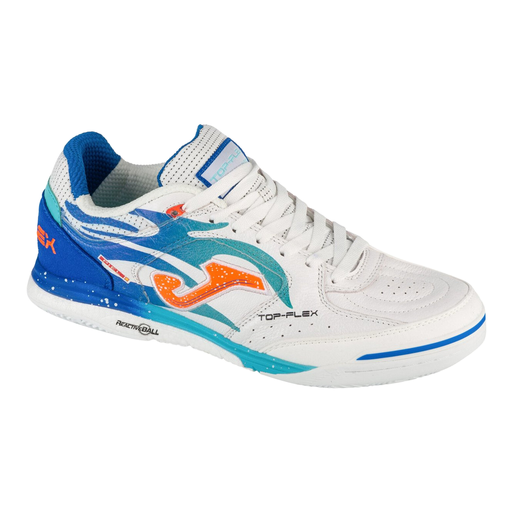
Why it suits this type of player: A good choice for indoor players who value flexibility, responsiveness and comfort during intense training sessions and matches.
The product information specifically mentions a non-marking indoor sole, reinforced toe and EVA insole, rather than relying on general performance claims alone.
Rebound technology in the midsole, synthetic and textile upper, and regular fit.
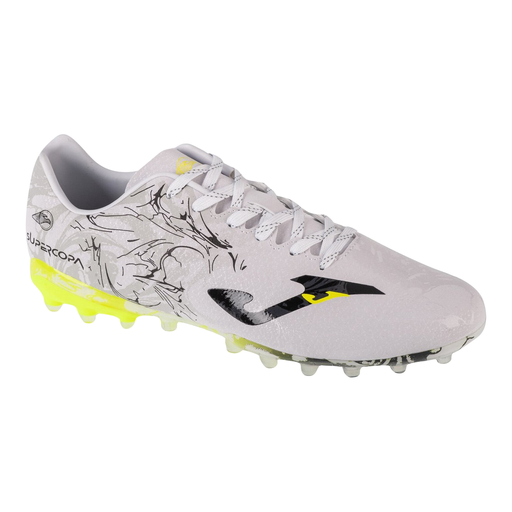
Why it suits this type of player: For adult players who train or play on artificial grass and are looking for size 45 in a regular fit.
The AG specification helps you avoid choosing an FG or indoor stud pattern for a synthetic pitch.
Rubber sole, strategically positioned plastic studs, synthetic upper and a lightweight design, according to the product description.

Why it suits this type of player: A good fit for adults who play on firm natural grass and want a lightweight model with an FG sole.
The product details list FG (Firm Ground) as the suitable surface, so you’re not basing your choice on appearance or colour alone.
Synthetic leather upper, polyurethane foam insole and lace-up fastening.
We’ve put together a complete, up-to-date list of products that meet these strict selection criteria and the applicable European safety regulations.
Usually not. IN models are made for flat indoor surfaces and typically have a non-marking rubber sole. For artificial grass, choose a model with an AG or TF designation, depending on the type of pitch.
It depends on how often you play, the surface, your body weight, playing style and how well you care for them. An indoor sole used outdoors may wear down more quickly. Clean your boots after use, let them air dry naturally and use each model only on the surface it’s designed for.
That’s not practical. Football boots are designed for sideways movement and contact with the ball, while running shoes such as the Salomon Alphaglide L47801100 are described as suitable for roads and trails. Choose footwear with a sole and construction suited to each activity.
